
Forex Trading
Exness India: Trading Access and Regulatory Status
Current status, regulatory framework, and practical options for traders in India

Senior Forex Trader & Market Analyst
Daniel Chen is an experienced forex trader and financial market analyst with over 15 years of experience in currency trading. He specializes in technical analysis, risk management, and developing practical trading strategies to help traders make informed decisions.
Indian traders looking for access to global forex markets often encounter Exness during their research. The broker has built a substantial international presence with competitive spreads, multiple platform options, and a reputation for fast execution. However, the situation for residents of India differs significantly from what traders in many other countries experience.
Contents
- 1. Current Regulatory Status of Exness in India
- 2. Why Exness Is Not Available in India
- 3. RBI and SEBI Regulatory Framework
- 4. Legal Alternatives for Indian Traders
- 5. Exness Platform Features and Trading Conditions
- 6. Account Types and Minimum Deposit Requirements
- 7. Deposit and Withdrawal Considerations
- 8. Mobile Trading App Availability
- 9. Risk Considerations for Indian Traders
- 10. Common Questions About Exness India Status
- 11. Final Assessment of Exness India Access
The core issue is not technical. Exness operates as a legitimate international broker regulated by several recognized authorities including CySEC in Cyprus, the FCA in the UK, and the FSCA in South Africa. Their platforms function normally, their pricing is transparent, and their withdrawal processes work as advertised. The barrier for Indian users is regulatory, not operational.
India maintains strict capital controls through the Reserve Bank of India (RBI) and the Securities and Exchange Board of India (SEBI). These regulators permit forex trading only through authorized dealers and recognized exchanges. The framework allows currency derivatives trading on Indian exchanges like NSE and BSE, but restricts direct participation in overseas forex markets through unregulated international brokers.
This article examines the current status of Exness for Indian residents, explains the regulatory reasoning behind the restrictions, outlines what Indian traders can legally access, and provides practical context for anyone evaluating their options.
Current Regulatory Status of Exness in India
Exness does not hold a license from SEBI or registration with the RBI as an authorized dealer. The broker has not established a local entity in India that would permit it to solicit Indian residents directly. This means Exness cannot legally advertise, onboard, or provide trading services to individuals physically located in India.
The practical consequence is straightforward. Indian IP addresses attempting to access the Exness website or trading platforms typically encounter blocks. The mobile applications are not available on the Indian Google Play Store or Apple App Store. Payment gateways that process transactions in Indian rupees through domestic banking channels do not integrate with Exness systems.
Some traders attempt workarounds using VPNs, international payment methods, or offshore entities. These approaches carry significant risks. Funds deposited through unofficial channels lack regulatory protection. Disputes cannot be resolved through Indian legal mechanisms. Tax compliance becomes complex and potentially non-compliant with Indian tax law.
The RBI's Liberalised Remittance Scheme (LRS) permits Indian residents to remit up to $250,000 per financial year for permissible current and capital account transactions. However, forex trading with overseas brokers is not listed as a permissible purpose under the LRS. The scheme explicitly excludes margin trading and speculative forex activities.
Why Exness Is Not Available in India
The restriction stems from India's broader approach to capital account convertibility. The country maintains a managed float exchange rate regime and uses capital controls to manage currency stability, prevent capital flight, and maintain monetary policy autonomy. Allowing unrestricted access to high-leverage offshore forex brokers would undermine these objectives.
SEBI's regulatory framework for currency derivatives focuses on exchange-traded products with defined lot sizes, position limits, and centralized clearing. These products trade on recognized stock exchanges with transparent price discovery. The regulator views over-the-counter forex markets as opaque, prone to counterparty risk, and unsuitable for retail participants without substantial protections.
Exness and similar international brokers typically offer leverage up to 1:2000 on certain account types. Indian regulations cap leverage on exchange-traded currency derivatives at much lower levels. The disparity reflects fundamentally different risk philosophies. Indian regulators prioritize investor protection over market access.
There is also a consumer protection dimension. Numerous Indian traders have lost funds to unregulated offshore entities that disappeared, manipulated prices, or refused withdrawals. The regulatory restrictions aim to prevent such outcomes by channeling trading activity through supervised domestic venues.
RBI and SEBI Regulatory Framework
The Reserve Bank of India derives its authority over foreign exchange transactions from the Foreign Exchange Management Act (FEMA), 1999. FEMA replaced the earlier FERA with a more liberal framework but retained strict controls on capital account transactions. Section 5 of FEMA permits current account transactions freely but requires RBI authorization for capital account transactions.
SEBI, established under the SEBI Act, 1992, regulates securities markets including currency derivatives. The regulator has approved currency futures and options on USD/INR, EUR/INR, GBP/INR, and JPY/INR pairs. Cross-currency pairs like EUR/USD or GBP/JPY are not available on Indian exchanges.
The regulatory perimeter is clear. Indian residents can trade currency derivatives through SEBI-registered brokers on NSE, BSE, or MSEI. They cannot legally open trading accounts with overseas entities for speculative forex trading. The distinction matters because some brokers market themselves as "available in India" through affiliate networks or introducing brokers operating in gray areas.
Enforcement actions have targeted both brokers and payment processors. The RBI has directed banks and payment gateways to block transactions related to unauthorized forex trading platforms. SEBI has issued investor alerts naming specific entities. These measures make practical access increasingly difficult even for determined individuals.
Scroll horizontally to see all columns
| Activity | Status | Regulatory Basis |
|---|---|---|
| Currency futures on NSE/BSE | Permitted | SEBI Circular |
| Currency options on NSE/BSE | Permitted | SEBI Circular |
| OTC forex with offshore brokers | Restricted | FEMA / RBI Master Directions |
| CFD trading on forex pairs | Restricted | SEBI / FEMA |
| Remittance for forex margin trading | Not permitted under LRS | RBI LRS Guidelines |
Legal Alternatives for Indian Traders
Indian traders seeking forex exposure have several regulated pathways. The most direct is currency derivatives trading on Indian exchanges. NSE offers futures and options on four INR pairs with lot sizes of 1,000 units for USD/INR and 1,000 units for other pairs. Margin requirements typically range from 2% to 5% depending on the pair and volatility.
These products provide genuine currency exposure with regulatory oversight, centralized clearing, and transparent pricing. The limitation is the restricted pair selection. Traders wanting exposure to major cross pairs like EUR/USD or commodity currencies must use synthetic positions or look elsewhere.
Some Indian brokers offer international market access through the GIFT City (Gujarat International Finance Tec-City) framework. This special economic zone operates under a separate regulatory regime (IFSCA) that permits certain offshore-style products. However, access typically requires higher net worth thresholds and the product range remains limited compared to global brokers.
Another route involves investing in international mutual funds or ETFs that provide currency exposure indirectly. These products are available through the LRS within the $250,000 annual limit and comply with SEBI's foreign investment guidelines. They suit investors more than active traders.
The exchange-traded currency derivatives market in India has grown substantially since its 2008 launch. Daily volumes now regularly exceed $10 billion across all pairs, indicating genuine demand for regulated forex products.
Exness Platform Features and Trading Conditions
For context, Exness offers several account types globally. Standard and Standard Cent accounts operate on a spread-only model with no commission. Raw Spread and Zero accounts charge commission per lot but offer tighter spreads. Pro accounts target high-volume traders with specific conditions. The broker supports MetaTrader 4, MetaTrader 5, and a proprietary web terminal.
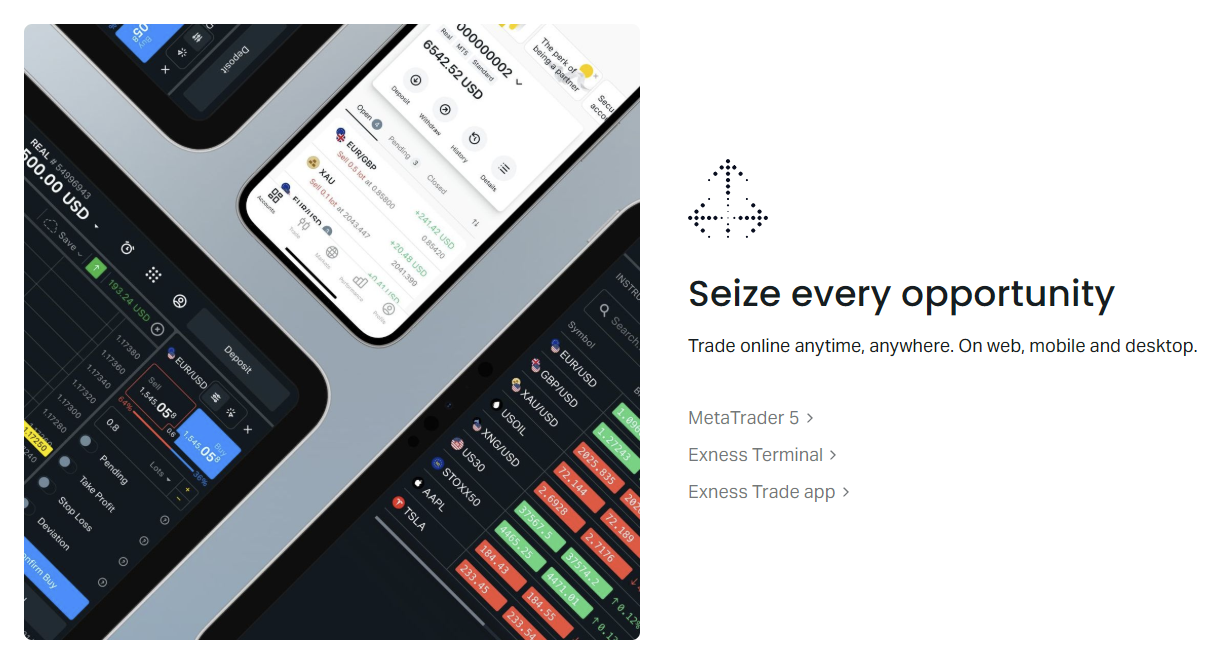
Execution quality is a frequently cited strength. Exness publishes execution statistics including slippage data, requote rates, and order fill speeds. The broker uses a hybrid model combining market making for smaller orders with straight-through processing for larger volumes. This approach is common among major brokers but differs from the pure agency model some traders prefer.
The trading instrument range exceeds 200 markets including forex pairs, metals, energies, indices, stocks, and cryptocurrencies. Spreads on major pairs like EUR/USD can start from 0.0 pips on Raw Spread accounts with a $3.50 per side commission per lot. Standard accounts typically show spreads around 0.7-1.0 pips on EUR/USD with no commission.
Leverage varies by account equity and instrument. Forex majors can reach 1:2000 on balances under $1,000, scaling down at higher equity tiers. This dynamic leverage model adjusts automatically. Cryptocurrency leverage is capped lower. These conditions explain the broker's appeal but also illustrate why Indian regulators consider the risk profile incompatible with retail investor protection norms.
Account Types and Minimum Deposit Requirements
Globally, Exness sets a $1 minimum deposit for Standard and Standard Cent accounts. Professional account types (Raw Spread, Zero, Pro) require $200 minimum deposits. The Cent account denominates balances in cents rather than dollars, allowing micro-lot trading with very small capital. This feature attracts beginners but also enables high-leverage speculation with minimal downside protection.
Indian traders sometimes ask about minimum deposit in rupees. Since Exness does not accept INR deposits directly, any funding would require conversion through international payment methods. The effective minimum in rupees depends entirely on the payment processor's exchange rate and fees, which can add 3-5% to the transaction cost.
Verification requirements follow standard KYC/AML procedures: government-issued ID, proof of address, and sometimes source of funds documentation for larger deposits. The process is fully digital and typically completes within hours. However, Indian documents may trigger additional scrutiny since the broker does not operate in the Indian market.
Deposit and Withdrawal Considerations
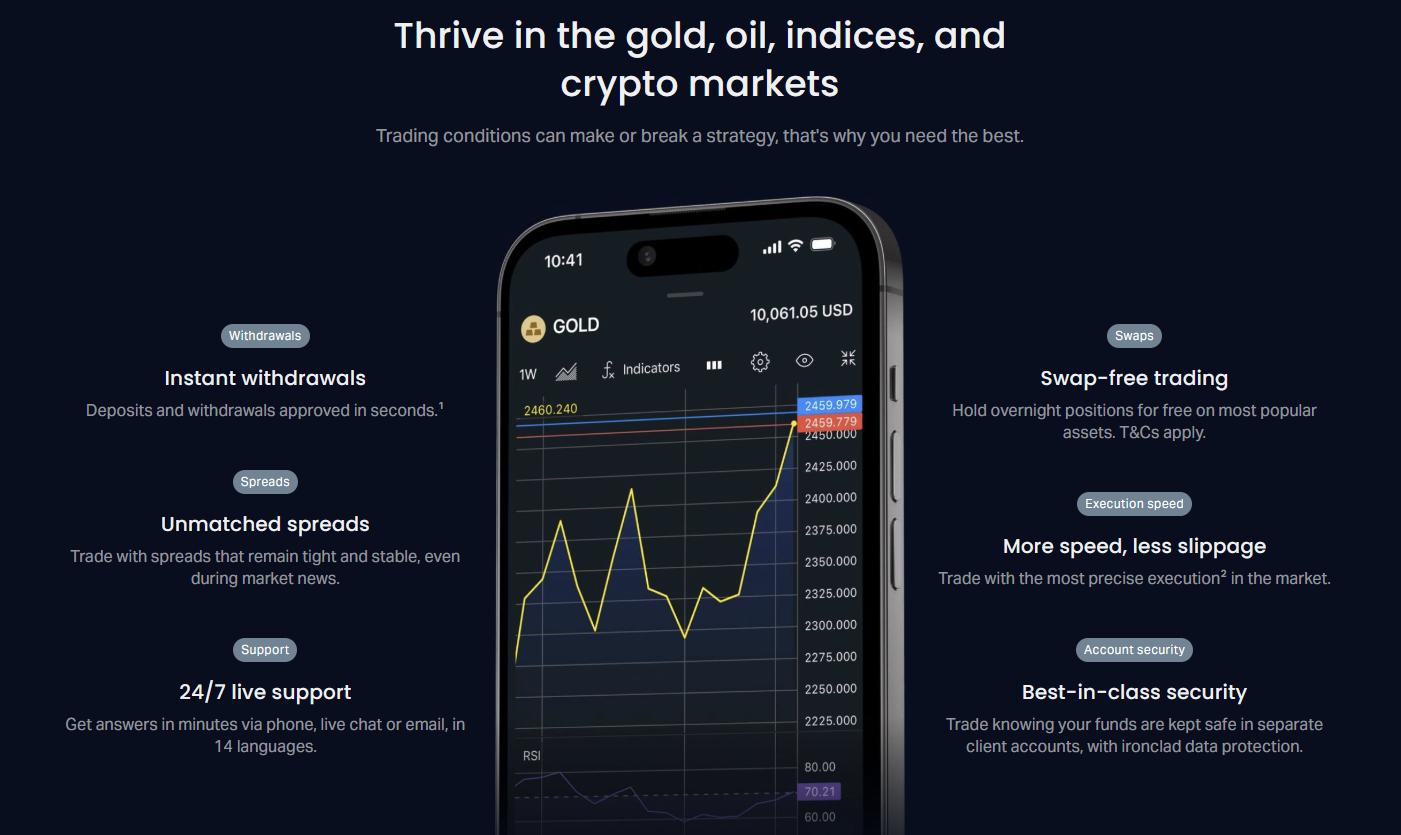
Exness supports numerous payment methods globally: bank wire, credit/debit cards, electronic wallets (Skrill, Neteller, WebMoney), and regional solutions. Instant withdrawal is a marketed feature for many methods, with processing times often under a few hours. The broker does not charge deposit or withdrawal fees, though payment processors may.
For an Indian user, the payment landscape is fundamentally different. International cards issued by Indian banks may be blocked for forex trading transactions under RBI directives. E-wallets that serve Indian customers typically restrict gambling and forex transactions to comply with local regulations. Cryptocurrency deposits, while technically possible, introduce additional regulatory and tax complexity.
Withdrawal reversals to Indian bank accounts can trigger FEMA compliance queries. Banks are required to report suspicious transactions and may freeze funds pending source verification. The burden of proof falls on the account holder to demonstrate the funds originated from permissible activities.
Tax implications add another layer. Profits from unauthorized forex trading may be classified as income from speculative business or capital gains, depending on interpretation. The lack of proper documentation from an unregulated broker complicates tax filing and increases audit risk. Professional tax advice becomes essential but may not resolve the underlying regulatory issue.
Mobile Trading App Availability
The Exness Trade app and MetaTrader mobile applications are not listed on the Indian Google Play Store or Apple App Store. This removal occurs at the platform level in response to regulatory guidance. Users with Indian Apple IDs or Google accounts cannot download these apps through official channels.
Some traders sideload APK files on Android or use TestFlight on iOS. These methods bypass store restrictions but introduce security risks. Unofficial app sources may distribute modified versions containing malware. Even legitimate sideloaded apps cannot receive automatic security updates, leaving users vulnerable to exploits.
The web terminal remains accessible through browsers in some cases, though Exness has implemented geo-blocking for Indian IP ranges. VPN usage to access the web terminal compounds the regulatory and security concerns already discussed. The mobile experience, which many traders prefer for monitoring positions, is effectively unavailable through legitimate channels.
Risk Considerations for Indian Traders
Beyond regulatory risk, Indian traders using offshore brokers face several practical dangers. Fund segregation standards vary by jurisdiction. While Exness maintains client funds in segregated accounts with top-tier banks under CySEC and FCA oversight, these protections apply to clients onboarded under those regulatory licenses. An Indian resident accessing the platform through unofficial means may not qualify for the same protections.
Dispute resolution becomes nearly impossible. The Financial Ombudsman Service (UK) or Cyprus Financial Ombudsman only handle complaints from clients within their regulatory perimeter. Indian courts have no jurisdiction over offshore entities. The broker's terms of service typically specify exclusive jurisdiction in their country of incorporation.
Market manipulation risk, while low with major regulated brokers, cannot be eliminated in OTC markets. Price feeds, execution quality, and stop-loss handling operate under the broker's discretion within regulatory bounds. Without local regulatory oversight, recourse for unfair practices is limited.
Currency conversion costs erode returns. Every deposit and withdrawal involves INR to USD (or EUR) conversion at bank or payment processor rates. These spreads typically range from 1.5% to 3.5% each way. On a round trip, that's 3-7% in pure conversion costs before any trading profit or loss.
The total cost of offshore forex trading for an Indian resident — regulatory risk, conversion costs, tax uncertainty, and lack of legal recourse — often exceeds any spread or commission advantage the international broker offers.
Common Questions About Exness India Status
Several recurring questions appear in trading forums and search queries. Addressing them directly helps clarify the practical reality.
Will Exness come back to India? There is no public indication that Exness plans to seek SEBI authorization or establish an Indian entity. The regulatory framework would require fundamental changes to their product offering — leverage caps, product restrictions, and compliance infrastructure — that may not align with their global business model.
Why is Exness not working today in India? The website and platforms may be accessible intermittently depending on ISP-level blocking implementation. Some users report access without VPN on certain networks. This inconsistency reflects technical enforcement variations, not a policy change.
Can Exness be used in India with a VPN? Technically yes, but this does not make it legal. The VPN masks the IP address but does not change the user's physical location, residency, or the regulatory status of the activity. Payment processing remains the choke point.
Is Exness trading app legal in India? No. The app's absence from Indian app stores reflects its unauthorized status. Using sideloaded versions does not create legality.
Frequently Asked Questions
Is Exness banned in India or just unavailable?
Exness is not explicitly named in a ban order. Rather, it operates without SEBI authorization, making its services unavailable to Indian residents under existing forex regulations. The practical effect is the same as a ban.
Can I open an Exness account using an overseas address?
You may complete registration, but funding and withdrawal will require international payment methods not linked to Indian banking. This creates FEMA compliance risks and potential tax complications.
What forex trading is legal in India?
Currency futures and options on USD/INR, EUR/INR, GBP/INR, and JPY/INR pairs traded on NSE, BSE, or MSEI through SEBI-registered brokers. All other forex trading by residents is restricted.
Does Exness accept Indian rupees?
No. Exness does not support INR deposits or withdrawals. All accounts are denominated in USD, EUR, or other major currencies.
Are there any Indian brokers offering Exness-like conditions?
Indian brokers operate under SEBI leverage caps (typically 1:20 to 1:50 for currency derivatives) and offer only INR pairs. Conditions differ significantly from offshore brokers.
What happens if I trade forex offshore from India?
You risk regulatory penalties under FEMA, bank account freezing, tax scrutiny, and loss of legal recourse for disputes. The RBI has warned against such activities.
Will regulations change to allow brokers like Exness?
India has gradually liberalized capital accounts but maintains strict controls on retail forex speculation. Major policy shifts would be required, with no current timeline.
Final Assessment of Exness India Access
Exness remains a well-regarded international broker with competitive conditions for traders in jurisdictions where it operates legally. For Indian residents, the regulatory barrier is structural and unlikely to change without significant policy shifts. The exchange-traded currency derivatives market provides a regulated alternative with growing liquidity, though limited pair selection.
Traders must weigh the practical costs — conversion fees, regulatory exposure, tax complexity, and lack of dispute resolution — against perceived advantages of offshore access. For most, the regulated domestic pathway or GIFT City options present fewer long-term complications. Those determined to access global markets should consult qualified legal and tax professionals before committing capital.
The situation reflects India's deliberate pace of financial liberalization. As the currency derivatives market matures and the IFSCA framework expands, more sophisticated products may become available domestically. Until then, the gap between what global brokers offer and what Indian regulations permit remains wide.