

Forex Broker Bonuses
Exness Bonus Programs and Trading Incentives Explained
What bonuses Exness offers, how they work, and what to watch for before claiming.

Senior Forex Trader & Market Analyst
Daniel Chen is an experienced forex trader and financial market analyst with over 15 years of experience in currency trading. He specializes in technical analysis, risk management, and developing practical trading strategies to help traders make informed decisions.
Traders looking at Exness often ask whether the broker runs bonus campaigns. The short answer is that Exness does not operate a permanent, globally available bonus program in the way many competitors do. Instead, the company has built its reputation on raw trading conditions — tight spreads, low commissions, instant withdrawals, and high leverage — rather than promotional incentives. That approach reflects a deliberate business choice: attract clients with execution quality and transparency, not with deposit matches or welcome credits that come with restrictive terms.
Contents
- 1. Does Exness Offer Bonuses to Traders
- 2. Types of Exness Bonus Programs Historically Available
- 3. How Exness Deposit Bonuses Work in Practice
- 4. Welcome Bonus Offers for New Exness Clients
- 5. Regional Availability of Exness Bonus Campaigns
- 6. Key Terms and Conditions to Watch
- 7. How to Claim an Active Exness Bonus
- 8. Comparing Bonus Value Against Standard Trading Conditions
- 9. Exness Partner and IB Programs as Alternative Incentives
- 10. Common Misconceptions About Exness Bonuses
- 11. Practical Decision Framework for Traders
- 12. Exness Bonus vs. Competitor Bonus Structures
- 13. Final Assessment of Exness Bonus Offerings
This does not mean bonuses never appear. Exness occasionally runs region-specific or time-limited promotions, often tied to local marketing partnerships or introductory offers for new registrations in certain countries. These campaigns tend to be deposit-based, meaning you must fund your account before any bonus credit is applied. They also carry standard conditions: trading volume requirements, withdrawal restrictions on the bonus amount itself, and expiration deadlines. Understanding those conditions matters more than the headline figure.
The broker's stance on bonuses also connects to its regulatory framework. Exness holds licenses from several Tier-1 and Tier-2 regulators, including the FCA in the UK, CySEC in Cyprus, FSCA in South Africa, and FSA in Seychelles. Regulators in major jurisdictions have tightened rules around bonus promotions, especially those marketed to retail clients. The FCA and CySEC, for instance, restrict or prohibit certain types of trading incentives. Exness complies by keeping its core offering bonus-free in regulated entities, while allowing limited promotions through its offshore entities where local rules permit.
For traders, the practical takeaway is simple: do not choose Exness expecting a standing 100% deposit bonus or a no-deposit welcome credit. Choose it for the trading environment. If a promotion happens to be active in your region when you register, treat it as a secondary benefit — not the primary reason to open an account. The rest of this guide breaks down what has existed historically, how any active offer works, and what to compare against the broker's standard conditions.
Does Exness Offer Bonuses to Traders
The most direct answer comes from the broker's own website and client agreement. Exness states clearly that it does not provide a universal welcome bonus, no-deposit bonus, or recurring deposit bonus across all entities. The Exness entity you register under — determined by your country of residence — dictates what promotions, if any, are available. Clients registering under the UK (FCA) or Cyprus (CySEC) entities will not find any bonus offers. Those registering under the Seychelles (FSA) or South Africa (FSCA) entities may encounter periodic campaigns, but these are not guaranteed.
This entity-based structure confuses many traders. A user in Nigeria might see a 50% deposit bonus advertised on a local affiliate site, while a user in Germany sees none. Both are on Exness, but they are contracted with different legal entities. The bonus terms, leverage limits, and even available account types can differ. Always check the specific entity's website or contact support before depositing with bonus expectations.
Historically, Exness has run deposit bonus campaigns in parts of Asia, Africa, and Latin America. These typically match a percentage of the first deposit — sometimes up to 100% — up to a maximum credit amount. The bonus funds are credited to a separate bonus balance and cannot be withdrawn directly. They serve as additional margin, allowing larger positions. To convert bonus funds to withdrawable cash, traders must meet a volume requirement, usually expressed in lots traded. The standard formula tends to be: bonus amount divided by a fixed USD value per lot. For example, a $500 bonus might require trading 50 lots (at $10 per lot) before the bonus becomes withdrawable.
No-deposit bonuses — where a small credit is given just for registering — have been extremely rare at Exness. When they appear, they are usually tiny amounts ($10–$30) with aggressive volume targets and short expiration windows, often 30 days. Most traders find them not worth the effort. The broker's marketing focus has shifted toward its Premier loyalty program and partner rebates, which reward ongoing volume rather than one-time deposits.
Types of Exness Bonus Programs Historically Available
Over the years, Exness has tested several promotional structures. The most common is the first-deposit match bonus. A typical version offers 50% or 100% on the initial deposit, capped at a maximum bonus value — say $2,000. The bonus is credited automatically after the deposit clears. Some campaigns extend the match to the second or third deposit within a promotional window, usually 30–90 days from registration. These multi-deposit structures aim to encourage larger initial funding rather than small test deposits.
Another structure seen in specific regions is the "trade and earn" cashback model. Instead of an upfront credit, traders receive a rebate per lot traded during a promotional period. This functions more like a temporary commission reduction than a traditional bonus. It favors active traders and avoids the withdrawal lock-in of margin bonuses. Exness has run such campaigns in Southeast Asia and parts of Africa, often in partnership with local introducing brokers who promote the offer to their networks.
Seasonal promotions appear around major holidays or events — Chinese New Year, Ramadan, Black Friday, or the broker's anniversary. These are short, usually two to four weeks, and may combine a deposit match with reduced spreads on specific instruments or a prize draw for high-volume traders. The prize draws are marketing tools; the odds of winning are low, but the deposit match component follows the same terms as standard campaigns.
Referral bonuses exist but operate through the partner program, not the retail client portal. An existing client who refers a friend can earn a commission on the friend's trading volume. This is a standard introducing broker (IB) arrangement, not a retail bonus. The referred friend does not receive a bonus unless a separate new-client campaign is active. Traders sometimes confuse the IB commission with a personal bonus; they are distinct.
How Exness Deposit Bonuses Work in Practice
When a deposit bonus is active, the mechanics are straightforward but the details determine whether it helps or hinders your trading. After registering and verifying your account, you opt into the promotion — sometimes automatically, sometimes via a promo code or a button in the Personal Area. You then make a qualifying deposit. The minimum deposit to trigger the bonus is usually higher than the broker's standard minimum; $100–$500 is common for bonus campaigns versus $10–$50 for regular funding.
The bonus credit appears in your trading account as a separate line item: "Bonus" or "Credit." It increases your free margin, so you can open larger positions or withstand deeper drawdowns without a margin call. However, the bonus itself is not your money. You cannot withdraw it. You can only withdraw profits generated while trading with the bonus margin, and only after meeting the volume requirement. Until then, the bonus balance is locked.
The volume requirement is the critical metric. Exness typically calculates it as: bonus amount (USD) divided by a fixed rate (e.g., $5 or $10 per standard lot). A $1,000 bonus at $10 per lot means 100 lots must be traded. That is round-turn volume — opening and closing counts as one lot. For a day trader doing 5–10 lots daily, 100 lots takes two to three weeks. For a swing trader doing one lot every few days, it could take months. The clock starts ticking from the bonus credit date, and most campaigns impose a deadline — often 90 or 180 days. If you miss the deadline, the bonus is removed from the account, and any open positions relying on that margin may be stopped out.
Profit withdrawal during the active bonus period is restricted. Some versions allow partial profit withdrawal once a portion of the volume is met; others block all withdrawals until the full requirement is satisfied. Read the specific campaign terms. A common trap: you request a withdrawal before completing the volume, and the system cancels the bonus entirely, which can trigger stop-outs on open trades. Plan your liquidity needs before opting in.
Welcome Bonus Offers for New Exness Clients
The term "welcome bonus" gets used loosely. At Exness, a true welcome bonus — a credit for simply opening an account, no deposit required — has not been a standard feature. What affiliates and regional marketers sometimes call a welcome bonus is actually a first-deposit match. The distinction matters because a no-deposit bonus lets you test live conditions with zero risk. A deposit match requires your capital upfront.
In regions where a first-deposit campaign runs, the welcome package may bundle the match with other perks: a few days of zero spreads on major pairs, a temporary leverage increase, or entry into a trading contest. These bundles are marketing constructs. The zero-spread window is usually short (3–7 days) and applies only to specific instruments. The leverage increase may not exceed the entity's regulatory cap. The contest entry is a lottery ticket. Evaluate the deposit match on its own merits; treat the extras as negligible.
New clients should also know that the standard Exness onboarding flow — registration, email verification, identity verification (KYC), deposit — applies regardless of any bonus. The bonus does not accelerate verification. In fact, some campaigns require full KYC completion before the bonus credits, which can take 24–48 hours. If you need to trade immediately, the bonus delay may not suit you.
One practical tip: if you see a welcome bonus advertised, check whether it applies to your chosen account type. Some campaigns exclude Raw Spread or Zero accounts because those already offer the tightest pricing. The bonus may only be available on Standard or Standard Cent accounts. Since Raw Spread accounts charge commission per lot, the volume requirement to clear a bonus on a Standard account (where the cost is built into the spread) may actually be more expensive in effective terms. Run the numbers.
Regional Availability of Exness Bonus Campaigns
Bonus availability follows regulatory boundaries. The FCA (UK) and CySEC (EU) entities do not offer retail bonuses. Period. If you reside in the UK, Germany, France, Spain, Italy, or any other EEA country, you will not see bonus offers on the Exness website or in your Personal Area. The regulator prohibits them. Any affiliate site promising an Exness bonus to a UK or EU resident is either outdated or misleading.
The FSA (Seychelles) entity serves much of Asia, Africa, Latin America, and the Middle East. This is where most bonus campaigns appear. Countries like Thailand, Vietnam, Indonesia, Malaysia, Philippines, Nigeria, Kenya, South Africa, UAE, Brazil, Mexico, and Colombia have seen active promotions at various times. However, even within the FSA entity, campaigns are not universal. They may target specific sub-regions or be distributed through local partners rather than the main website.
The FSCA (South Africa) entity serves South African residents and sometimes neighboring countries. It has run deposit bonuses in the past, but South African regulators have also tightened rules on leverage and incentives. Current campaigns, if any, are modest and heavily disclosed. Always verify on the ZA-specific Exness site (exness.co.za) rather than the global .com domain.
A trader's entity assignment is automatic based on the residence declared during registration. You cannot choose a different entity to access a bonus. Attempting to register under a different country using a VPN or false address violates the client agreement and will trigger verification failure when documents are submitted. The bonus, if any, will be voided. Exness compliance teams check IP consistency and document authenticity.
Key Terms and Conditions to Watch
Every bonus campaign publishes terms. Most traders skim them. The ones who read them avoid surprises. Here are the clauses that most often catch people off guard.
- Volume calculation method: Some campaigns count only closed trades. Others count opening and closing separately (round-turn vs. one-way). The difference doubles the required activity.
- Eligible instruments: Bonuses may restrict volume counting to forex majors. Trades on gold, indices, crypto, or stocks might not count toward the requirement, or count at a reduced rate (e.g., 50%).
- Leverage restrictions: During the bonus period, maximum leverage may be capped lower than the account's standard limit. This reduces the margin benefit of the bonus itself.
- Hedging and offsetting trades: Some terms void volume from hedged positions (simultaneous long and short on the same instrument) or from trades that offset each other within a short window. This targets arbitrage or bonus-farming strategies.
- Stop-out protection: The bonus acts as margin, so it delays stop-outs. But if the bonus is removed (expiry or withdrawal request), the sudden margin drop can trigger immediate liquidation. Monitor your margin level closely near the deadline.
- Profit cap: A few campaigns cap the withdrawable profit derived from bonus funds — for example, maximum 3x the bonus amount. Excess profits are forfeited.
- Account type lock: Once you opt in, you may not be able to switch account types or open new accounts under the same entity until the bonus is cleared or forfeited.
The volume requirement deserves a worked example. Suppose a 100% deposit bonus up to $500. You deposit $500, get $500 bonus. Volume requirement: bonus / $5 per lot = 100 lots. You trade EURUSD on a Standard account with a 1.0 pip spread. Each lot costs ~$10 in spread. 100 lots = $1,000 in spread costs. Your deposit was $500. You are effectively paying $1,000 in trading costs to unlock $500. That is a negative expected value unless your strategy has a genuine edge. The bonus only makes sense if you would have traded that volume anyway, or if the spread on your account is lower (Raw Spread/Zero) — but those accounts are often excluded.
Withdrawal restrictions are the second major trap. Many traders deposit, trade a bit, then need funds for an emergency. They request a withdrawal. The system either rejects it or warns that the bonus will be cancelled. If cancelled, the bonus margin disappears. Open positions may get stopped out. The trader ends up with less than they started. If there is any chance you will need the deposited funds within the bonus period, do not opt in. Keep the account bonus-free.
How to Claim an Active Exness Bonus
If a bonus is available for your entity, the claim process is usually automatic. Log into your Personal Area. Check the "Bonuses" or "Promotions" tab. If a campaign is active for your region, you will see an "Activate" or "Join" button. Click it. The terms will display — read them. Then make a qualifying deposit using any supported payment method. The bonus credits within minutes to a few hours. No promo code is typically needed for main campaigns; partner-specific offers may require a code provided by the introducing broker.
Some campaigns require you to contact support via live chat to activate the bonus after depositing. This is more common with IB-exclusive offers. The support agent will verify the deposit and apply the credit manually. Keep the chat transcript and deposit receipt. If the bonus does not appear within the promised timeframe, follow up with the same chat reference.
You can usually track your progress in the Personal Area. A progress bar shows traded volume versus required volume. It updates in near real-time. This transparency helps you plan. If you are halfway through the volume with two weeks left, you can assess whether to increase trading frequency or accept forfeiture.
Opting out is possible before you start trading with the bonus. In the Personal Area, there is often a "Cancel Bonus" button. Clicking it removes the bonus credit immediately. Any open positions relying on that margin may be closed if your equity falls below the margin requirement. If you have already traded volume toward the requirement, cancelling forfeits that progress. You cannot pause a bonus; it is active or cancelled.
Comparing Bonus Value Against Standard Trading Conditions
The real question is not whether a bonus exists, but whether it improves your bottom line compared to trading on Exness's standard conditions without a bonus. Exness's core pitch is low cost: spreads from 0.0 pips on Raw Spread/Zero accounts, commissions of $3.50 per side per lot ($7 round-turn), no swap on majors for many accounts, instant withdrawals, and leverage up to 1:2000 (entity-dependent). These features are permanent. A bonus is temporary and conditional.
Consider a trader depositing $1,000. Option A: take a 100% deposit bonus ($1,000 credit) on a Standard account with 1.0 pip average spread on EURUSD. Option B: no bonus, trade on a Raw Spread account with 0.1 pip spread + $7 commission. Over 100 lots (the typical volume to clear a $1,000 bonus at $10/lot), Option A costs ~$1,000 in spreads. Option B costs ~$100 in spreads + $700 commission = $800 total. The bonus trader pays $200 more in effective costs, and has withdrawal restrictions for the duration. The non-bonus trader keeps full flexibility.
The math changes if the bonus is on a Raw Spread account (rare) or if the volume requirement is lower. But Exness structures its campaigns to favor the broker. The volume target is calibrated so that the expected spread/commission revenue from the required trading exceeds the bonus liability. That is how promotional budgets work. The trader's edge, if any, comes from using the extra margin to survive drawdowns that would otherwise stop them out — effectively a free insurance policy on account survival. For a disciplined trader with a positive expectancy strategy, that insurance has value. For a gambler, it just delays the inevitable.
There is also the Premier program to consider. Exness Premier is a loyalty tier for high-volume traders (typically $10M+ monthly volume). It offers reduced commissions, priority support, dedicated account managers, and exclusive events. This is not a bonus; it is a volume rebate program. For serious traders, Premier delivers more tangible value over time than any one-time deposit match. The qualification threshold is high, but it scales with your trading rather than locking you into a short-term campaign.
Exness Partner and IB Programs as Alternative Incentives
Traders who build a network often earn more from the partner program than from any retail bonus. The Exness Introducing Broker (IB) program pays commissions on the trading volume of referred clients. Rates vary by entity and partner tier but can reach $10–$15 per lot per side for active partners with large networks. This is recurring revenue, not a one-time credit. A partner referring ten active traders each doing 50 lots monthly generates 500 lots/month. At $10/lot, that is $5,000/month — far exceeding any deposit bonus.
The affiliate (CPA) model pays a fixed amount per qualified new client (first deposit + trading activity). Rates range from $200–$600 depending on the client's region and deposit size. This suits marketers with traffic sources but no ongoing relationship with traders. The IB model suits signal providers, educators, community leaders, and money managers who maintain contact with their referrals.
Importantly, the partner program operates independently of retail bonuses. A referred client can still claim a new-client deposit bonus if one is active in their region. The partner earns their commission on the client's volume regardless. There is no conflict. Traders sometimes worry that signing up under an IB link disqualifies them from bonuses; it does not. The IB link tracks the referral; the bonus system tracks the promotion. They are separate databases.
For individual traders not interested in building a referral business, the partner program is irrelevant. But it explains why Exness invests less in retail bonuses: their growth engine is partner-driven. The broker pays for distribution through commissions on volume, not through upfront client acquisition costs like bonuses. This model aligns broker and partner incentives around sustained trading activity, which also benefits the broker's revenue stability.
Common Misconceptions About Exness Bonuses
Several myths circulate in trading forums and affiliate sites. Clearing them up saves time and prevents bad decisions.
- "Exness gives a $100 no-deposit bonus." False. No standing no-deposit offer exists. Occasional $10–$30 micro-bonuses have appeared in specific countries for a few weeks, but they are not a reliable feature.
- "The 100% deposit bonus is always available." False. It appears in cycles, region-dependent, and often only for the first deposit within a promotional window.
- "You can withdraw the bonus after trading 10 lots." False. The volume requirement is typically much higher — often 50–100+ lots for a meaningful bonus amount.
- "Bonuses work on all account types." False. Raw Spread, Zero, and Pro accounts are frequently excluded. Check the campaign terms.
- "Using a VPN lets you access bonuses from other countries." False. Verification requires proof of address and identity matching the registered country. Mismatch leads to account closure and bonus forfeiture.
- "The bonus is free money." False. It is margin with strings attached. The cost to unlock it (spreads, commissions, time, restricted withdrawals) often exceeds its face value.
Another misconception: that Exness's lack of a permanent bonus makes it inferior to brokers advertising 50%, 100%, or even 200% deposit matches. The brokers offering large permanent bonuses often compensate with wider spreads, higher commissions, slower withdrawals, or stricter stop-out levels. The bonus is priced into the trading conditions. Exness chooses transparent pricing over hidden cross-subsidies. Neither model is inherently better; they suit different trader profiles. The bonus-heavy model suits beginners who want a psychological cushion and don't trade enough volume for the spread difference to matter. The raw-conditions model suits active traders for whom every pip and dollar of commission compounds over thousands of lots.
Practical Decision Framework for Traders
When evaluating whether to pursue an Exness bonus, run through this checklist. Be honest about your trading habits.
- What is my expected monthly trading volume in lots? If under 20 lots, a bonus with a 100-lot requirement is unrealistic.
- Do I need withdrawal flexibility in the next 30–90 days? If yes, skip the bonus.
- Am I registering under an entity that currently offers a campaign? Check the local Exness site or ask support before depositing.
- Is the bonus available on my preferred account type (Raw Spread/Zero)? If not, the wider spreads on Standard may cost more than the bonus is worth.
- Can I meet the volume deadline without changing my strategy? Forcing extra trades to clear a bonus is a recipe for losses.
- Would I be better off with the standard conditions and no restrictions? For most active traders, the answer is yes.
If you decide to take a bonus, treat it as a margin buffer, not a profit target. Use the extra margin to size positions according to your normal risk rules — do not increase risk because you have "free" margin. Track your volume progress weekly. If you are behind pace with two weeks left, decide whether the effort to catch up is worth the potential reward. Often it is not. Accepting forfeiture is a valid risk-management decision.
If you decide against the bonus, you lose nothing. Exness's standard conditions are available to everyone, all the time. No opt-in, no deadline, no withdrawal lock. The broker's competitive advantage is that baseline. The bonus, when it exists, is a marketing layer on top — sometimes useful, often distracting.
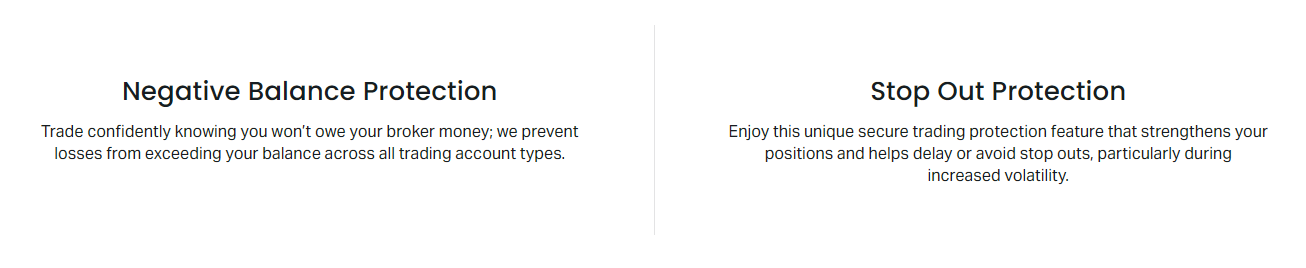
The image above summarizes the permanent advantages Exness offers instead of bonuses: instant withdrawals, stable spreads, negative balance protection, and segregation of client funds. These features apply to every client, every day, without conditions. They represent the broker's actual value proposition.
Exness Bonus vs. Competitor Bonus Structures
Comparing Exness to brokers with aggressive bonus programs reveals a pattern. Brokers like XM, FBS, InstaForex, and RoboForex (among others) run near-permanent 50–100% deposit bonuses, sometimes with no-deposit offers of $30–$100. Their spreads on standard accounts are often 1.5–2.0 pips on EURUSD, versus Exness Standard at ~1.0 pip. Over 100 lots, that 0.5–1.0 pip difference costs $500–$1,000. The bonus covers that gap — but only once. After the bonus is cleared or expired, the trader remains on the wider spreads. Exness traders keep the tighter spreads forever.
Some competitors offer "loyalty bonuses" — recurring deposit matches on every deposit, or cashback per lot. These are closer to Exness's Premier program but with lower entry thresholds. However, they usually come with higher base spreads or commissions that fund the loyalty payouts. The net cost to the trader is often similar; the presentation differs. Exness puts the discount in the raw pricing. Competitors put it in a rebate layer. The rebate layer adds complexity: you must track points, tiers, and redemption rules. Exness's model is simpler: you see the spread, you pay the commission, done.
Regulatory pressure is pushing the industry toward the Exness model. ESMA (EU) banned deposit bonuses for retail clients in 2018. The FCA (UK) followed. ASIC (Australia) restricted leverage and incentives. CySEC aligns with ESMA. Major jurisdictions now treat bonuses as inducements that conflict with best-execution obligations. Brokers operating primarily in regulated markets have largely abandoned them. Exness, with its multi-entity structure, retains the ability to offer bonuses offshore while keeping its regulated entities clean. This hybrid approach may shrink further as more countries adopt stricter rules.
For a trader choosing a broker today, the bonus question is increasingly secondary to the regulation question. A bonus from an unregulated or lightly regulated entity carries counterparty risk: the broker can change terms, delay withdrawals, or disappear. Exness's Tier-1 licenses (FCA, CySEC) provide legal protections that no bonus can match. If you qualify for a regulated entity, you get no bonus but you get regulatory safety. If you fall under an offshore entity, you might get a bonus but with less regulatory recourse. The trade-off is real.
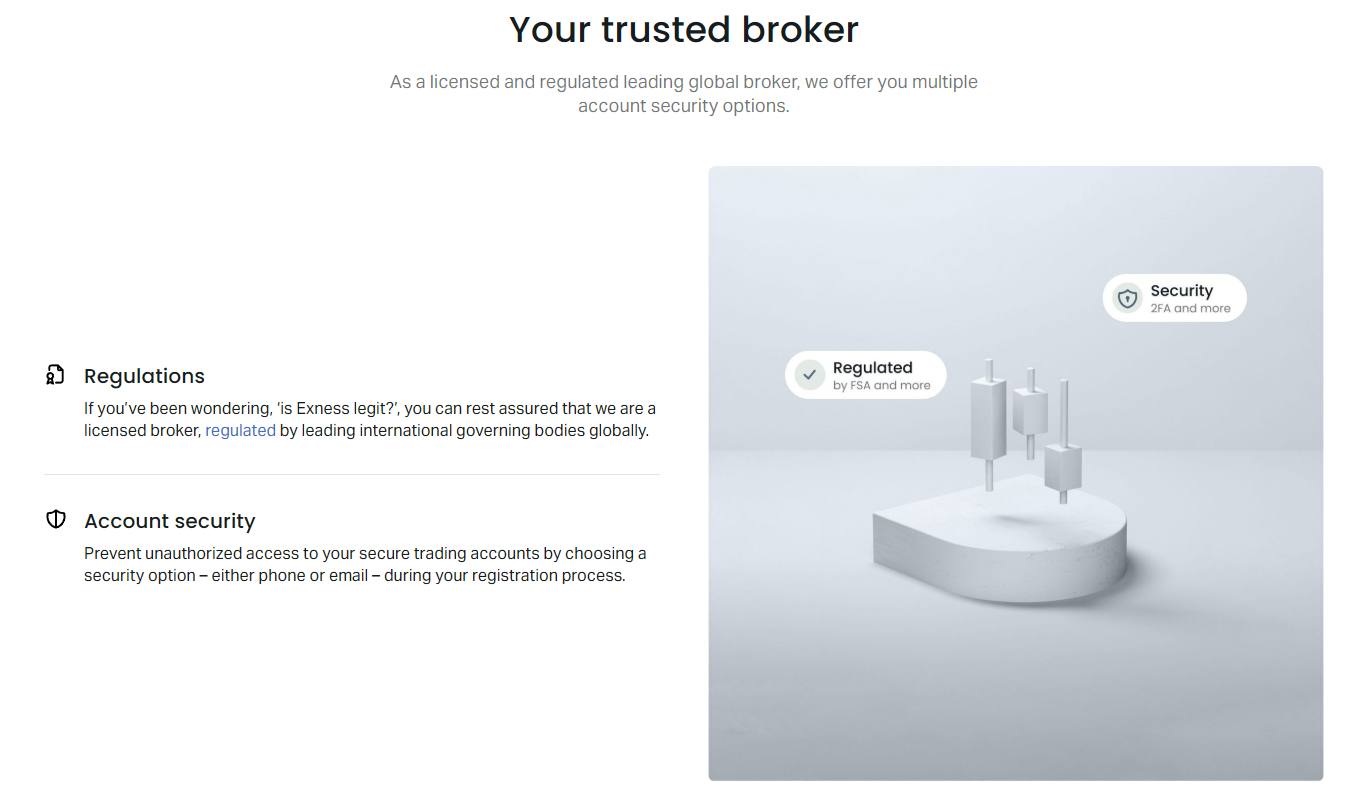
The regulatory landscape matters more than any promotional offer. The image above shows the licenses that underpin Exness's operations. Traders should verify which entity covers their country before weighing bonus availability.
Final Assessment of Exness Bonus Offerings
Exness does not lead with bonuses. It leads with execution quality, withdrawal speed, and transparent pricing. Bonuses exist only as occasional, region-specific campaigns under the offshore entities. They follow industry-standard mechanics: deposit match, volume requirement, withdrawal restrictions, expiration. The terms are fair but not generous — the volume targets are set so that the broker's expected revenue from the required trading exceeds the bonus cost. For most traders, the standard conditions without a bonus deliver better value over time.
If you are in a region with an active campaign and you were going to deposit and trade that volume anyway, taking the bonus costs nothing extra and gives you a margin cushion. Just read the terms, track your progress, and do not let the deadline distort your trading decisions. If you are not in a bonus region, or if the campaign excludes your preferred account type, do not force it. The broker's core offering — tight spreads, low commissions, instant withdrawals, high leverage — is available to you regardless. That is the product Exness actually sells. The bonus is just seasonal packaging.
The partner program offers a more substantial incentive structure for those who can refer traders, but it is a business model, not a retail perk. The Premier loyalty program rewards high-volume traders with tangible cost reductions, but the entry threshold is high. For the individual retail trader, the decision is simple: trade on Exness for the conditions, not for the promotions. The conditions are permanent. The promotions are not.
Frequently Asked Questions
Does Exness have a welcome bonus for new clients?
Exness does not offer a universal welcome bonus. Some regional entities run time-limited first-deposit match campaigns, but these are not available in all countries and are not guaranteed.
Can I get a no-deposit bonus from Exness?
No-deposit bonuses are extremely rare at Exness. When offered, they are typically small amounts ($10–$30) with high volume requirements and short expiration periods, limited to specific countries.
How does the Exness deposit bonus work?
When active, a deposit bonus matches a percentage of your deposit (often 50–100%) up to a maximum amount. The bonus is added as trading credit, not withdrawable cash. You must trade a required volume (e.g., bonus amount divided by $5–$10 per lot) within a deadline (usually 90–180 days) to make the bonus withdrawable.
Are Exness bonuses available in the UK or EU?
No. The FCA (UK) and CySEC (EU) prohibit retail trading bonuses. Clients registering under these entities will not see any bonus offers.
Can I withdraw profits while a bonus is active?
Most Exness bonus campaigns restrict withdrawals until the volume requirement is met. Requesting a withdrawal early often cancels the bonus and removes its margin support, which can trigger stop-outs on open positions.
Which Exness account types are eligible for bonuses?
Bonuses are typically offered only on Standard and Standard Cent accounts. Raw Spread, Zero, and Pro accounts are usually excluded from promotional campaigns.
Is the Exness bonus worth taking?
Only if you would trade the required volume anyway and do not need withdrawal flexibility during the campaign period. For active traders on Raw Spread accounts, the standard conditions without a bonus are usually more cost-effective.
How do I check if a bonus is available in my country?
Log into your Exness Personal Area and check the Promotions or Bonuses tab. You can also contact live support and ask about current campaigns for your registered entity.