

Forex Trading Accounts
Exness ECN Account: Features, Costs, and Trading Conditions
What traders need to know about raw spreads, commission structure, and platform access.

Senior Forex Trader & Market Analyst
Daniel Chen is an experienced forex trader and financial market analyst with over 15 years of experience in currency trading. He specializes in technical analysis, risk management, and developing practical trading strategies to help traders make informed decisions.
The Exness ECN account sits in the professional tier alongside Raw Spread and Zero accounts. It targets traders who want direct market access with raw spreads and a separate commission charge. Unlike the Standard and Standard Cent accounts that build costs into the spread, the ECN model separates the two components. This transparency appeals to scalpers, high-frequency traders, and anyone running algorithmic strategies where spread consistency matters more than absolute minimums.
Contents
- 1. What Is the Exness ECN Account
- 2. How ECN Execution Works at Exness
- 3. Spreads and Commission Structure
- 4. Minimum Deposit and Account Requirements
- 5. Trading Platforms Available
- 6. Leverage and Margin Rules
- 7. Comparing ECN to Raw Spread and Zero Accounts
- 8. Who Should Use the ECN Account
- 9. Opening and Verifying an ECN Account
- 10. Risk Considerations for ECN Trading
- 11. Funding and Withdrawal Practicalities
- 12. Final Assessment of Exness ECN Account
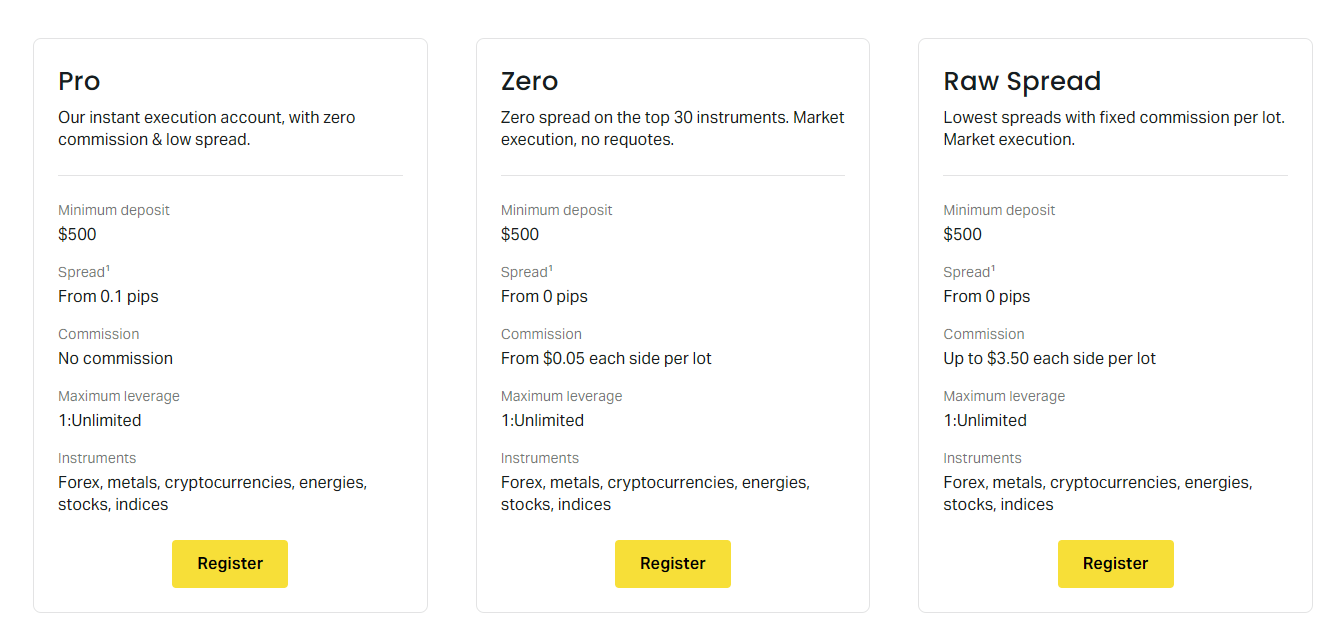
Exness does not market a standalone product labeled "ECN Account" in its current public lineup. The broker groups its professional offerings under Raw Spread and Zero accounts, both of which operate on an ECN-style execution model. The Raw Spread account offers spreads from 0.0 pips with a commission per lot. The Zero account fixes commissions at $3.5 per side per lot on major pairs while keeping spreads near zero. Traders looking for an ECN experience at Exness typically choose between these two. Understanding the distinction matters because the cost structure changes depending on which pair you trade and what time of day you operate.
What Is the Exness ECN Account
ECN stands for Electronic Communication Network. In practice, it means your orders route directly to liquidity providers — banks, hedge funds, other brokers — without a dealing desk intervening. Exness aggregates prices from multiple liquidity sources and passes the best bid and ask to your platform. The spread you see reflects the actual market depth at that moment. When liquidity thins, spreads widen. When it deepens, they tighten. This behavior differs from market-maker models where the broker sets the spread and may hold the other side of your trade.
At Exness, the Raw Spread account is the closest match to a classic ECN product. It charges a variable commission that depends on the instrument. For EURUSD, the commission runs around $3.5 per side per lot, though the exact figure can shift. The Zero account locks that commission at $3.5 per side for major forex pairs but applies higher commissions on metals, energies, indices, and cryptocurrencies. Both accounts support market execution with no requotes. Slippage can occur in fast markets, but positive slippage is also possible — your order fills at a better price than requested.
The ECN label gets used loosely across the industry. Some brokers call any raw-spread account ECN. Others reserve it for accounts that display market depth (Level 2 data). Exness does not currently expose a full depth-of-market ladder in MetaTrader 4 or 5. You see the best bid and ask, not the full order book. For most retail traders, this distinction has limited practical impact. What matters is that spreads reflect interbank pricing and commissions are disclosed upfront.
How ECN Execution Works at Exness
Exness uses a hybrid execution model. The broker connects to a pool of liquidity providers — tier-one banks and non-bank market makers — and streams aggregated prices to its servers. When you place a market order, the system matches it against the best available price in that pool. The process is automated. There is no manual intervention, no dealing desk approving or rejecting trades. This applies to both Raw Spread and Zero accounts.
Execution speed is a selling point. Exness publishes average execution times under 10 milliseconds for most orders. The broker co-locates servers in Equinix data centers (LD4 in London, NY4 in New York) to minimize latency between its matching engine and liquidity providers. For traders running expert advisors or high-frequency strategies, this infrastructure reduces the gap between signal generation and fill. The VPS hosting service Exness offers — free for qualifying accounts — places your trading terminal in the same data center, cutting latency further.
Order types supported include market, limit, stop, and stop-limit orders. One-cancels-other (OCO) and trailing stops function on the platform side. There is no guaranteed stop-loss feature. In extreme volatility — think Swiss franc unpegging in 2015 or COVID flash crashes — spreads can widen dramatically and stops may fill at prices far from your level. This is standard ECN behavior. The broker does not promise protection against negative balance beyond regulatory requirements, though Exness does offer negative balance protection for retail clients under its FCA and CySEC entities.
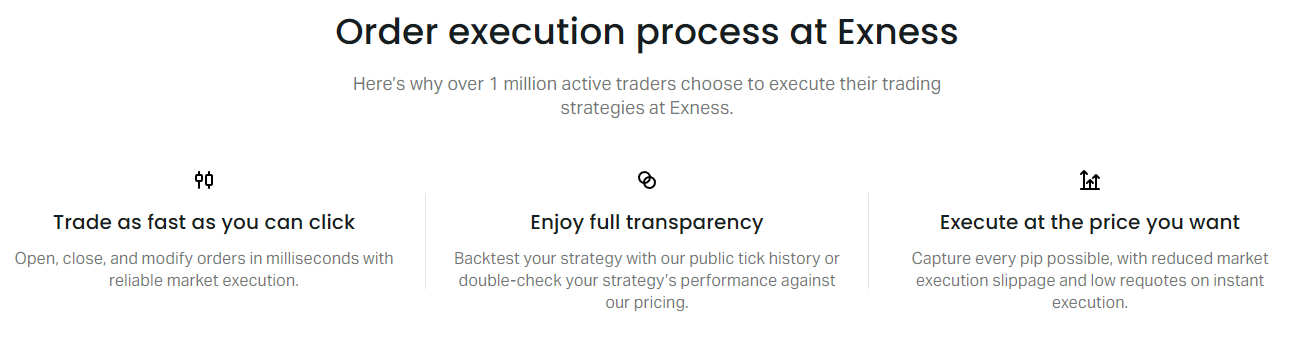
Requotes do not occur on ECN accounts because the price you see is the price available in the market at that instant. If liquidity disappears between your click and the server receipt, the order either fills at the next available price or rejects. This transparency cuts both ways. You avoid the frustration of a broker widening spreads artificially before news, but you also absorb the full impact of genuine market gaps.
Spreads and Commission Structure
The defining feature of an ECN account is the separation of spread and commission. On the Raw Spread account, typical EURUSD spreads hover around 0.0 to 0.2 pips during London-New York overlap. The commission varies by instrument. For major forex pairs, it averages $3.5 per side per lot ($7 round trip). On gold (XAUUSD), the commission rises to roughly $10 per side per lot. Indices and energies carry their own schedules. The Zero account simplifies this: $3.5 per side per lot fixed on 30 major forex pairs, with spreads from 0.0 pips. Other instruments follow the Raw Spread commission table.
Spread behavior changes across sessions. Asian session spreads run wider — EURUSD might show 0.3 to 0.6 pips on Raw Spread. London open tightens them. The New York close often sees a brief widening as liquidity providers pull quotes. Economic releases (NFP, CPI, central bank decisions) can spike spreads to 5-10 pips or more for seconds. This is not a broker markup. It reflects providers managing risk. Traders using tight stops during news often get stopped out by spread expansion alone, not price movement.
Scroll horizontally to see all columns
| Account Type | Avg Spread (pips) | Commission ($) | Total Cost ($) |
|---|---|---|---|
| Raw Spread | 0.1 | 7.00 | 8.00 |
| Zero | 0.0 | 7.00 | 7.00 |
| Standard | 1.0 | 0.00 | 10.00 |
| Standard Cent | 1.2 | 0.00 | 12.00 |
The table above uses approximate figures. Actual spreads fluctuate. The Zero account often edges out Raw Spread on major pairs because the commission is capped. On crosses like EURGBP or AUDJPY, Raw Spread may cost less if the variable commission drops below $3.5 per side. Exness publishes a detailed commission schedule in the personal area and on its website. Always check the current rate for your specific instrument before sizing a position.
Minimum Deposit and Account Requirements
Exness sets no formal minimum deposit for Raw Spread or Zero accounts. You can open either with $1. However, practical minimums exist. A 1-lot position on EURUSD requires roughly $1,000 margin at 1:1000 leverage (the maximum for balances under $2,000). At 1:2000 leverage (available above $2,000), margin drops to ~$500. But leverage restrictions kick in based on equity and instrument. Forex majors max out at 1:2000. Gold caps at 1:1000. Indices and crypto sit lower. If you deposit $10, you cannot trade a full lot on most instruments without hitting margin limits.
The real constraint is position sizing relative to risk. A trader risking 1% per trade with a 20-pip stop on EURUSD needs $200 per 0.1 lot. With $100 equity, that forces 0.05 lots — below the 0.01 minimum step on some platforms. Exness allows 0.01 lot minimum on all professional accounts. So $100 works for micro-position trading, but commission becomes a larger percentage of profit targets. At $7 round trip per lot, a 0.01 lot trade pays $0.07 commission. On a 10-pip target ($1 profit), that's 7% of gross return eaten by fees.
Account currency options include USD, EUR, GBP, CHF, JPY, AUD, CAD, NZD, SGD, HKD, PLN, CZK, HUF, ZAR, and several others. Base currency choice affects conversion costs if you deposit in a different currency. Exness does not charge deposit or withdrawal fees on most methods, but payment processors may. Bank wire withdrawals can incur intermediary bank fees of $15-$30. Crypto withdrawals carry network fees. These external costs matter more on small accounts.
Trading Platforms Available
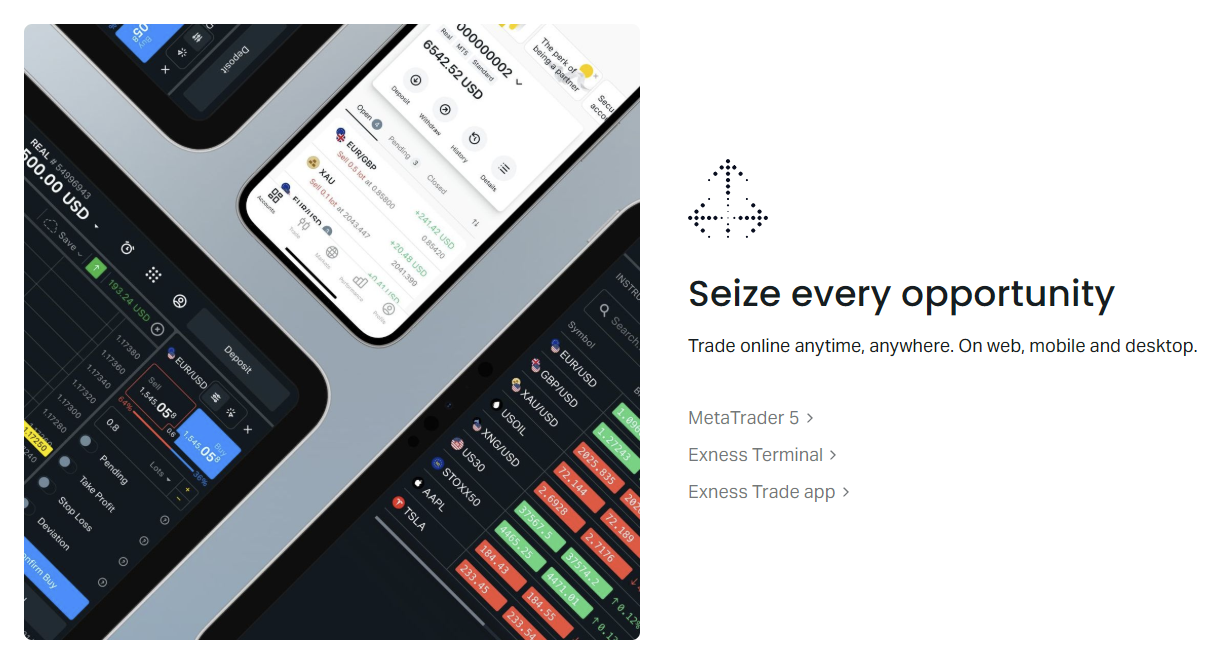
Raw Spread and Zero accounts run on MetaTrader 4, MetaTrader 5, Exness Web Terminal, and the Exness Trade mobile app. All platforms connect to the same pricing engine. MT4 remains popular for its expert advisor ecosystem and custom indicators. MT5 adds more timeframes, a built-in economic calendar, depth of market (though Exness does not fully populate it), and netting/hedging account modes. The Web Terminal requires no installation and works in any modern browser. It supports charting, one-click trading, and basic analysis tools.
The Exness Trade app (iOS and Android) provides full account management — deposits, withdrawals, verification, platform downloads — plus trading. Charts load quickly. You can set price alerts, view economic calendar events, and access Trading Central signals. The app does not support custom indicators or EAs. For algorithmic trading, you need MT4/MT5 desktop or a VPS. Exness offers free VPS hosting for accounts with $500 equity and at least 5 lots traded monthly (or $15 monthly fee otherwise). The VPS runs Windows Server with MT4/MT5 preinstalled in the LD4 data center.
Social trading and copy trading are separate products. The Exness Social Trading app lets you copy signal providers. Those accounts operate on Standard or Standard Cent pricing, not Raw Spread or Zero. You cannot link an ECN-style account to the copy trading system as a follower. Strategy providers can use professional accounts, but followers replicate trades on standard-cost accounts. This creates a cost mismatch — the provider pays commission, the follower pays spread markup.
Leverage and Margin Rules
Exness offers dynamic leverage that scales with account equity. Below $2,000 equity, maximum leverage is 1:2000 on forex majors. Between $2,000 and $5,000, it drops to 1:1000. Above $5,000, 1:500. Above $30,000, 1:200. These thresholds apply per account, not across your entire personal area. You can open multiple accounts under one email and manage leverage independently. This flexibility lets you run a high-leverage scalping account alongside a lower-leverage swing account.
Margin calls trigger at 60% margin level. Stop out occurs at 0% — positions close automatically when equity falls to zero. This is more generous than brokers who stop out at 20% or 50% margin level. However, it also means you can lose the entire account balance before liquidation finishes. In fast gaps, negative balance is possible. Exness provides negative balance protection for retail clients under FCA (UK) and CySEC (EU) regulation. Professional clients and entities under offshore licenses (Seychelles, Curaçao, BVI) do not receive this protection.
Leverage restrictions also apply by instrument. Gold (XAUUSD) maxes at 1:1000 regardless of equity. Major indices (US30, US500, USTEC) cap at 1:200. Cryptocurrencies sit at 1:100 or lower. Energies (UKOIL, USOIL) at 1:200. These limits are non-negotiable and apply to all account types. If you need higher leverage on gold, you cannot get it at Exness. Some competitors offer 1:2000 on metals for low-equity accounts.
Comparing ECN to Raw Spread and Zero Accounts
The terminology confuses many traders. Exness does not list an "ECN Account" in its current account selector. The professional category contains Raw Spread and Zero. Both use ECN execution. The difference is purely cost structure. Raw Spread: variable commission, spreads from 0.0 pips. Zero: fixed $3.5/side commission on 30 major forex pairs, spreads from 0.0 pips. On those 30 pairs, Zero is usually cheaper or equal. On everything else — crosses, metals, energies, indices, crypto — Raw Spread often costs less because its variable commission undercuts the Zero account's higher rates for non-major instruments.
Scroll horizontally to see all columns
| Factor | Raw Spread | Zero |
|---|---|---|
| Major Forex Commission | Variable (~$3.5/side) | Fixed $3.5/side |
| Cross Pairs Commission | Variable (often <$3.5) | Higher than majors |
| Gold Commission | ~$10/side | ~$10/side |
| Indices Commission | Variable | Higher fixed rate |
| Spread Baseline | 0.0 pips | 0.0 pips |
| Best For | Diverse instrument traders | Major pair specialists |
Standard and Standard Cent accounts use market execution but build all costs into the spread. No commission. Spreads start around 0.3 pips on EURUSD for Standard, 0.5 for Standard Cent. For a trader doing 5-10 lots monthly, the all-in cost on Standard often exceeds Raw Spread once commissions are counted. The crossover point depends on your exact spread experience. Exness provides a trading calculator in the personal area that lets you input your volume and see estimated costs per account type.
Who Should Use the ECN Account
Scalpers benefit most. A strategy targeting 3-5 pips per trade on EURUSD loses 30-50% of gross profit to spread on a Standard account (1.0 pip spread = $10 per lot). On Raw Spread at 0.1 pip + $7 commission, the cost drops to ~$8 per lot. The edge compounds over hundreds of trades. High-frequency EAs that place dozens of orders per session need the tightest possible spread. Commission becomes a fixed overhead, easier to model than variable spread widening.
Algorithmic traders running statistical arbitrage, latency-based strategies, or market-making bots need raw pricing. The Zero account's fixed commission on majors removes a variable. The VPS co-location reduces execution variance. Exness allows hedging and netting modes on MT5. Hedging lets you hold long and short positions simultaneously on the same instrument — useful for grid strategies or correlated pair hedging. Netting aggregates them. Choose based on your strategy logic.
Swing traders and position traders holding days to weeks care less about spread. A 1-pip spread on a 200-pip target is 0.5% of profit. Commission matters even less. For these traders, Standard or Standard Cent accounts simplify accounting — one number (the spread) covers all costs. No commission invoices, no per-lot calculations. The ECN advantage diminishes as holding period increases.
Beginners should avoid ECN accounts initially. The separate commission line item confuses P&L reading. A trade shows -$7 commission immediately on open. Floating P&L must overcome that before turning positive. Psychological impact is real — seeing an instant loss triggers premature exits. Standard accounts hide costs in the spread, which feels cleaner while learning. Move to Raw Spread or Zero after you understand position sizing, risk management, and how spreads behave across sessions.
Opening and Verifying an ECN Account
Account opening happens in the Exness Personal Area. After email registration, you select "Open New Account," choose Raw Spread or Zero, pick base currency and leverage preference. The account number and server credentials generate instantly. You can download MT4/MT5 or launch Web Terminal immediately. No verification required for deposits up to $2,000 (varies by jurisdiction). Withdrawals always require full KYC.
Verification requires proof of identity (passport, national ID, driver's license) and proof of residence (utility bill, bank statement, government letter) issued within 3 months. Documents upload through the Personal Area. Review typically completes within a few hours, sometimes minutes. Exness uses automated checks for most submissions. Manual review triggers if document quality is poor or data mismatches. Once verified, withdrawal limits lift. Unverified accounts face restrictions on withdrawal methods and amounts.
Entity selection matters. Exness operates multiple legal entities: Exness (UK) Ltd (FCA), Exness (Cy) Ltd (CySEC), Exness (SC) Ltd (FSA Seychelles), Exness (VG) Ltd (FSC BVI), Exness (CU) Ltd (Curaçao). Your residence determines the entity. EU/UK residents get FCA/CySEC protection — negative balance protection, investor compensation schemes, leverage caps (1:30 retail under ESMA). Non-EU residents often fall under Seychelles or BVI entities with higher leverage (up to 1:2000) but no compensation fund. You cannot choose your entity; it assigns automatically by IP and document country.
Risk Considerations for ECN Trading
Raw spreads expose you to genuine market conditions. During news, spreads can widen 20-50x normal levels. A 0.1 pip EURUSD spread becomes 5 pips. If you have a 3-pip stop, it triggers purely from spread expansion. This is not broker manipulation — liquidity providers widen quotes to manage inventory risk. The solution: widen stops during high-impact events, reduce position size, or avoid trading the release window entirely. Exness publishes an economic calendar in the platform and app. Use it.
Commission adds up. A trader doing 100 lots monthly on Zero pays $700 in commissions. That's $8,400 annually. On a $10,000 account, that's 84% of equity in fees. The strategy must generate enough gross profit to cover this overhead. Many retail traders underestimate commission drag. Track your cost ratio: total commissions / gross profit. If it exceeds 20-30%, your edge is thin. Consider whether higher timeframes or lower frequency would improve net returns.
Slippage works both ways. Positive slippage — fills better than requested — happens when price moves in your favor between order send and execution. Negative slippage costs you. Over large samples, slippage should net near zero if the broker is fair. Exness publishes slippage statistics quarterly. Review them. If your personal slippage consistently skews negative, document it and contact support. But accept that in fast markets, any ECN broker will show variance.
Funding and Withdrawal Practicalities
Exness supports a wide range of deposit methods: bank cards (Visa, Mastercard), bank wire, electronic wallets (Skrill, Neteller, WebMoney, Perfect Money), crypto (BTC, USDT, ETH, USDC), and local payment systems (Pix in Brazil, UPI in India, various Southeast Asian and African methods). Most deposits are instant. Bank wires take 1-3 business days. Minimum deposit is $1 for most methods, though some e-wallets set $10 minimums. Exness charges no deposit fees. Card processors may charge cash-advance fees — check with your issuer.
Withdrawals follow the same method as deposit (closed-loop policy). Card withdrawals refund to the original card up to the deposited amount. Profits withdraw via bank wire or e-wallet. Crypto withdrawals go to the same network address. Processing times: instant for e-wallets and crypto (once approved), 1-5 business days for bank wires, 3-10 days for card refunds. Exness processes withdrawal requests 24/7, including weekends. The finance team works in shifts. Large withdrawals ($50,000+) may trigger additional verification.
Currency conversion occurs if your account base currency differs from the payment method currency. Exness uses its own conversion rates, which include a markup. For large transfers, using a matching-currency account saves 1-3%. Example: EUR account funded via EUR SEPA wire avoids conversion. USD account funded via USDT on TRC20 avoids conversion. Plan your account currency around your primary funding method.
Final Assessment of Exness ECN Account
The Exness ECN experience — delivered through Raw Spread and Zero accounts — suits traders who understand their cost structure and trade enough volume for commissions to make sense. The execution infrastructure is solid: co-located servers, millisecond fills, no requotes, 24/7 withdrawal processing. The platform choice covers every need from discretionary mobile trading to co-located algorithmic systems. Regulation spans top-tier (FCA, CySEC) and offshore entities, with protections varying accordingly.
The main friction points are terminology confusion (no single "ECN Account" label), variable commission opacity on Raw Spread, and leverage step-downs that catch growing accounts off guard. The Zero account fixes the commission guesswork for major pairs but penalizes cross-pair and multi-asset traders. Raw Spread rewards those who check the commission table per instrument. Neither account offers guaranteed stops or Level 2 depth data. For pure ECN purists, brokers like IC Markets or Pepperstone provide deeper market visibility.
If you trade 50+ lots monthly on majors, Zero saves money. If you trade crosses, gold, indices, or crypto alongside majors, Raw Spread likely costs less. If you trade under 10 lots monthly, Standard or Standard Cent may actually be cheaper once commissions are counted. Run the numbers in the Exness calculator before committing. Open both a Raw Spread and Zero demo account. Trade your strategy on each for two weeks. Compare net P&L after all costs. The data will tell you more than any review.
Frequently Asked Questions
Does Exness offer a specific account called ECN Account?
No. Exness groups its ECN-style execution under Raw Spread and Zero professional accounts. Both use electronic communication network execution with raw spreads and separate commissions.
Which is cheaper: Raw Spread or Zero account?
Zero fixes commission at $3.5 per side per lot on 30 major forex pairs, making it cheaper or equal on those pairs. Raw Spread uses variable commissions that are often lower on crosses, metals, indices, and crypto.
What is the minimum deposit for Raw Spread or Zero accounts?
There is no formal minimum. You can open with $1. Practical minimums depend on your position sizing, leverage tier, and risk management.
Can I use expert advisors on Exness ECN accounts?
Yes. Both Raw Spread and Zero support EAs on MT4 and MT5. Exness offers free VPS hosting for accounts with $500 equity and 5 lots monthly volume.
Does Exness charge deposit or withdrawal fees?
Exness charges no fees. Payment processors may. Bank wire withdrawals can incur intermediary bank fees. Crypto withdrawals carry network fees.
What leverage is available on Raw Spread and Zero accounts?
Dynamic leverage up to 1:2000 on forex majors for equity under $2,000. Steps down at $2,000 (1:1000), $5,000 (1:500), $30,000 (1:200). Instrument caps apply: gold 1:1000, indices 1:200, crypto 1:100.
Is negative balance protection included?
Yes for retail clients under FCA (UK) and CySEC (EU) entities. Not for professional clients or accounts under offshore entities (Seychelles, BVI, Curaçao).
How do I switch between Raw Spread and Zero accounts?
Open a new account in the Personal Area. Select the desired type. You can run both simultaneously and move funds internally between them instantly.