
Forex Broker Reviews
Exness UAE: Trading Conditions and Local Access
A practical guide to Exness services for traders in the United Arab Emirates

Senior Forex Trader & Market Analyst
Daniel Chen is an experienced forex trader and financial market analyst with over 15 years of experience in currency trading. He specializes in technical analysis, risk management, and developing practical trading strategies to help traders make informed decisions.
Exness has built a noticeable presence among traders in the United Arab Emirates over the past several years. The broker operates globally under multiple regulatory licenses, and its services are accessible to UAE residents through the international entity. Traders in Dubai, Abu Dhabi, Sharjah, and other emirates can open accounts, deposit in dirhams through local payment channels, and trade a wide range of instruments without needing a VPN or offshore workaround. This article examines what Exness actually offers to UAE-based traders, from regulation and account types to platforms, costs, and practical considerations.
Contents
- 1. Exness Presence in the United Arab Emirates
- 2. Regulatory Framework for UAE Traders
- 3. Account Types Available to UAE Residents
- 4. Trading Platforms and Technology
- 5. Deposit and Withdrawal Methods for UAE
- 6. Trading Instruments and Market Access
- 7. Leverage, Spreads, and Trading Costs
- 8. Customer Support and Local Language Options
- 9. Exness Partner Program in the UAE
- 10. Risk Considerations for UAE Traders
- 11. Final Assessment of Exness UAE
The UAE financial landscape is distinct. The Securities and Commodities Authority (SCA) regulates onshore financial activities, while the Dubai Financial Services Authority (DFSA) oversees the Dubai International Financial Centre (DIFC). Exness does not hold an SCA or DFSA license. Instead, it serves UAE clients through its Seychelles-registered entity (Exness (SC) Ltd) and its Cyprus entity (Exness Europe Ltd) for eligible clients. This distinction matters because it determines the regulatory protections available, the leverage limits offered, and the dispute resolution mechanisms in place. Understanding this structure is the first step for any UAE trader evaluating the broker.
Many UAE traders first encounter Exness through advertising that highlights low spreads, instant withdrawals, and high leverage. Those features are real, but they come with conditions. The broker's raw spread and zero accounts offer commission-based pricing that can undercut standard accounts for high-volume traders. The standard and standard cent accounts use spread-only pricing with no commission. Leverage up to 1:2000 is advertised, though it applies only to specific account types and equity thresholds. For most retail traders, the practical leverage available will be lower, and the risk of using maximum leverage is substantial. This article breaks down these details without marketing fluff.
Exness Presence in the United Arab Emirates
Exness does not maintain a physical office in the UAE. The broker operates entirely online, with customer support available through live chat, email, and phone. Arabic language support is provided across the website, trading platforms, and customer service channels. The website detects UAE visitors automatically and presents content in Arabic or English based on browser settings. Local payment integration is the most tangible sign of market commitment. UAE traders can deposit and withdraw using UAE bank transfers, local debit and credit cards, and several e-wallets popular in the region. Processing times for these methods are generally faster than international wire transfers.
The broker sponsors several high-profile sports partnerships globally, including football clubs and Formula 1 teams. These sponsorships increase brand visibility in the UAE, where sports viewership is high. However, sponsorships do not equate to local regulatory authorization. Traders should verify the regulatory status independently rather than relying on brand visibility. The Exness website lists its licenses prominently: FSA (Seychelles), CySEC (Cyprus), FCA (UK), FSCA (South Africa), and CBCS (Curaçao). UAE residents typically fall under the Seychelles entity unless they qualify for the Cyprus entity under specific criteria.
Social trading and copy trading features are fully accessible to UAE clients. The Exness Social Trading app allows users to browse strategy providers, review performance metrics, and allocate funds to copy trades automatically. This feature has gained traction in the UAE, where many traders prefer to follow experienced providers rather than trade independently. The app is available on iOS and Android, with Arabic interface support. Strategy providers from the UAE and the broader MENA region are visible on the platform, creating a localized ecosystem within the global network.
The broker's marketing in the UAE emphasizes trust signals: years of operation, client count, trading volume, and withdrawal speed statistics. These figures are published on the Exness website and updated periodically. While they indicate scale, they do not guarantee individual outcomes. The UAE trading community discusses Exness actively on forums, Telegram groups, and social media. Common topics include withdrawal reliability, spread behavior during news events, and customer support responsiveness in Arabic. This peer feedback is often more useful than promotional material for assessing day-to-day experience.
Regulatory Framework for UAE Traders
Regulation is the most misunderstood aspect of trading with Exness from the UAE. The broker is not licensed by the UAE Securities and Commodities Authority (SCA) or the Dubai Financial Services Authority (DFSA). This means UAE traders do not benefit from the SCA's investor compensation scheme or the DFSA's client money rules. Instead, protection depends on the entity through which the account is opened. Most UAE retail clients are onboarded under Exness (SC) Ltd, regulated by the Financial Services Authority of Seychelles. The Seychelles regulator requires segregation of client funds and membership in a compensation fund, but the coverage limits and enforcement track record differ from EU or UK frameworks.
Clients who meet professional client criteria may be eligible for onboarding under Exness Europe Ltd (Cyprus), regulated by CySEC. CySEC regulation brings MiFID II protections: negative balance protection, investor compensation fund coverage up to €20,000, and strict client asset segregation. However, professional classification requires meeting two of three quantitative criteria (portfolio size, trading frequency, or professional experience) and comes with reduced regulatory protections in other areas. Most UAE retail traders will not qualify or may prefer not to opt into professional status.
The absence of a local license does not make Exness illegal for UAE residents. UAE law does not prohibit individuals from using offshore brokers, provided the activity is for personal investment and not conducted as an unlicensed financial business. Many UAE traders use brokers regulated in Cyprus, Australia, the UK, or Seychelles. The practical implication is that disputes must be resolved through the broker's internal complaint process, the relevant external regulator, or arbitration — not through UAE courts or the SCA. Traders should keep records of all communications, account statements, and transaction histories.
Negative balance protection is offered across all Exness entities, including the Seychelles one. This means a trader cannot lose more than the account balance, even during extreme market volatility. The broker absorbs losses beyond the deposited amount. This policy is not a regulatory requirement in Seychelles but a company-wide commitment. It is a meaningful safeguard, especially for traders using high leverage. However, it does not protect against the broker's insolvency — only against negative equity from trading losses.
Account Types Available to UAE Residents
Exness offers five main account types to UAE clients: Standard, Standard Cent, Raw Spread, Zero, and Pro. Each has distinct pricing, minimum deposit requirements, and target users. The Standard account is the default choice for most beginners. It uses spread-only pricing with no commission, minimum deposit of $10 (or equivalent), and access to all instruments. Spreads on major pairs like EURUSD typically start around 0.3 pips but average closer to 1.0 pip during normal conditions. The Standard Cent account denominates balances in cents rather than dollars, allowing micro-lot trading with very small deposits. It suits beginners testing live conditions with minimal risk.
The Raw Spread and Zero accounts target more experienced traders who prefer commission-based pricing. Raw Spread offers spreads from 0.0 pips with a commission of $3.5 per lot per side on forex. Zero account also starts at 0.0 pips but charges a fixed commission per instrument, which can be higher or lower depending on the pair. Both require a $200 minimum deposit. The Pro account is designed for high-volume traders, with lower commissions ($2 per lot per side) and priority support, but requires a $500 minimum deposit and higher equity maintenance. UAE traders should calculate their expected monthly volume to determine whether commission-based pricing saves money compared to spread-only accounts.
Scroll horizontally to see all columns
| Account | Min Deposit | Pricing Model | Typical EURUSD Spread | Commission | Best For |
|---|---|---|---|---|---|
| Standard | $10 | Spread only | ~1.0 pip | None | Beginners, low volume |
| Standard Cent | $10 | Spread only (cents) | ~1.0 pip | None | Micro trading, testing |
| Raw Spread | $200 | Commission + spread | 0.0 - 0.2 pip | $3.5/lot/side | Scalpers, EA users |
| Zero | $200 | Fixed commission | 0.0 pips | Varies by instrument | High frequency traders |
| Pro | $500 | Low commission | 0.1 - 0.3 pip | $2/lot/side | High volume, pros |
Islamic (swap-free) accounts are available for all account types. Exness does not charge swap fees on any instrument for Islamic accounts, including forex, metals, indices, energies, stocks, and crypto. There is no additional commission or widened spread to compensate. This is a genuine swap-free offering, not a hidden-cost structure. To open an Islamic account, UAE residents select the option during registration or request conversion through support. The broker may request a declaration of faith, but the process is straightforward. This feature is important for Muslim traders in the UAE who require Sharia-compliant trading conditions.
Demo accounts are unlimited and do not expire. Traders can open multiple demo accounts across different account types to test strategies, practice platform navigation, or evaluate pricing under simulated conditions. Demo pricing mirrors live pricing, including spreads, commissions, and execution speed. However, demo accounts do not replicate the psychological pressure of real money, and slippage during high-impact news may differ. UAE traders should use demo accounts for platform familiarization and strategy testing, not as a reliable predictor of live results.
Account verification (KYC) is mandatory before withdrawals. UAE residents typically provide a valid Emirates ID or passport, proof of address (utility bill, bank statement, or tenancy contract dated within three months), and a selfie for facial verification. The process is automated and usually completes within a few hours. Delays can occur if documents are unclear, expired, or mismatched. Exness support can assist in Arabic if issues arise. Once verified, the account remains verified unless regulatory changes require re-verification.
Trading Platforms and Technology
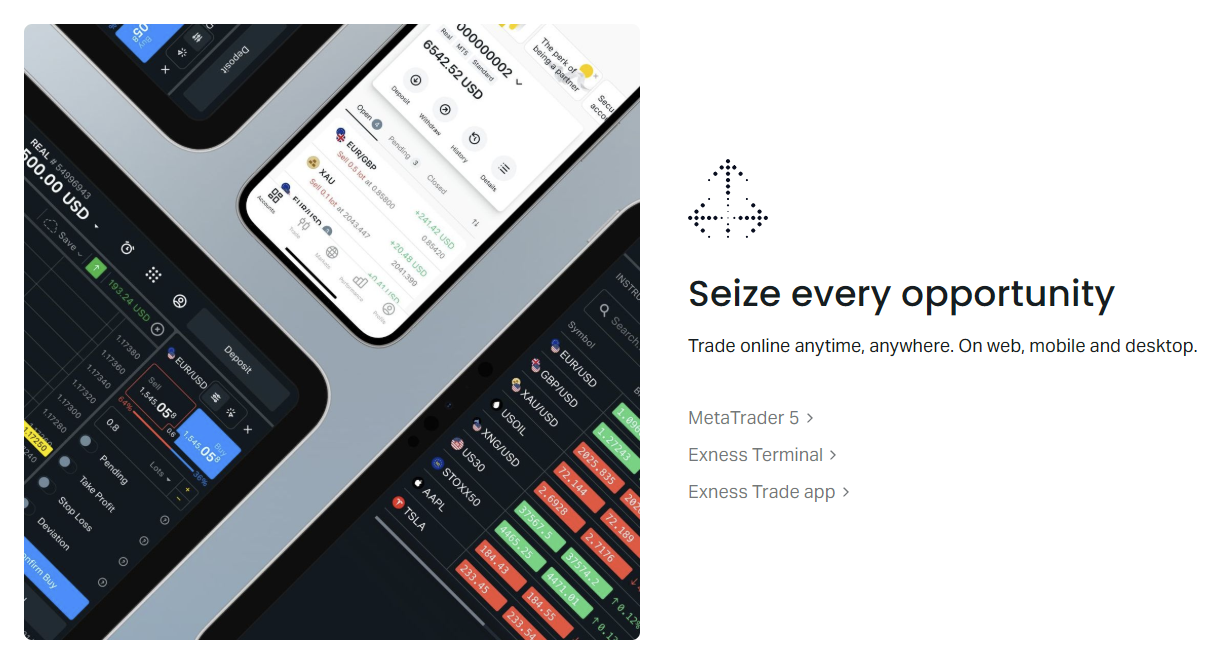
UAE traders have access to MetaTrader 4, MetaTrader 5, Exness Web Terminal, and the Exness Trade mobile app. All platforms connect to the same liquidity pool and pricing engine. MT4 remains popular for its vast library of custom indicators, expert advisors (EAs), and community support. MT5 adds more timeframes, order types, an economic calendar, and better backtesting. The Web Terminal requires no installation and works in any modern browser, including on Chromebooks and Linux machines. The Exness Trade app is a proprietary mobile-first platform with a simplified interface, integrated analytics, and direct access to deposit/withdrawal functions.
The Exness Web Terminal has evolved significantly. It now supports one-click trading, multiple chart layouts, technical indicators, drawing tools, and partial position closing. It lacks the depth of MT4/MT5 for algorithmic trading but covers the needs of most discretionary traders. For UAE traders who cannot install software on work computers or prefer browser-based access, the Web Terminal is a capable alternative. It also integrates with the Exness personal area, allowing seamless switching between account management and trading.
VPS hosting is available for traders running EAs or copy trading strategies that require 24/7 uptime. Exness provides a free VPS to clients who meet a minimum trading volume threshold (typically 5 lots per month on Raw Spread, Zero, or Pro accounts). The VPS runs on low-latency servers near Exness data centers. For UAE traders, the nearest data centers are in London and Frankfurt. Latency from Dubai to London averages 120-150ms, which is acceptable for most strategies but not ideal for ultra-low-latency arbitrage. Traders requiring lower latency may need third-party VPS providers with Middle East presence.
The Exness Trade app deserves specific attention for UAE traders. It includes a built-in economic calendar with push notifications for high-impact events, trading signals from Trading Central, and a market news feed from FXStreet. The app also shows real-time spread and swap information per instrument, which helps avoid surprise costs. Account management functions — deposit, withdrawal, internal transfer, leverage change — are all accessible without leaving the app. Arabic localization is complete, including right-to-left layout support. The app is available on the UAE App Store and Google Play without region restrictions.
Deposit and Withdrawal Methods for UAE
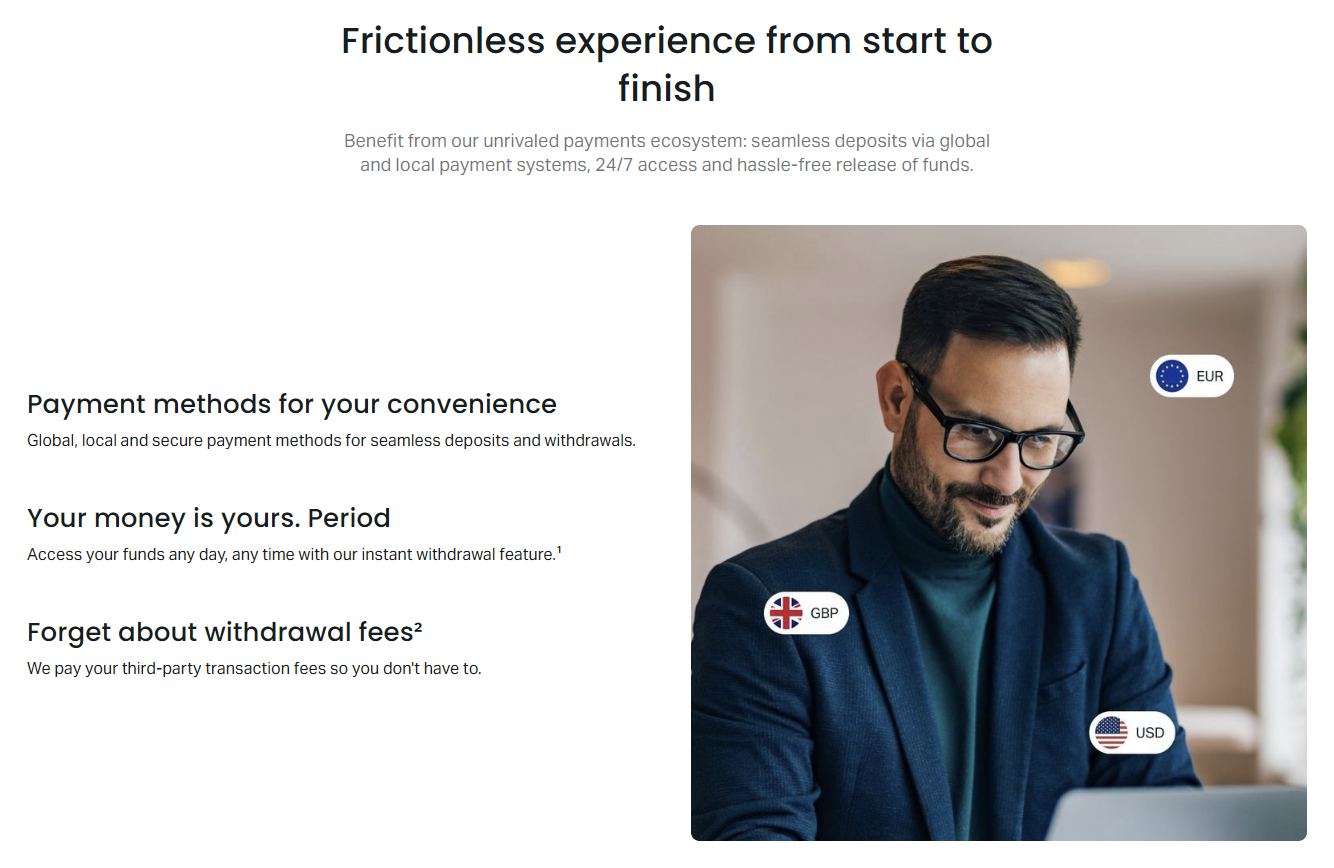
Payment methods are a practical strength for Exness in the UAE. The broker supports UAE bank transfers (via local partner banks), Visa and Mastercard issued by UAE banks, and several e-wallets including Neteller, Skrill, WebMoney, and Perfect Money. Cryptocurrency deposits (USDT, USDC, BTC, ETH) are also accepted. Minimum deposit is $10 for most methods. Deposits via cards and e-wallets are instant. Bank transfers may take 1-3 business days depending on the sending bank. Exness does not charge deposit fees, though the payment provider or issuing bank may apply their own charges.
Withdrawals are processed back to the original deposit method where possible, following anti-money laundering rules. Card withdrawals can take 3-10 business days to appear on the statement, depending on the issuing bank. E-wallet withdrawals are typically instant after Exness approval. Bank transfer withdrawals take 1-5 business days. Exness advertises instant withdrawals for most methods, meaning the broker's internal processing is automated and completes within minutes. The actual arrival time depends on the payment network. UAE traders report that card withdrawals to Emirates NBD, ADCB, and Mashreq cards usually clear within 2-5 business days.
Scroll horizontally to see all columns
| Method | Deposit Time | Withdrawal Time | Min Deposit | Fees |
|---|---|---|---|---|
| UAE Bank Transfer | 1-3 business days | 1-5 business days | $10 | None from Exness |
| Visa/Mastercard (UAE) | Instant | 3-10 business days | $10 | None from Exness |
| Neteller/Skrill | Instant | Instant after approval | $10 | None from Exness |
| USDT/USDC (TRC20/ERC20) | Instant (blockchain) | Instant after approval | $10 | Network fee only |
| WebMoney/Perfect Money | Instant | Instant after approval | $10 | None from Exness |
Internal transfers between Exness accounts are instant and free. This is useful for UAE traders managing multiple accounts — for example, separating scalping and swing trading strategies, or moving funds between a Standard and a Raw Spread account. The personal area also allows currency conversion between account wallets at competitive rates. Exness does not charge conversion fees; the spread on the conversion is the only cost. This flexibility reduces the need to withdraw and redeposit when shifting capital between strategies.
A practical note: UAE banks may flag or block transactions to forex brokers as a precaution. Some traders report that their bank's fraud prevention system rejects the first deposit attempt, requiring a call to the bank to authorize future transactions. This is not specific to Exness — it applies to most offshore brokers. Using e-wallets or crypto can bypass this friction, though it adds a step (funding the e-wallet first). Traders should test with a small deposit first to confirm their bank's behavior before committing larger amounts.
Trading Instruments and Market Access
Exness offers over 200 instruments across forex, metals, energies, indices, stocks, and cryptocurrencies. Forex coverage includes major, minor, and exotic pairs — over 100 currency pairs total. Major pairs like EURUSD, GBPUSD, USDJPY, and AUDUSD have the tightest spreads and deepest liquidity. Exotic pairs involving emerging market currencies (including some Middle Eastern currencies on other brokers) are not a focus here; the list is standard global forex. Metals include gold (XAUUSD), silver (XAGUSD), platinum, and palladium. Gold trading is particularly popular among UAE traders, and Exness offers competitive spreads on XAUUSD, often below 20 cents on Raw Spread accounts.
Energies cover US crude oil (WTI), UK crude oil (Brent), and natural gas. Indices include major global benchmarks: US30 (Dow Jones), US500 (S&P 500), USTEC (Nasdaq 100), UK100 (FTSE 100), GER40 (DAX), FRA40 (CAC 40), JP225 (Nikkei 225), and others. Stock CFDs cover large-cap US companies (Apple, Tesla, Amazon, Microsoft, etc.) and some European names. Trading hours for stocks follow the underlying exchange (NYSE/NASDAQ: 13:30-20:00 UTC). UAE traders should note the time difference: US market open is 17:30-18:30 UAE time depending on daylight saving, which is convenient for evening trading after work.
Cryptocurrency CFDs are available 24/7 on major coins: BTCUSD, ETHUSD, LTCUSD, XRPUSD, BCHUSD, ADAUSD, DOTUSD, LINKUSD, and others. Spreads on crypto are wider than forex — typically 0.5-1.5% of price — and leverage is capped at 1:100 for most crypto pairs. Weekend trading is supported, which is a differentiator since many brokers disable crypto over weekends. For UAE traders who want crypto exposure without managing wallets or exchange accounts, this is a viable option, though the costs are higher than spot exchanges.
Trading hours are displayed in the platform and on the Exness website in server time (GMT+2 or GMT+3 depending on daylight saving). UAE is GMT+4 year-round. The forex market opens Sunday 23:00 UAE time (Monday 00:00 server time) and closes Friday 23:00 UAE time. Daily rollover occurs at 01:00 UAE time (22:00 server time). Swap charges apply at rollover for positions held overnight, except on Islamic accounts. Traders should be aware of the Sunday open gap risk, especially after major weekend news.
Leverage, Spreads, and Trading Costs
Leverage is a major marketing point for Exness. The broker advertises unlimited leverage (effectively 1:2000 maximum) for accounts with equity below $1,000. As equity grows, maximum leverage steps down: 1:2000 under $1,000, 1:1000 up to $5,000, 1:500 up to $30,000, 1:200 above that. Professional accounts under the CySEC entity are capped at 1:500 by regulation. For UAE retail traders under the Seychelles entity, the dynamic leverage model applies. This means a trader cannot simply select 1:2000 and keep it indefinitely — the system adjusts automatically as account equity changes.
Spreads vary by account type, instrument, and market conditions. On Standard accounts, EURUSD averages 1.0-1.2 pips during London/New York overlap, widening to 2-3 pips during Asian session or news events. Raw Spread and Zero accounts show 0.0-0.2 pips on majors during peak liquidity, with commission added. Gold (XAUUSD) spreads on Raw Spread average 10-20 cents. Crypto spreads are percentage-based: BTCUSD typically 0.5-1.0% of price. Swap rates (overnight financing) are published per instrument and can be positive or negative depending on interest rate differentials. Islamic accounts have zero swaps on all instruments.
Scroll horizontally to see all columns
| Instrument | Standard Spread | Raw Spread + Commission | Zero Commission | Max Leverage (Retail) |
|---|---|---|---|---|
| EURUSD | 1.0-1.2 pips | 0.0-0.2 pips + $3.5/lot | 0.0 pips + fixed fee | 1:2000 (dynamic) |
| GBPUSD | 1.2-1.5 pips | 0.1-0.3 pips + $3.5/lot | 0.0 pips + fixed fee | 1:2000 (dynamic) |
| XAUUSD (Gold) | 30-50 cents | 10-20 cents + $3.5/lot | 0.0 pips + fixed fee | 1:2000 (dynamic) |
| US500 (S&P 500) | 0.4-0.6 points | 0.1-0.2 pts + $3.5/lot | 0.0 pts + fixed fee | 1:200 |
| BTCUSD | 0.5-1.0% | 0.3-0.6% + $3.5/lot | 0.0% + fixed fee | 1:100 |
Commission on Raw Spread and Zero accounts is charged per lot per side. A round trip (open and close) on 1 lot of EURUSD costs $7 on Raw Spread. On a Standard account, the same trade costs the spread (say 1.2 pips = $12 on 1 lot). For traders doing more than a few lots per month, commission-based pricing is usually cheaper. The Pro account reduces commission to $2 per lot per side ($4 round trip), but requires $500 minimum deposit and higher equity. UAE traders should model their expected monthly volume and compare total cost across account types before committing.
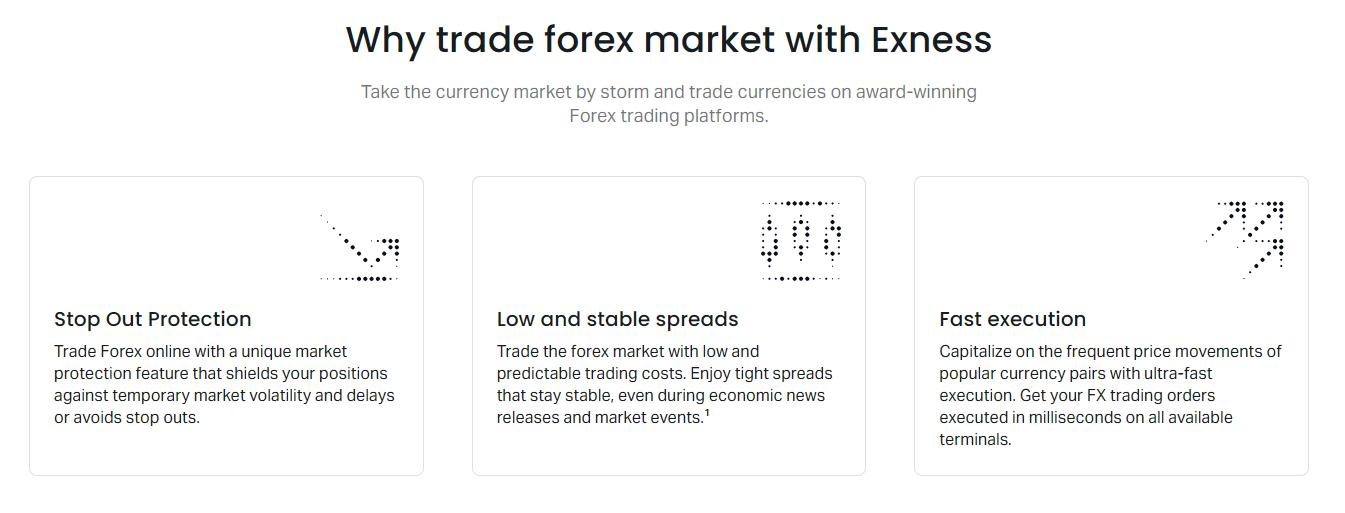
Slippage and requotes are practical cost factors. Exness uses market execution on all account types — no requotes. During high volatility (NFP, CPI, central bank decisions), slippage can occur. The broker publishes execution statistics quarterly, showing average execution speed, slippage distribution, and fill rates. UAE traders can review these reports on the Exness website. In practice, slippage on majors during news is typically 1-3 pips on Standard accounts and 0.5-1.5 pips on Raw Spread. Limit orders and stop-limit orders can mitigate slippage but carry the risk of non-fill.
Customer Support and Local Language Options
Exness provides 24/7 customer support via live chat, email, and phone. Arabic support is available across all channels. Live chat is the fastest route — typical wait time is under a minute during peak hours. The chat interface supports file uploads (screenshots, documents) and conversation history. Email responses usually arrive within a few hours. Phone support includes a UAE toll-free number and international callback request. The support team handles account verification, payment issues, platform troubleshooting, and general trading questions. They do not provide trading advice or signal recommendations.
The help center (knowledge base) is fully translated into Arabic and covers account opening, verification, deposits, withdrawals, platform guides, trading conditions, and partner program details. Articles are practical and include screenshots. For UAE traders who prefer self-service, the help center resolves most common issues. The Exness Trade app also includes an in-app help section with searchable articles and direct chat access. Video tutorials in Arabic are available on the Exness YouTube channel and embedded in the help center.
Response quality is generally consistent. Complex issues — such as payment disputes, verification rejections, or execution complaints — are escalated to specialist teams. Resolution times vary. Traders should keep ticket numbers and follow up if no update within 24 hours. The broker's social media accounts (Twitter/X, Facebook, Instagram) are not official support channels but sometimes respond to public complaints. For formal disputes, the complaints procedure is documented on the website and follows the Seychelles FSA framework.
Exness Partner Program in the UAE
The Exness Partner Program (Introducing Broker / Affiliate) is active in the UAE. Individuals and companies can register as partners, refer clients, and earn commissions based on referred clients' trading volume. The program offers two models: Revenue Share (percentage of spread/commission) and CPA (fixed payment per qualified client). Rates are competitive globally. Partners get a dedicated dashboard, marketing materials in Arabic and English, and a partner manager for high-volume affiliates. Payouts are weekly, with no minimum threshold for most methods.
UAE-based partners should be aware of local regulations regarding financial promotion. The SCA requires licensing for anyone providing investment advice or promoting financial products commercially. Operating as an Exness IB without an SCA license may fall into a regulatory gray area if the activity constitutes financial promotion. Many UAE partners operate as affiliates (sharing links, content) rather than introducing brokers (providing personalized guidance). The distinction matters legally. Exness compliance team can provide general guidance but cannot advise on UAE law.
The partner dashboard shows real-time referred client activity, commissions earned, and conversion metrics. Marketing assets include banners, landing pages, and educational content branded for the partner. Arabic creatives are available. Partners can create sub-IBs (multi-level) to build a network. The program is popular among UAE trading educators, signal providers, and community managers who monetize their audience. However, the market is competitive, and conversion rates depend heavily on the partner's credibility and audience trust.
Partner commissions are paid in USD to the partner's Exness wallet or via bank transfer, crypto, or e-wallet. Withdrawal of partner commissions follows the same methods as trading profits. Tax implications for UAE residents depend on individual circumstances — the UAE has no personal income tax, but partners operating as companies may have corporate tax obligations from June 2023 onward. Partners should consult a local tax advisor. Exness does not withhold tax on partner payments.
Risk Considerations for UAE Traders
Trading forex and CFDs carries substantial risk. The majority of retail clients lose money — Exness publishes this statistic quarterly, typically around 70-80% of accounts are unprofitable over a quarter. High leverage amplifies both gains and losses. The dynamic leverage model at Exness reduces maximum leverage as equity grows, which is a risk management feature, but traders can still lose their entire deposit quickly. UAE traders should only use funds they can afford to lose and should not trade with borrowed money, credit card advances, or funds needed for living expenses.
Market risk is not the only risk. Counterparty risk exists because Exness is the counterparty to all CFD trades (market maker / STP hybrid model). The broker hedges its net exposure with liquidity providers, but during extreme events, execution quality can degrade. The 2015 CHF unpeg and 2020 COVID crash showed how brokers handle — or fail to handle — such scenarios. Exness maintained operations during both events, but spreads widened significantly and some positions were stopped out at worse prices. Negative balance protection prevented debts, but equity was wiped out for overleveraged accounts.
Operational risk includes platform downtime, payment delays, and account restrictions. Exness schedules maintenance windows (usually weekends) and announces them in advance. Unscheduled outages are rare but happen. During outages, positions cannot be modified or closed. Traders with open positions should consider this when holding over weekends or known maintenance windows. Payment delays can occur due to bank processing, blockchain congestion (crypto), or compliance checks. Exness support can expedite but cannot control external networks.
Regulatory risk is specific to the offshore structure. If the Seychelles FSA revokes Exness's license, or if the UAE introduces restrictions on offshore broker access (website blocking, bank transaction bans), UAE traders could face sudden access loss. This has happened in other jurisdictions. Funds in segregated accounts would be protected, but withdrawal processing could be disrupted. Diversifying across brokers with different regulatory homes reduces this concentration risk. Some UAE traders maintain accounts with both Exness and a DFSA-licensed broker for this reason.
Final Assessment of Exness UAE
Exness delivers a functional, low-cost trading experience for UAE residents. The combination of local payment methods, Arabic support, swap-free accounts, and competitive pricing on major instruments makes it a practical choice for many. The Web Terminal and mobile app lower the barrier to entry. The partner program offers a legitimate income stream for those with relevant audiences. These are real strengths, not marketing claims.
The trade-offs are clear. No local regulatory license means no access to UAE investor protections or courts. The Seychelles regulatory framework is lighter than CySEC, FCA, or DFSA. Dynamic leverage reduces maximum leverage as accounts grow, which protects the broker more than the trader. Spreads on Standard accounts are average, not industry-leading. Commission-based accounts require $200 minimum, which excludes some beginners. Withdrawal speed depends heavily on the UAE banking system, not just Exness.
For a UAE trader starting out, the Standard Cent account with a $10-50 deposit is a low-risk way to test live conditions. For active traders doing 20+ lots monthly, Raw Spread or Pro accounts reduce costs meaningfully. For Muslim traders, the genuine swap-free offering across all instruments is a standout feature. For partners, the program is well-structured and pays reliably. The broker is not perfect, but it works as advertised for its core use cases. Traders who understand the regulatory structure, manage risk, and match the account type to their volume will find Exness adequate. Those expecting local regulatory safety nets or guaranteed profits will be disappointed.
Frequently Asked Questions
Is Exness legal in the UAE?
Yes, UAE residents can legally use Exness for personal trading. The broker is not licensed by the SCA or DFSA but operates through its Seychelles entity. UAE law does not prohibit individuals from using offshore brokers for personal investment.
Can I deposit in AED?
Exness accounts are denominated in USD, EUR, or other major currencies. You can deposit via UAE bank transfer or card in AED; the conversion happens at your bank's rate or Exness's internal rate. No AED-denominated accounts are offered.
Does Exness offer Islamic accounts for UAE traders?
Yes. All account types can be switched to swap-free (Islamic) mode with no additional fees, widened spreads, or hidden commissions. The option is available during registration or via support request.
What is the minimum deposit for UAE clients?
$10 for Standard and Standard Cent accounts. $200 for Raw Spread and Zero accounts. $500 for Pro account. Deposits can be made via UAE bank transfer, Visa/Mastercard, e-wallets, or crypto.
How fast are withdrawals to UAE banks?
Exness processes withdrawals instantly for most methods. Card withdrawals take 3-10 business days to appear on your statement. Bank transfers take 1-5 business days. E-wallets and crypto are instant after approval.
Is there an Exness office in Dubai or Abu Dhabi?
No. Exness does not have a physical office in the UAE. All services are provided online with Arabic-speaking support available 24/7 via live chat, email, and phone.
What leverage can I get as a UAE trader?
Dynamic leverage up to 1:2000 for equity under $1,000, stepping down to 1:200 above $30,000 equity. Professional clients under the CySEC entity are capped at 1:500. Maximum leverage is not guaranteed and adjusts automatically.
Can I trade US stocks from the UAE on Exness?
Yes. Exness offers CFDs on major US stocks (Apple, Tesla, Amazon, etc.) with trading hours matching NYSE/NASDAQ (17:30-00:00 UAE time). Leverage on stocks is up to 1:20. Dividend adjustments apply to long positions.