
Forex Broker Reviews
Exness Korea: Trading Conditions and Services for Korean Traders
Everything Korean traders need to know about Exness broker features, regulation, and local support.

Senior Forex Trader & Market Analyst
Daniel Chen is an experienced forex trader and financial market analyst with over 15 years of experience in currency trading. He specializes in technical analysis, risk management, and developing practical trading strategies to help traders make informed decisions.
Exness has established a significant presence among Korean traders since entering the Asian market. The broker offers Korean language support, local payment methods, and trading conditions that appeal to both beginners and experienced market participants in South Korea. This article examines what Exness provides specifically for Korean residents, from account opening through daily trading operations.
Contents
- 1. Regulatory Status for Korean Clients
- 2. Account Types Available to Korean Residents
- 3. Trading Platforms and Technology
- 4. Deposit and Withdrawal Methods for Korea
- 5. Trading Instruments and Market Access
- 6. Spreads, Commissions, and Trading Costs
- 7. Leverage and Margin Requirements
- 8. Customer Support for Korean Users
- 9. Verification and KYC Process
- 10. Partner and IB Program in Korea
- 11. Tax Considerations for Korean Traders
- 12. Advantages and Limitations for Korean Traders
- 13. Comparison with Brokers Popular in Korea
- 14. Opening an Account from Korea
- 15. Risk Management for Korean Market Conditions
- 16. Final Assessment of Exness for Korean Traders
South Korea maintains strict financial regulations through the Financial Services Commission (FSC) and Financial Supervisory Service (FSS). Foreign brokers must navigate these rules carefully. Exness operates under international licenses from CySEC, FCA, and other regulators, accepting Korean clients through its global entities. Korean traders should understand the regulatory framework before committing funds.
The broker's popularity in Korea stems from several factors: low minimum deposits, instant withdrawals on most methods, raw spread accounts with commission-based pricing, and a proprietary mobile app that works well on Korean networks. However, Korean traders face certain limitations compared to users in other jurisdictions, particularly around leverage caps and product availability.
Regulatory Status for Korean Clients
Exness does not hold a license from South Korea's Financial Services Commission. Instead, Korean residents trade through Exness entities regulated by CySEC (Cyprus), FCA (UK), FSA (Seychelles), and CBCS (Curaçao). The specific entity depends on the client's residence and the account type selected. Most Korean retail clients fall under the Seychelles or Curaçao entities, which offer higher leverage but fewer investor protections than European-regulated entities.
This offshore structure means Korean traders do not benefit from Korean investor compensation schemes. The Financial Investment Services and Capital Markets Act restricts domestic financial institutions from soliciting Korean residents for unlicensed foreign brokers. However, individual traders accessing Exness directly through the website generally face no legal barriers. The broker does not actively market in Korea through local advertising or Korean-language seminars, which helps it operate in a regulatory gray area.
Account Types Available to Korean Residents
Korean traders can access all standard Exness account types: Standard, Standard Cent, Pro, Raw Spread, and Zero. The Standard and Standard Cent accounts require only $1 minimum deposit, making them accessible for beginners. Pro, Raw Spread, and Zero accounts require $200 minimum deposits but offer tighter spreads and commission-based pricing suited for higher-volume trading.
The Standard Cent account deserves special mention for Korean beginners. It denominates balances in cents rather than dollars, so a $10 deposit appears as 1,000 cents. This allows meaningful position sizing practice with minimal risk. Spreads on Standard Cent are wider than on Standard accounts, but the psychological benefit of seeing larger account numbers helps new traders manage emotions during early learning phases.
Scroll horizontally to see all columns
| Account Type | Min Deposit | Spread from | Commission | Best For |
|---|---|---|---|---|
| Standard | $1 | 0.3 pips | None | Beginners, low capital |
| Standard Cent | $1 | 0.3 pips | None | Micro position practice |
| Pro | $200 | 0.1 pips | None | Experienced traders |
| Raw Spread | $200 | 0.0 pips | $3.5/lot/side | Scalpers, high volume |
| Zero | $200 | 0.0 pips | $3.5/lot/side | Major pairs focus |
Islamic swap-free accounts are available for all account types. Korean Muslim traders can request this option during registration or through support. No additional fees replace swaps; the broker simply removes overnight financing charges. This applies to forex, metals, energies, and indices, though some crypto instruments may still carry fees.
Trading Platforms and Technology
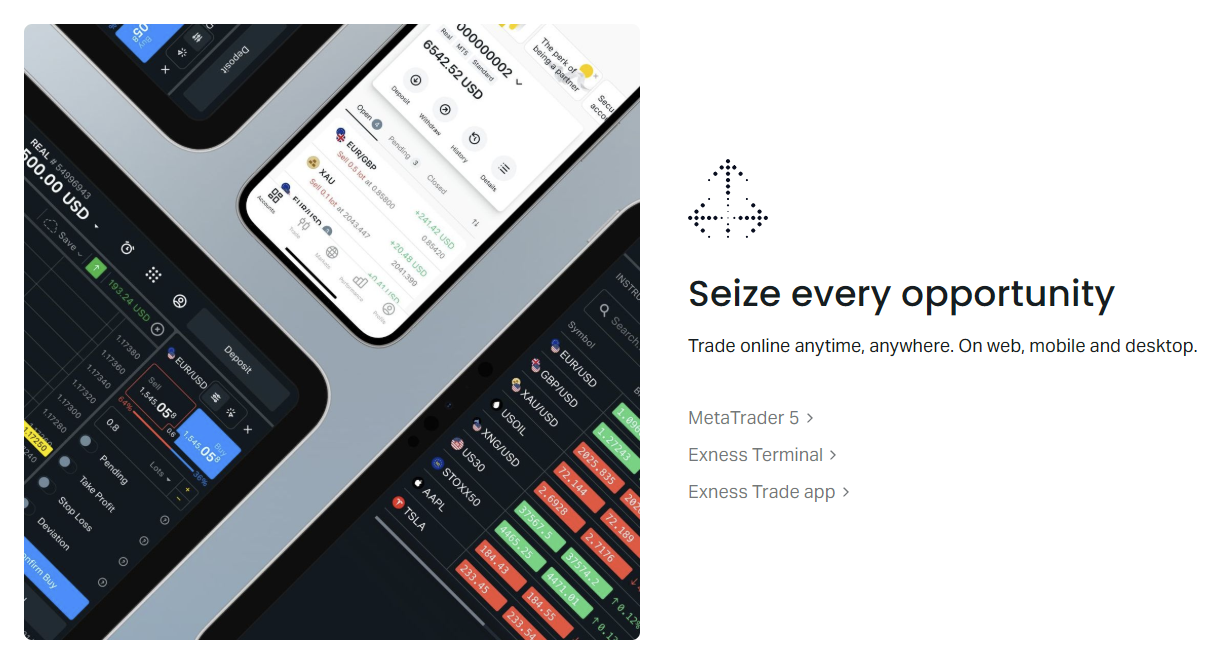
Korean traders access four main platforms: MetaTrader 4, MetaTrader 5, Exness Web Terminal, and the Exness Trade mobile app. All platforms support Korean language interfaces. MT4 remains popular for its extensive expert advisor ecosystem and familiar interface. MT5 adds more timeframes, order types, and an economic calendar. The Web Terminal requires no installation and works through any modern browser, useful for Korean traders using workplace computers where software installation is restricted.
The Exness Trade app deserves attention. It provides full account management, deposits, withdrawals, and trading from a single Korean-language interface. The app includes built-in Trading Central signals, economic calendar, and market news. Korean users report stable performance on both domestic Wi-Fi and 5G networks. Push notifications for price alerts and margin calls work reliably through Korean carriers.
VPS hosting is available free for clients meeting volume requirements (typically 5 lots monthly on Pro/Raw Spread/Zero accounts). The VPS runs in Equinix data centers with low latency to Exness trade servers. Korean algorithmic traders benefit from reduced latency compared to home connections, especially during Asian session news events.
Deposit and Withdrawal Methods for Korea
Exness supports several payment methods convenient for Korean residents. Domestic bank transfer via local Korean banks processes in Korean won, avoiding currency conversion fees. Major banks like KB Kookmin, Shinhan, Woori, and Hana Bank work reliably. Processing typically takes 1-3 business hours during Korean banking hours. Minimum deposit is $10 equivalent for bank transfers.
Credit and debit cards (Visa, Mastercard, JCB) process instantly with no fees from Exness. Korean-issued cards work without issues. E-wallets include Skrill, Neteller, and Perfect Money. These process instantly but may carry fees from the wallet provider. Cryptocurrency deposits (USDT, BTC, ETH) are also accepted with blockchain confirmation times. Exness does not charge deposit fees on any method.
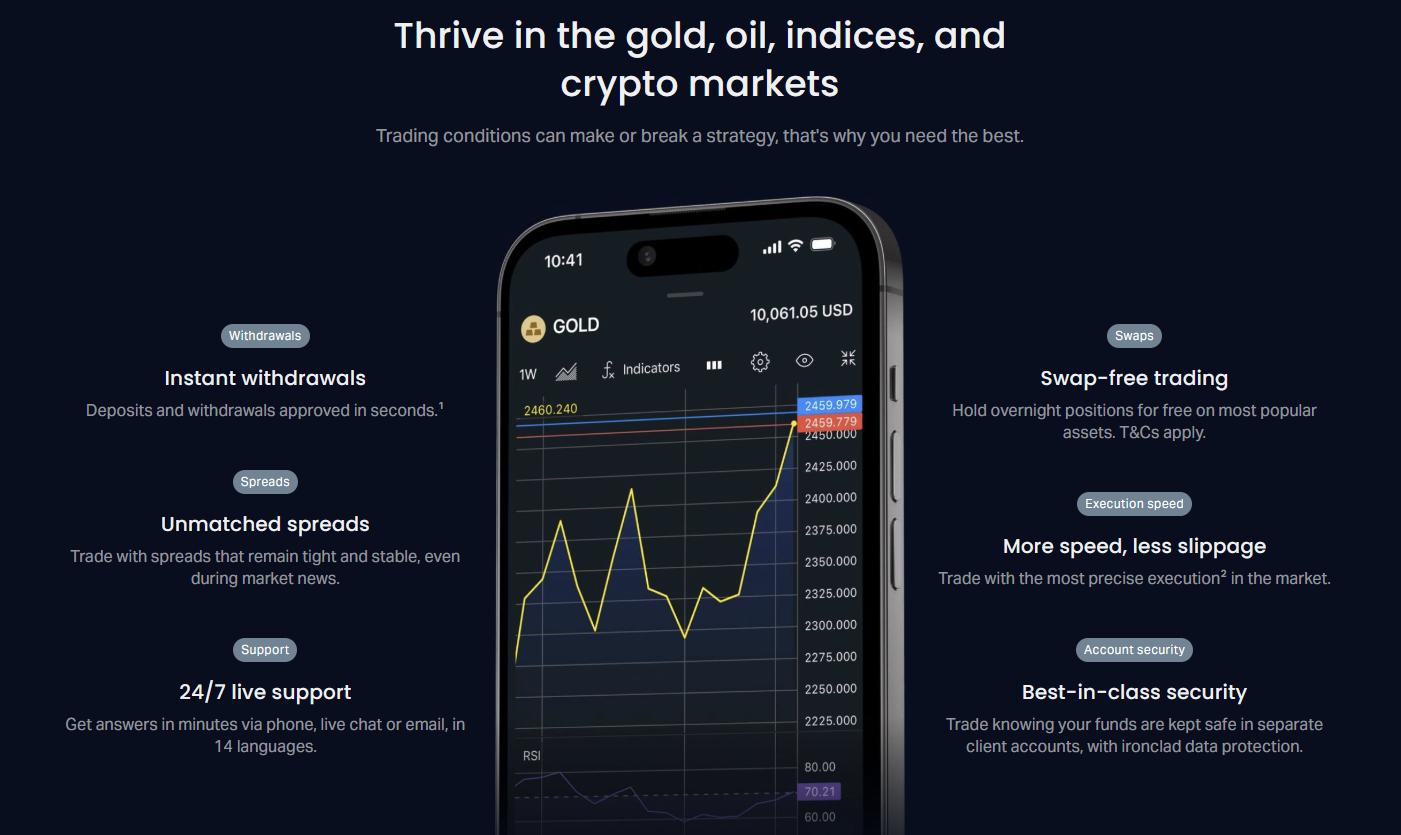
Withdrawals follow the same methods. Exness promotes instant withdrawals, and Korean users confirm most e-wallet and crypto withdrawals complete within minutes. Bank transfers take 1-3 business days. Card refunds can take 5-10 business days depending on the issuing bank. No withdrawal fees apply from Exness side, though intermediary banks may deduct fees on international transfers.
Scroll horizontally to see all columns
| Method | Deposit Time | Withdrawal Time | Min Deposit | Fees |
|---|---|---|---|---|
| Korean Bank Transfer | 1-3 hours | 1-3 business days | $10 | None from Exness |
| Visa/Mastercard/JCB | Instant | 5-10 business days | $10 | None from Exness |
| Skrill/Neteller | Instant | Instant | $10 | Wallet fees may apply |
| USDT/BTC/ETH | Blockchain confirm | Blockchain confirm | $10 | Network fees only |
| Perfect Money | Instant | Instant | $10 | Wallet fees may apply |
Trading Instruments and Market Access
Korean traders access over 100 currency pairs including majors, minors, and exotics. Major pairs like EURUSD, GBPUSD, USDJPY offer the tightest spreads. USDKRW is not offered as a spot forex pair, which disappoints some Korean traders wanting direct won exposure. However, USDKRW exposure can be synthesized through USDJPY and JPYKRW crosses, though JPYKRW liquidity is limited.
CFDs on indices include KOSPI 200, giving Korean traders direct access to their domestic equity benchmark. Other Asian indices available: Nikkei 225, Hang Seng, China A50, Taiwan Weighted, and Singapore MSCI. US indices (S&P 500, Nasdaq 100, Dow Jones) and European indices (DAX, FTSE 100, CAC 40) round out the offering. Index CFDs trade with leverage up to 1:200 on professional accounts.
Commodities include gold (XAUUSD), silver (XAGUSD), Brent and WTI crude oil, natural gas, and palladium/platinum. Gold trading is particularly popular among Korean traders as a hedge against won volatility. Crypto CFDs cover Bitcoin, Ethereum, Litecoin, Ripple, Bitcoin Cash, and several altcoins. Crypto trades 24/7 with leverage up to 1:100 on professional accounts, though spreads widen significantly during weekend hours.
Spreads, Commissions, and Trading Costs
Spreads vary by account type and instrument. On Raw Spread and Zero accounts, EURUSD averages 0.0-0.1 pips with $3.5 per lot per side commission. This equals roughly 0.7 pips total cost, competitive with other brokers serving Korea. Standard accounts show EURUSD around 0.8-1.2 pips all-in with no commission. During Asian session hours, spreads on yen pairs and Asian indices tighten considerably.
Swap rates follow standard institutional calculations. Long positions on high-yield currencies earn swaps; short positions pay. Korean traders holding positions overnight should check the swap calculator in the personal area. Triple swaps apply Wednesday-Thursday rollover. Islamic accounts eliminate swaps entirely. No hidden fees exist for inactivity, account maintenance, or platform access.
Scroll horizontally to see all columns
| Pair | Standard Spread | Raw Spread + Commission | Zero Spread + Commission | Session |
|---|---|---|---|---|
| EURUSD | 1.0 pips | 0.7 pips equivalent | 0.7 pips equivalent | All sessions |
| USDJPY | 1.2 pips | 0.8 pips equivalent | 0.8 pips equivalent | Asian/London |
| GBPUSD | 1.5 pips | 1.0 pips equivalent | 1.0 pips equivalent | London/NY |
| AUDUSD | 1.3 pips | 0.9 pips equivalent | 0.9 pips equivalent | Asian |
| USDKRW (synthetic) | N/A | N/A | N/A | Not offered |
Leverage and Margin Requirements
Leverage for Korean clients depends on the regulating entity. Under the Seychelles entity (most common for Korean retail), forex leverage reaches 1:2000 on Standard and Pro accounts for balances under $1,000. Leverage steps down as equity grows: 1:2000 under $1K, 1:1000 up to $5K, 1:500 up to $30K, 1:200 above $30K. Raw Spread and Zero accounts cap at 1:200 regardless of balance. Indices max at 1:200, commodities at 1:200, crypto at 1:100.
Margin calls occur at 60% margin level; stop-out executes at 0% margin level. This aggressive stop-out level means positions close only when equity reaches zero, giving trades maximum room but risking negative balance. Exness offers negative balance protection, so accounts cannot go below zero. Korean traders should still use proper position sizing rather than relying on high leverage.
Customer Support for Korean Users
Exness provides 24/7 customer support in Korean through live chat, email, and callback requests. The Korean support team operates from the broker's Asian hubs. Response times on live chat average under 2 minutes during Korean business hours (9 AM - 6 PM KST). Outside these hours, English-speaking agents handle queries with translation assistance. Phone support is not offered for Korean numbers.
The help center includes Korean-language articles covering account opening, verification, deposits, withdrawals, platform guides, and trading conditions. Video tutorials in Korean cover MT4/MT5 basics, mobile app usage, and risk management. The personal area dashboard displays in Korean, including all transaction history, trading reports, and tax statements.
Korean support quality exceeds many brokers claiming Asian focus. Agents understand local banking nuances and don't rely on translation software.
Verification and KYC Process
Korean residents complete standard KYC: government-issued ID (Korean resident registration card, passport, or driver's license) and proof of address (utility bill, bank statement, or government letter within 3 months). Documents upload through the personal area. Verification typically completes within 2-4 hours during Korean business hours. Unverified accounts can deposit and trade but cannot withdraw.
Source of funds verification may trigger for deposits exceeding $10,000 cumulative. Exness requests bank statements showing income source. This complies with international AML standards. Korean traders should prepare salary slips, business registration documents, or investment account statements if planning large deposits. The process is straightforward but cannot be bypassed.
Partner and IB Program in Korea
Exness operates an Introducing Broker (IB) program accessible to Korean residents. Partners earn commissions from referred clients' trading volume. Commission rates vary by account type: up to $15 per lot on Standard, up to $20 per lot on Pro, and up to 40% of spread revenue on Raw Spread/Zero accounts. Payments process daily to partner accounts with no minimum threshold.
Korean partners receive marketing materials in Korean, a dedicated partner portal, and sub-IB functionality for building multi-level networks. The program suits Korean financial educators, trading community leaders, and signal providers. No exclusive territory restrictions apply; multiple IBs can operate in Korea simultaneously.
Scroll horizontally to see all columns
| Account Type | Commission per Lot | Payment Frequency | Min Payout |
|---|---|---|---|
| Standard | Up to $15 | Daily | No minimum |
| Standard Cent | Up to $15 | Daily | No minimum |
| Pro | Up to $20 | Daily | No minimum |
| Raw Spread | Up to 40% spread share | Daily | No minimum |
| Zero | Up to 40% spread share | Daily | No minimum |
Tax Considerations for Korean Traders
South Korea taxes forex trading profits as financial investment income. Since 2023, financial investment income exceeding 50 million KRW annually faces 20% tax (22% including local tax). Losses offset gains within the same tax year. Exness provides annual trading statements but does not withhold Korean taxes. Traders must self-report to the National Tax Service. Consult a Korean tax accountant familiar with overseas forex income.
Crypto CFD profits may fall under different tax treatment. The Korean government has proposed 20% tax on crypto gains exceeding 2.5 million KRW, though implementation timelines shift. Forex and CFD profits remain under financial investment income rules. Keep detailed records of all deposits, withdrawals, and trade history for accurate reporting.
Advantages and Limitations for Korean Traders
Key advantages: Korean language support across platforms and support channels, local bank transfer deposits in won, instant withdrawals on e-wallets and crypto, competitive raw spread pricing, high leverage options for small accounts, free VPS for qualifying volumes, and a capable mobile app optimized for Korean networks. The broker's execution quality ranks well in independent tests, with minimal slippage on major pairs during normal conditions.
Notable limitations: No FSC license means no domestic investor protection, USDKRW pair unavailable, leverage restrictions kick in at relatively low equity thresholds, no phone support for Korean numbers, professional account classification requires meeting strict criteria, and some promotional bonuses available in other regions are excluded for Korean residents due to regulatory constraints.
The lack of USDKRW is the single biggest gap for Korean traders. Synthetic exposure through crosses works but adds spread cost and complexity.
Comparison with Brokers Popular in Korea
Compared to other brokers serving Korean traders, Exness sits between pure offshore brokers and locally licensed firms. Local Korean securities firms (Kiwoom, Samsung, Mirae Asset) offer domestic stock trading with FSC protection but limited forex/CFD products and higher costs. Other international brokers like IC Markets, Pepperstone, and XM offer similar offshore access. Exness differentiates through instant withdrawals, lower minimum deposits, and superior Korean-language mobile experience.
IC Markets offers tighter raw spreads on average but requires $200 minimum deposit and lacks Korean bank transfer deposits. Pepperstone provides excellent execution and ASIC regulation (stronger than Exness Seychelles) but no Korean language support. XM matches Exness on Korean support and low minimums but has slower withdrawal processing. Each broker presents trade-offs; Korean traders should test demo accounts across several before committing.
Scroll horizontally to see all columns
| Feature | Exness | IC Markets | Pepperstone | XM |
|---|---|---|---|---|
| Korean Language | Full support | Limited | None | Full support |
| Korean Bank Transfer | Yes | No | No | Yes |
| Min Deposit | $1 | $200 | $200 | $5 |
| Instant Withdrawal | Yes (most methods) | No | No | Partial |
| Regulation Tier | Offshore (primary) | ASIC + CySEC | ASIC + FCA | CySEC + ASIC |
Opening an Account from Korea
Account opening takes 5-10 minutes. Visit the Exness website, select Korean language, click 'Register,' and enter email, password, and country (South Korea). Choose account type: Standard for beginners, Raw Spread/Zero for experienced traders. Complete email verification. Log into the personal area, upload ID and address documents for verification. Once verified, deposit via preferred method and download platforms.
Demo accounts open instantly without verification. Use them to test platforms, practice Korean-language interface navigation, and verify deposit/withdrawal flows with small amounts. The demo environment mirrors live conditions including spreads, execution speed, and swap rates. Korean traders should spend at least 2-4 weeks on demo before live trading, especially if new to forex or CFDs.
Risk Management for Korean Market Conditions
Korean traders face unique market timing considerations. The Asian session (9 AM - 6 PM KST) overlaps with Tokyo, Sydney, and Singapore sessions. Liquidity peaks during Tokyo-London overlap (9 AM - 12 PM KST) and London-New York overlap (10 PM - 1 AM KST). Spreads tighten during overlaps; widen during lunch hours (12 PM - 1 PM KST) and late night (2 AM - 6 AM KST). News from Bank of Korea, US Fed, and BOJ create volatility spikes.
Won volatility correlates with USD strength, semiconductor cycle, and geopolitical tension. Korean traders holding USD-denominated accounts face currency risk on profits/losses when converting back to won. Some hedge by maintaining won-denominated bank accounts for living expenses while keeping trading capital in USD. Exness does not offer KRW-denominated trading accounts.
Trading forex from Korea means managing two currencies: the pair you trade and the won you live in. Ignoring KRW/USD moves distorts real returns.
Frequently Asked Questions
Is Exness legal for Korean residents to use?
Yes, Korean residents can legally access Exness through its international entities. The broker does not hold an FSC license, so Korean investor protections do not apply.
Can I deposit Korean won directly to Exness?
Yes, domestic bank transfers in KRW are supported. Exness converts to USD at competitive rates. Minimum deposit is $10 equivalent.
Does Exness offer USDKRW trading pair?
No, USDKRW is not available as a spot forex pair. Korean traders synthesize won exposure through USDJPY and other crosses.
What leverage can Korean traders access?
Up to 1:2000 on Standard/Pro accounts under $1,000 equity, stepping down at higher balances. Raw Spread/Zero accounts cap at 1:200.
How fast are withdrawals for Korean bank transfers?
1-3 business days. E-wallet and crypto withdrawals process instantly. Card refunds take 5-10 business days.
Is Korean language support available 24/7?
Live chat in Korean operates during Korean business hours (9 AM - 6 PM KST). Outside these hours, English agents assist with translation.
Do I pay Korean taxes on Exness profits?
Yes, forex profits are taxable as financial investment income in Korea. Excess over 50 million KRW annually faces 20% tax plus 2% local tax. Self-reporting required.
Can I become an Exness IB from Korea?
Yes, the IB program accepts Korean residents. Commissions pay daily with no minimum threshold. Marketing materials available in Korean.
Final Assessment of Exness for Korean Traders
Exness delivers a solid package for Korean traders who accept offshore regulation. The Korean-language ecosystem — platforms, support, personal area, and mobile app — exceeds most competitors. Instant withdrawals, $1 minimum deposits, and raw spread pricing address practical pain points. The missing USDKRW pair and lack of FSC oversight are the main drawbacks. Traders prioritizing regulatory protection should consider ASIC or FCA-regulated alternatives, though they sacrifice Korean language support and local payment convenience. For active Korean traders comfortable with offshore structures, Exness remains a pragmatic choice worth testing on demo first.