

Forex Trading Costs
Exness Swap Rates: Complete Guide to Rollover Fees
Detailed breakdown of swap rates, triple Wednesday swaps, Islamic accounts, and practical cost management for Exness traders.

Senior Forex Trader & Market Analyst
Daniel Chen is an experienced forex trader and financial market analyst with over 15 years of experience in currency trading. He specializes in technical analysis, risk management, and developing practical trading strategies to help traders make informed decisions.
Swap charges sit quietly in the background of every forex trade held past the daily rollover point. Most traders notice them only when a position stays open for several days and the accumulated cost starts to appear in the account statement. Exness applies swap rates across its full instrument range — forex pairs, metals, energies, indices, stocks, and cryptocurrencies — and the exact amount depends on the account type, the instrument, and the direction of the trade.
Contents
- 1. What Swap Means in Forex and CFD Trading
- 2. How Exness Calculates Swap Rates
- 3. Swap Differences Across Exness Account Types
- 4. Swap-Free and Islamic Accounts at Exness
- 5. Wednesday Triple Swap and Weekend Rollover
- 6. Swap Rates by Instrument Category
- 7. Finding Current Swap Rates on Exness Platforms
- 8. Practical Swap Cost Examples
- 9. Managing Swap Costs in Your Trading Plan
- 10. Swap vs Commission vs Spread: The Total Cost Picture
- 11. Using the Exness Trading Calculator for Swap Estimates
- 12. Common Misconceptions About Exness Swap
- 13. Swap and Automated Trading Systems
- 14. Regulatory and Tax Considerations
- 15. Final Assessment of Exness Swap
This guide walks through how Exness calculates swap, where to find current rates, how they differ between Standard and Professional accounts, what happens on Wednesdays, and when a swap-free account makes sense. It also covers the built-in calculator that lets you estimate the cost before you enter a position.
If you trade short-term and close everything before the server day ends, swap rarely matters. For swing traders, carry traders, or anyone holding positions over weekends, it becomes a real line item in the trading budget. Understanding the mechanics helps you decide whether to adjust position sizing, switch account types, or simply factor the cost into your risk calculations.
What Swap Means in Forex and CFD Trading
Swap — also called rollover — is the interest differential between the two currencies in a forex pair, or the financing cost for holding a CFD position overnight. When you keep a trade open past the broker's rollover time (typically 22:00 or 23:00 server time), the position is technically closed and reopened for the next value date. The broker applies a credit or debit based on the interest rate gap between the two currencies, plus a markup.
For a long position on EURUSD, you are effectively borrowing USD to buy EUR. If the EUR interest rate is higher than the USD rate, you receive a small credit. If it is lower, you pay a debit. Most major pairs currently carry a negative swap on both sides because central bank rates are close and the broker's markup exceeds the raw differential. Exness publishes these rates daily in the contract specifications and in the trading platforms.
CFDs on metals, energies, indices, stocks, and crypto do not have an underlying interest rate pair. Instead, the swap reflects the cost of financing the leveraged exposure. Exness calculates it using a reference rate (such as SOFR or ESTR) plus a markup, adjusted for the instrument's currency and the trade direction. The result is almost always a debit for both long and short positions on non-forex instruments.
How Exness Calculates Swap Rates
Exness uses a points-based formula. The swap value shown in the platform is expressed in points per lot per night. To convert that into account currency, the platform multiplies the points by the pip value for the instrument and the number of lots. The formula is: Swap = (Swap Points × Pip Value × Lots) / 10. For a standard lot of EURUSD where one pip equals $10, a swap of -0.5 points means -$0.50 per night.
The points themselves come from the interbank swap curve for forex pairs. Exness takes the tom-next (tomorrow-next) swap rate from its liquidity providers, adds its markup, and converts the result into points. For metals and other CFDs, the calculation uses the relevant benchmark rate plus a fixed markup defined in the contract specifications. The markup varies by account type — Raw Spread and Zero accounts typically have lower swap markups than Standard accounts because the broker earns its revenue primarily from commissions on those accounts.
You do not need to calculate this manually. The MetaTrader 4 and 5 terminals show the current swap long and swap short values in the contract specification window (right-click a symbol → Specification). The Exness Web Terminal and mobile app display the same data. The Exness trading calculator on the website also returns the estimated overnight cost for any position size and instrument.
The calculator is especially useful when comparing the cost of holding a position across different account types. A 0.1 lot position on EURUSD might cost $0.05 per night on a Raw Spread account and $0.08 on a Standard account. Over two weeks that difference adds up, particularly if you run multiple positions simultaneously.
Swap Differences Across Exness Account Types
Exness offers Standard, Standard Cent, Pro, Raw Spread, and Zero accounts. The swap points for a given instrument are not identical across all of them. Standard and Standard Cent accounts generally carry higher swap points because the broker's compensation is built entirely into the spread and swap markup. Pro accounts sit in the middle. Raw Spread and Zero accounts, which charge a commission per lot, tend to have the lowest swap points — sometimes significantly lower.
For example, on a typical day the swap long for EURUSD might be -8.5 points on Standard, -7.2 on Pro, and -5.8 on Raw Spread. The swap short follows a similar pattern. The difference reflects the broker's markup policy. If you hold positions for weeks, the lower swap on a commission-based account can offset part of the commission cost. The trade-off is that you pay commission on every round turn, so the calculation depends on your holding period and trade frequency.
Standard Cent accounts use the same swap points as Standard accounts but the pip value is 100 times smaller (since 1 lot = 1,000 units instead of 100,000). This means the monetary swap cost per cent lot is negligible, which is intentional — cent accounts are designed for low-stakes practice and micro position sizing.
Swap-Free and Islamic Accounts at Exness
Exness provides swap-free accounts for clients who cannot receive or pay interest for religious reasons. These accounts are available to residents of certain countries automatically, and other clients can request them through support. On a swap-free account, no rollover debit or credit is applied to forex pairs, metals, energies, indices, or stocks. Cryptocurrency CFDs are excluded — swap still applies to crypto positions even on swap-free accounts.
The broker compensates for the lost swap revenue by charging a fixed commission per lot on swap-free accounts. The commission varies by instrument and is shown in the contract specification. For major forex pairs it is typically around $3–$5 per lot per side, which replaces the variable swap cost. For a trader holding a position for many nights, the fixed commission can be cheaper than accumulating daily swap debits. For short-term holders, it may be more expensive.
There is a condition: if a swap-free account shows trading patterns that suggest abuse — such as opening and closing positions solely to avoid swap while capturing price movements — Exness reserves the right to revoke the swap-free status and apply standard swap rates retroactively. Normal swing trading or position trading does not trigger this. The policy targets systematic arbitrage of the swap-free feature.
Wednesday Triple Swap and Weekend Rollover
The forex market settles on a T+2 basis. A trade opened on Monday settles Wednesday. A trade opened Wednesday settles Friday. A trade opened Thursday settles Monday — skipping the weekend. To account for the two extra days of financing (Saturday and Sunday), brokers apply a triple swap charge on Wednesday rollover. Exness follows this convention.
If you hold a position through the Wednesday server-time rollover, the swap debit or credit is three times the normal daily amount. This applies to all instruments that use the standard rollover schedule. Some CFDs on futures-based instruments (certain indices or commodities) may follow a different schedule depending on the underlying exchange calendar, but for spot forex, metals, and most indices, Wednesday is the triple-swap day.
Traders who are unaware of this often see a larger-than-expected charge on Thursday morning and assume an error. It is not an error. The triple swap is standard industry practice. If you want to avoid it, close the position before the Wednesday rollover time and reopen after. That incurs two spreads (or commissions) instead of the triple swap. Whether that saves money depends on the instrument's spread and the current swap rate.
Scroll horizontally to see all columns
| Trade Open Day | Settlement Day | Swap Applied | Notes |
|---|---|---|---|
| Monday | Wednesday | 1× | Normal rollover |
| Tuesday | Thursday | 1× | Normal rollover |
| Wednesday | Friday | 3× | Covers weekend financing |
| Thursday | Monday | 1× | Weekend skipped |
| Friday | Tuesday | 1× | Normal rollover |
The table above assumes the standard T+2 settlement. Holiday schedules can shift the triple-swap day. Exness publishes a trading hours and rollover calendar each year showing adjusted dates for major holidays like Christmas and New Year when liquidity providers change their settlement calendars.
Swap Rates by Instrument Category
Forex pairs are the only instruments where swap can be positive on one side. On most major pairs today, both long and short swaps are negative because the interest rate differential is smaller than the broker's markup. Exotic pairs with wide rate gaps (such as USDTRY or USDMXN) may still show a positive swap on the high-yield currency side. Exness updates these daily.
Metals (gold, silver, platinum, palladium) carry negative swap on both long and short positions. The cost reflects the financing of the leveraged exposure plus the cost of carry for the physical metal (storage, insurance). Gold swap is typically the highest among metals because of its notional value per lot.
Energies (WTI, Brent, natural gas) also show negative swap both ways. The rates are influenced by the futures curve structure (contango or backwardation) and the broker's financing markup. Indices and stocks are similar — negative both sides, based on the benchmark rate plus markup.
Cryptocurrency CFDs have the highest swap costs on the platform. The volatility and 24/7 market structure mean financing costs are significant. Swap on BTCUSD, ETHUSD, and other crypto pairs can be several times higher than on forex majors per unit of notional value. This makes holding crypto CFDs overnight expensive and is a key reason many crypto traders on Exness use intraday strategies or the swap-free option (though crypto is excluded from swap-free).
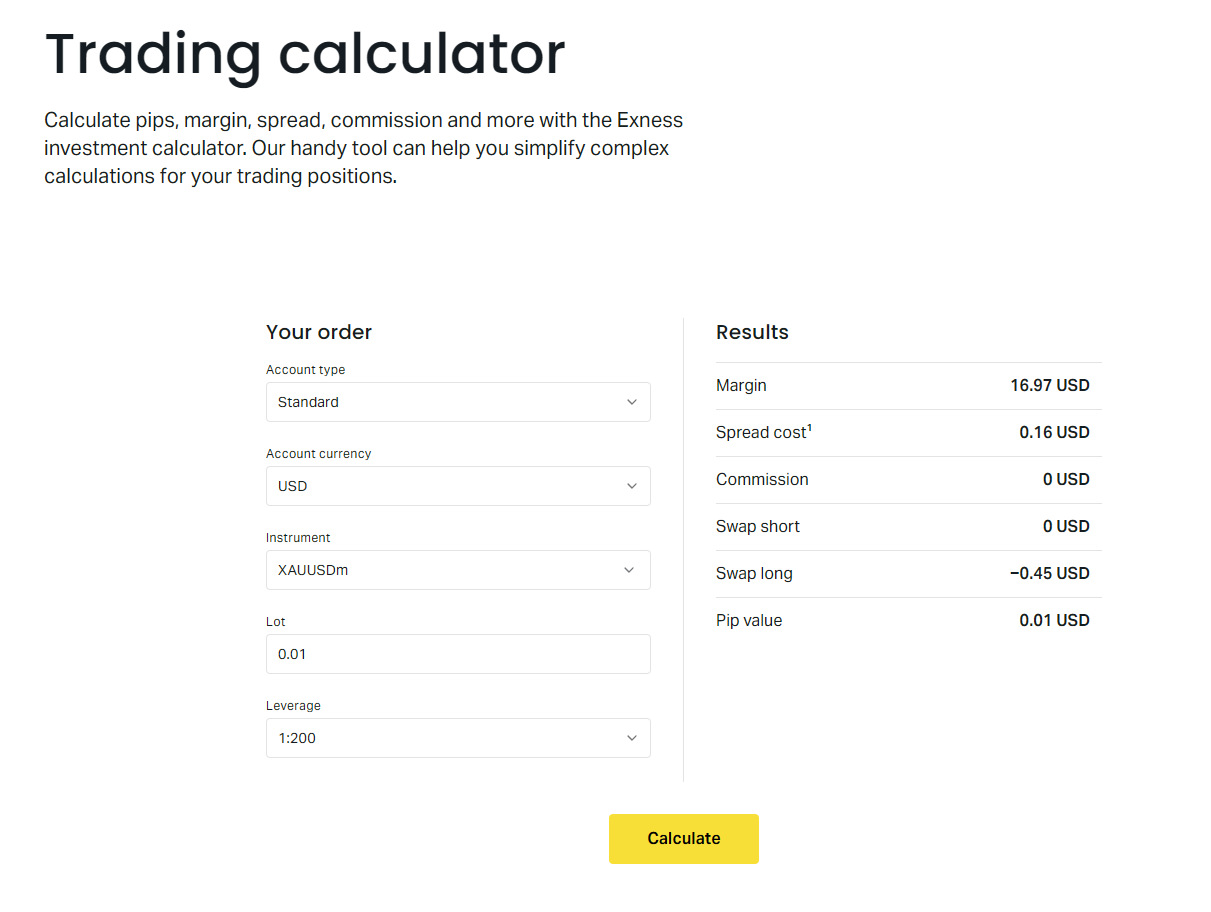
The Exness trading calculator lets you select any instrument, account type, position size, and direction to see the exact swap per night in your account currency. It also shows the triple-swap Wednesday amount. This is the fastest way to compare holding costs across instruments without opening the contract specification for each one.
Finding Current Swap Rates on Exness Platforms
Every Exness platform surfaces swap rates in the contract specification. In MetaTrader 4 or 5, right-click any symbol in Market Watch and choose Specification. The fields Swap Long and Swap Short show the current points per lot. In the Exness Web Terminal, click the information icon next to the instrument name. The mobile app has a similar detail view under each trading pair.
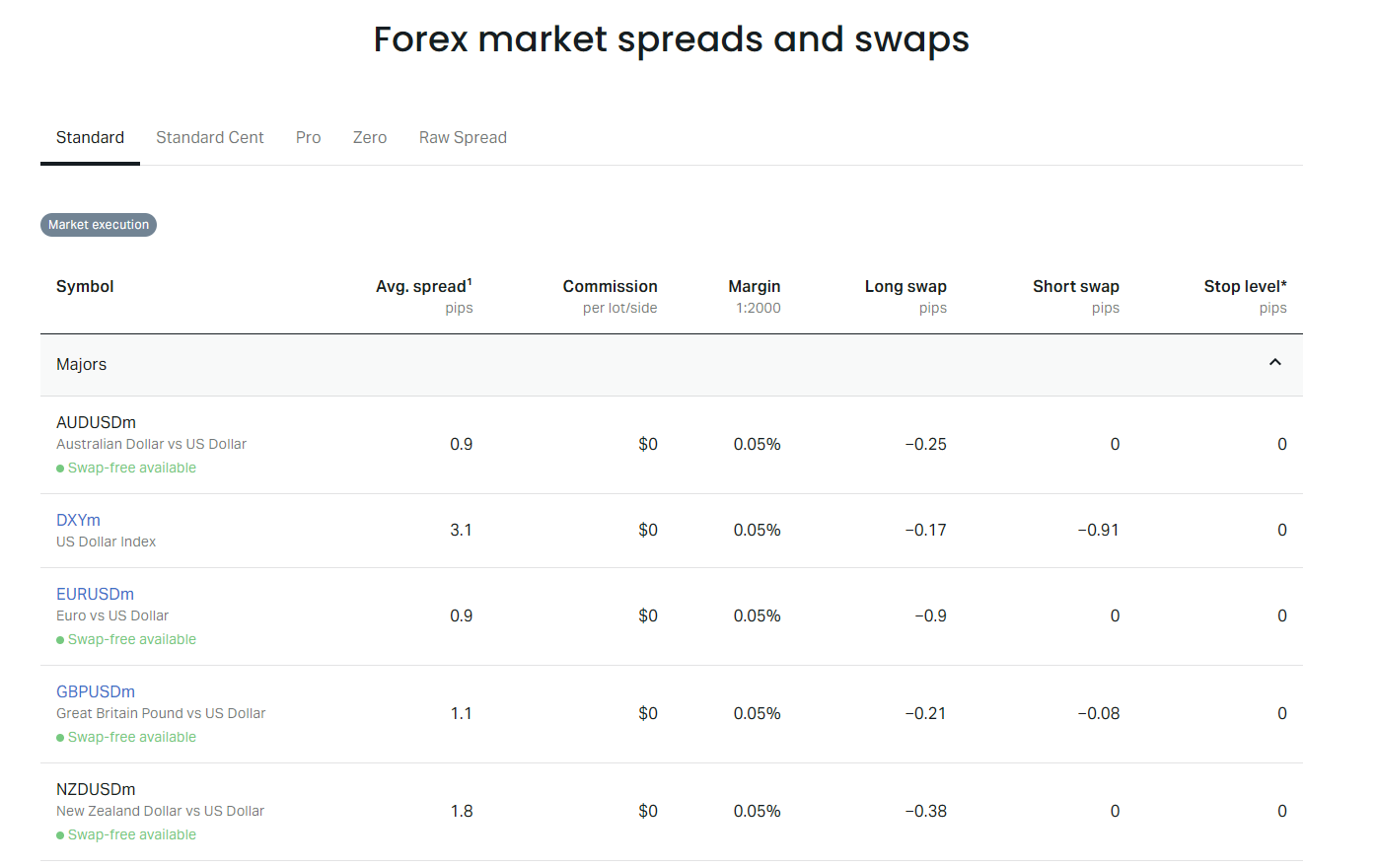
The Exness website also publishes a Swaps and Spreads page that lists current values for all instruments in a table. This page updates daily and is useful for quick comparison without logging into a terminal. The values shown there match what the platforms display for the Standard account type. For Pro, Raw Spread, or Zero accounts, you must check the specification inside the terminal logged into that account type.
Swap rates change daily for forex pairs because the underlying tom-next rates move with central bank policy and interbank liquidity. For CFDs on metals, energies, indices, and stocks, the rates are more stable but still adjust when benchmark rates change or when the futures curve shifts. Crypto swap rates can change intraday during periods of extreme volatility.
Practical Swap Cost Examples
Let's walk through three realistic scenarios using typical recent rates. All examples assume a Standard account and USD-denominated account currency.
Scenario 1: Long 0.5 lots EURUSD. Swap long = -8.5 points. Pip value for 0.5 lots = $5 per pip. Nightly cost = (-8.5 × $5) / 10 = -$4.25. Held for 10 nights (including one Wednesday) = 8 normal nights + 1 triple night = 11 single-night equivalents. Total = 11 × $4.25 = $46.75.
Scenario 2: Short 1 lot XAUUSD (gold). Swap short = -25 points. Pip value for 1 lot gold = $1 per pip (0.1 price move = 1 pip). Nightly cost = (-25 × $1) / 10 = -$2.50. Held for 14 nights (two Wednesdays) = 10 normal + 2 triple = 16 single-night equivalents. Total = 16 × $2.50 = $40.00.
Scenario 3: Long 2 lots US30 (Dow Jones index). Swap long = -12 points. Pip value for 2 lots = $2 per point (index CFDs typically 1 point = $1 per lot). Nightly cost = (-12 × $2) / 10 = -$2.40. Held for 5 nights (no Wednesday) = 5 × $2.40 = $12.00.
These examples show that swap is rarely the dominant cost for a single position held a week or two. But a portfolio of five to ten positions held for a month can accumulate hundreds of dollars in swap charges. That is money that directly reduces net profit or increases net loss. Traders who ignore it often wonder why their backtested strategy underperforms in live trading.
Managing Swap Costs in Your Trading Plan
The first step is awareness. Add a swap estimate column to your trade journal or position tracker. For each open position, note the current swap per night and the number of nights held. Sum the column daily. This makes the cost visible rather than hidden in the account equity curve.
If swap is eating a meaningful portion of your expected profit, consider these adjustments:
- Reduce position size on high-swap instruments (crypto, exotics, gold)
- Switch to a Raw Spread or Zero account if you hold positions longer than a few days
- Close positions before Wednesday rollover and reopen after if the spread cost is less than the triple swap
- Use the swap-free account if eligible and the fixed commission is lower than projected swap
- Favor instruments with lower swap rates for longer-term setups
- Incorporate swap into your risk-reward calculation before entry
Carry traders — those who deliberately seek positive swap — face a different challenge. With most major pairs negative both ways, genuine positive carry opportunities are rare. They exist mainly in exotic pairs with high interest rate differentials, but those pairs also carry wider spreads, higher volatility, and greater liquidity risk. Exness offers a range of exotics, but the swap markup often erases the theoretical carry advantage. Check the net swap after markup before building a carry strategy.
Swap is the silent drag on swing trades. It does not show up in backtests that assume zero overnight cost, and it does not appear in the P/L until the position closes or the daily statement arrives.
Swap vs Commission vs Spread: The Total Cost Picture
Exness offers two broad pricing models: spread-only (Standard, Standard Cent, Pro) and commission-plus-raw-spread (Raw Spread, Zero). Swap exists in both models but at different levels. To compare fairly, you need to look at the total cost of a round-trip trade held for a specific duration.
Take a 1 lot EURUSD trade held for 5 nights. On a Standard account: spread ~1.0 pip ($10), commission $0, swap ~5 nights × $0.85 = $4.25. Total = $14.25. On a Raw Spread account: spread ~0.1 pip ($1), commission $3.50 per side = $7, swap ~5 nights × $0.58 = $2.90. Total = $10.90. The Raw Spread account is cheaper in this example despite the commission, because the lower spread and lower swap more than offset it.

Now hold the same trade for 30 nights. Standard: spread $10 + swap 30 × $0.85 = $25.50 → $35.50. Raw Spread: spread $1 + commission $7 + swap 30 × $0.58 = $17.40 → $25.40. The gap widens. For very short holds (intraday), the commission model costs more because you pay commission but almost no swap. For longer holds, the commission model usually wins.
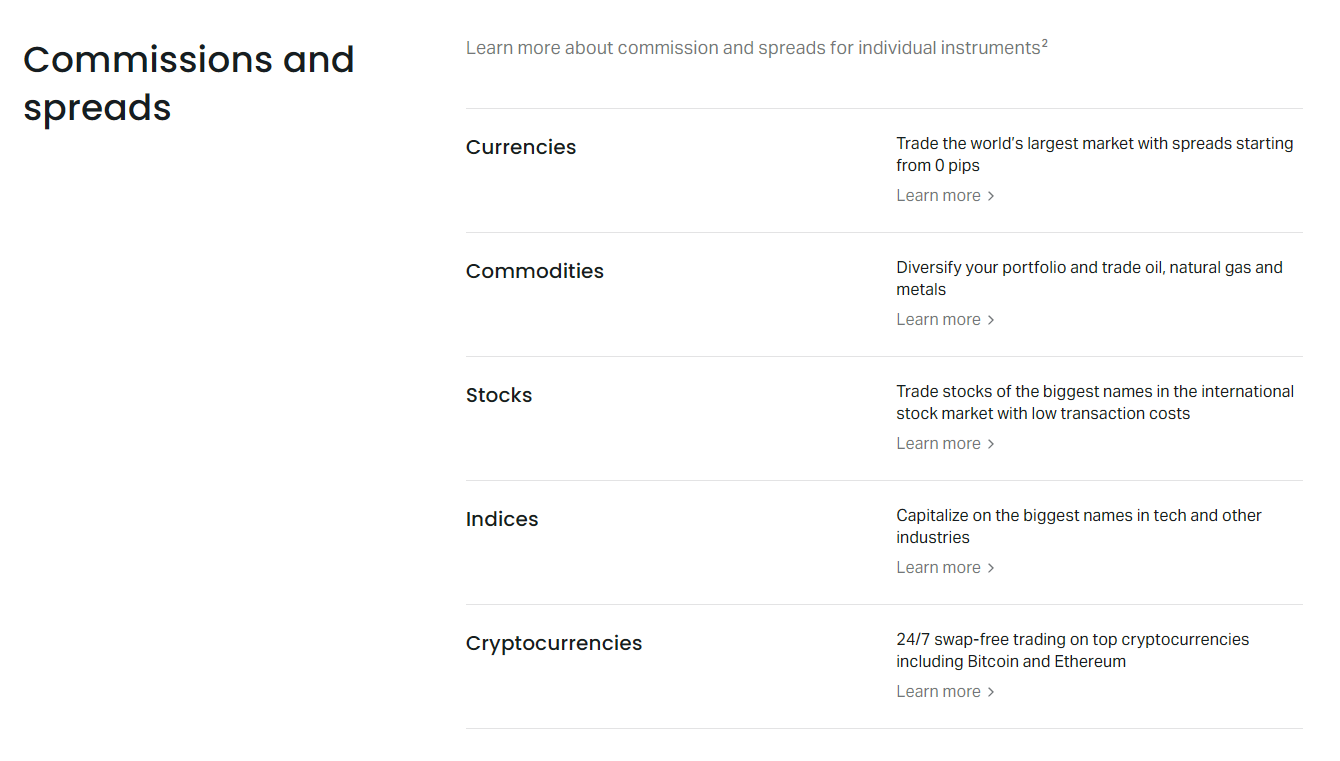
The Exness fees page and trading calculator let you model this for your exact scenario. Input the instrument, account type, position size, expected holding period, and direction. The calculator returns spread cost, commission (if any), and total swap for the period. This is the only way to make an informed account-type decision rather than guessing.
Using the Exness Trading Calculator for Swap Estimates
The calculator is available on the Exness website under Trading Tools. It supports all account types and instruments. You enter: account type, leverage, account currency, instrument, position size in lots, trade direction (buy/sell), and optionally the number of days to hold. The output shows required margin, spread cost, commission, swap per day, and total swap for the holding period.
One useful feature is the ability to compare two account types side by side. Select Standard in one tab and Raw Spread in another, keep all other inputs identical, and compare the total cost row. The calculator also flags the Wednesday triple swap automatically when the holding period spans a Wednesday.
For crypto positions, the calculator shows the notably higher swap rates. A 0.1 lot BTCUSD long held for 7 nights might show a swap cost of $15–$25 depending on current volatility. That is a substantial percentage of the margin required. The calculator makes this visible before you commit capital.
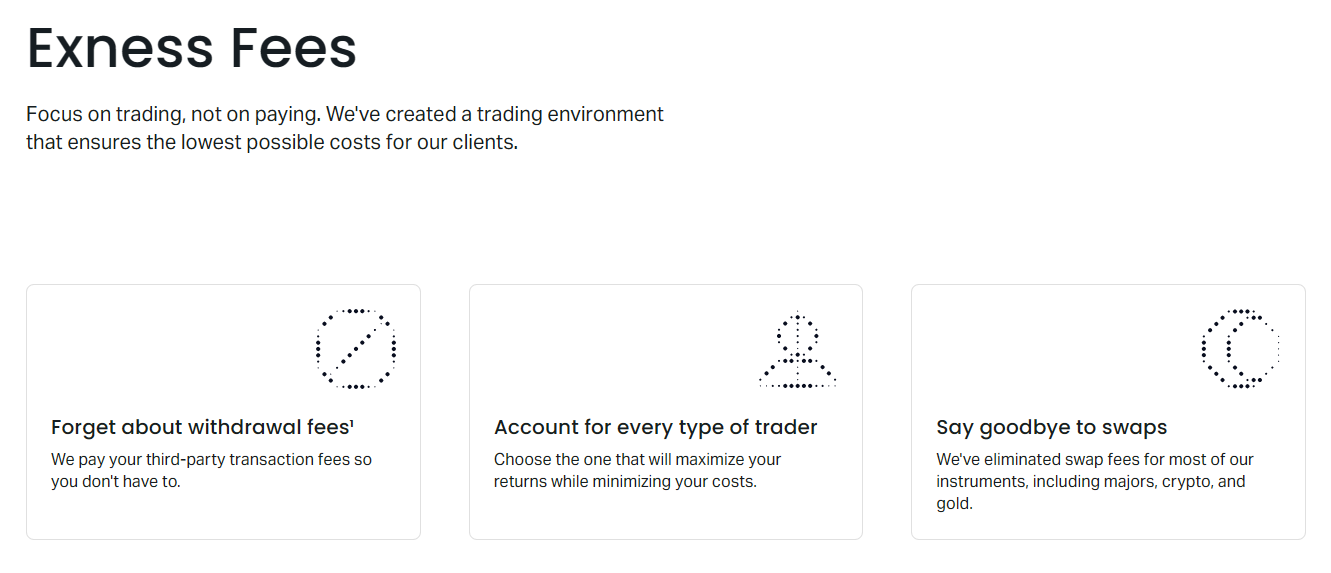
The fees page complements the calculator by showing the current swap points for every instrument in a searchable table. You can filter by asset class (forex, metals, crypto, etc.) and sort by swap long or swap short. This is helpful when scanning for instruments with unusually low or high swap costs for a given strategy.
Common Misconceptions About Exness Swap
Misconception 1: Swap is a fee charged by Exness. Technically, swap is the net interest differential plus a markup. The interbank portion is a real market rate; only the markup is the broker's fee. Exness does not set the underlying tom-next rates.
Misconception 2: Swap-free means completely free. Swap-free accounts replace variable swap with a fixed commission per lot. For short holds, the commission can exceed what the swap would have been. For long holds, it is usually cheaper. It is not free — it is a different pricing structure.
Misconception 3: Positive swap means you are paid to hold. On the rare pairs where swap long is positive, the amount is usually small (a few cents per lot per night). It does not meaningfully offset the risk of holding a leveraged position. Treat it as a minor bonus, not a strategy foundation.
Misconception 4: Swap rates are fixed. They change daily for forex. They change when benchmark rates move for CFDs. The value you see today may not be the value next week. Always check the current specification before entering a trade you plan to hold.
Swap and Automated Trading Systems
Expert Advisors (EAs) running on MetaTrader often ignore swap in their logic. An EA that holds positions for days may accumulate significant swap costs that were not present in the backtest if the backtest used zero swap or outdated rates. Exness provides historical swap data via the platform's history center, but many backtesting engines do not apply it by default.
If you run or purchase an EA, verify whether the backtest includes swap. If not, add a conservative swap estimate to the results. A common approach is to take the average swap long and short for the instrument over the past 30 days, multiply by the average holding period in the backtest, and subtract from the net profit. This gives a more realistic expectancy.
Some EAs include a swap filter — they close positions before rollover if the projected swap exceeds a threshold. This can be effective for high-frequency systems that otherwise hold positions overnight incidentally. The filter adds complexity but protects against unexpected cost accumulation during volatile periods when swap spikes.
Regulatory and Tax Considerations
Swap payments and receipts are part of your trading P/L for tax purposes in most jurisdictions. A negative swap increases your loss (or reduces your profit); a positive swap increases your profit. Exness annual statements include swap totals. Keep these records for tax filing.
Some countries treat swap differently from capital gains — for example, as interest income or expense. Consult a local tax professional. Exness does not provide tax advice and does not withhold tax on swap amounts. The responsibility for correct reporting rests with the trader.
Regulatory-wise, Exness discloses swap rates in accordance with MiFID II and other applicable transparency requirements. The contract specification is the official source. If you believe a swap charge was applied incorrectly, contact support with the trade ticket number, instrument, time, and the specification screenshot. Exness investigates and corrects verified errors.
The swap line in your account statement is not a mistake. It is the cost of leverage across time. Treat it like any other business expense — track it, minimize it where possible, and factor it into your pricing.
Final Assessment of Exness Swap
Exness swap rates are competitive within the industry, particularly on Raw Spread and Zero accounts where the markup is minimal. The broker provides full transparency through the contract specification, the website swaps page, and the trading calculator. The swap-free option is genuine and available to eligible clients, with a clear fixed-commission alternative. The Wednesday triple swap follows standard market convention and is clearly documented.
For most traders, swap is a secondary cost — smaller than spread or commission on a per-trade basis. But it compounds with holding time and position count. A portfolio of ten swing trades held for three weeks can generate swap costs equivalent to several round-trip commissions. Ignoring it does not make it disappear.
The practical takeaway: check the swap before you enter any trade you might hold overnight. Use the calculator to estimate the total cost for your expected holding period. Choose the account type that minimizes the sum of spread, commission, and swap for your typical trade duration. If you qualify for swap-free and hold positions for weeks, evaluate whether the fixed commission saves money. And always remember Wednesday.
Frequently Asked Questions
When does Exness apply the triple swap charge?
Triple swap is applied at the Wednesday server-time rollover (typically 22:00 or 23:00 MT4/MT5 server time) to cover weekend financing for Saturday and Sunday.
Are swap rates the same on all Exness account types?
No. Standard and Standard Cent accounts have higher swap points. Pro accounts are moderate. Raw Spread and Zero accounts have the lowest swap points because those accounts charge commission instead.
Can I avoid swap completely with a swap-free account?
Swap-free accounts replace variable swap with a fixed commission per lot on forex, metals, energies, indices, and stocks. Cryptocurrency CFDs still incur swap even on swap-free accounts.
Where can I see the current swap rate for a specific instrument?
In MT4/MT5: right-click the symbol in Market Watch → Specification. In Web Terminal or mobile app: tap the info icon next to the symbol. On the website: visit the Exness Swaps and Spreads page.
Does Exness charge swap on demo accounts?
Yes. Demo accounts replicate live swap rates so you can test holding costs realistically. The swap values match the live environment for the corresponding account type.
How is swap calculated for gold (XAUUSD) on Exness?
Gold swap uses a financing rate based on the benchmark rate plus markup, not a currency interest differential. Both long and short swaps are typically negative. The exact points per lot are shown in the contract specification.
Can swap be positive on Exness?
On some exotic forex pairs with wide interest rate gaps, the swap long or short may be positive after the broker markup. On major pairs and all non-forex CFDs, swap is almost always negative both ways.
What happens if I close a position before the rollover time?
No swap is charged or credited. Swap only applies to positions that remain open at the exact moment of the daily server rollover.