
Forex Trading Accounts
Exness Zero Account: Spreads, Commission, and Minimum Deposit
Understanding the zero-spread account type, its costs, and who it suits best.

Senior Forex Trader & Market Analyst
Daniel Chen is an experienced forex trader and financial market analyst with over 15 years of experience in currency trading. He specializes in technical analysis, risk management, and developing practical trading strategies to help traders make informed decisions.
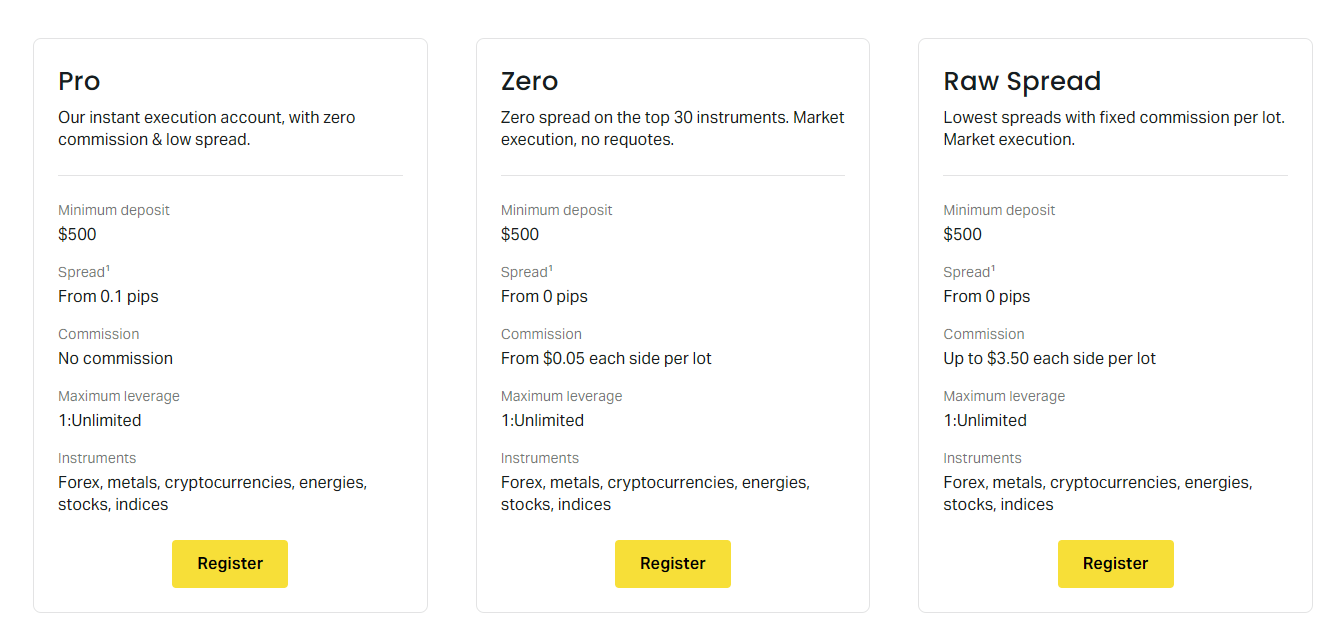
The Exness Zero Account sits in the professional account tier alongside Raw Spread and Pro. It targets traders who want fixed zero spreads on major forex pairs during most market hours, with a per-lot commission applied instead of a markup. This structure appeals to scalpers, high-frequency traders, and anyone running automated strategies where predictable transaction costs matter more than the absolute lowest possible spread at any given second.
Contents
- 1. What Is the Exness Zero Account
- 2. Zero Account Trading Conditions
- 3. Commission Structure and Costs
- 4. Minimum Deposit Requirements
- 5. Spread Behavior During Market Hours
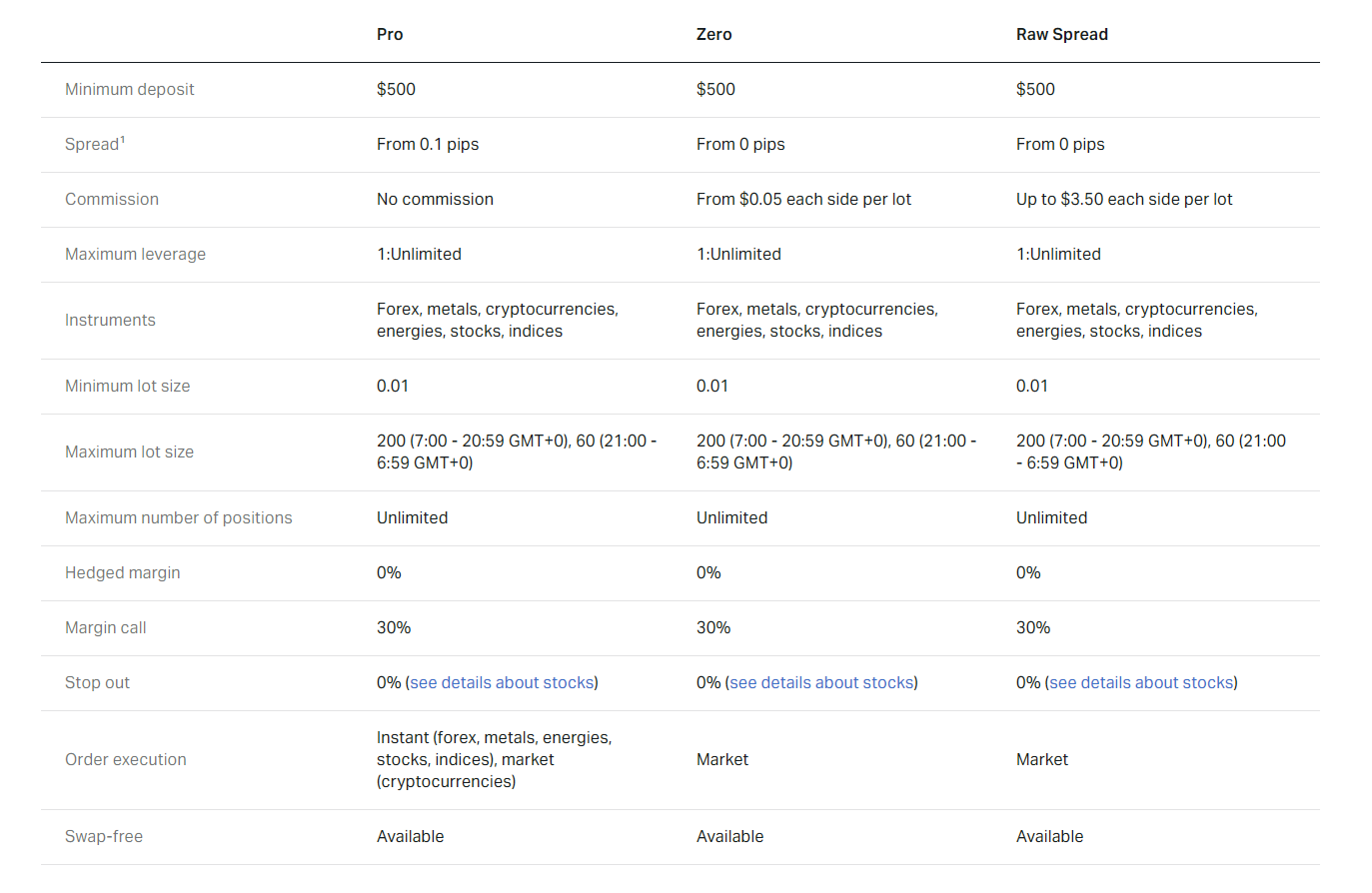
- 6. Comparing Zero Account to Raw Spread and Pro
- 7. Platform Compatibility and Execution
- 8. Who Should Use the Zero Account
- 9. Opening and Funding the Account
- 10. Risk Considerations
- 11. Final Assessment of Exness Zero Account
Exness markets the Zero Account as offering zero spreads on the top 30 instruments for 95 percent of the trading day. The remaining five percent covers periods of extreme volatility or low liquidity such as market open, major news releases, and the daily rollover window. During those windows spreads can widen, though they typically return to zero once normal conditions resume. The commission is charged per side per lot and varies by instrument, which means the total round-trip cost is twice the per-side rate.
Minimum deposit for the Zero Account is 200 USD, which is higher than the Standard and Standard Cent accounts but lower than the Pro account's typical requirement in some regions. This positions it as an accessible professional-tier option for traders who have moved past the learning phase and want tighter cost control without committing to the higher capital threshold of the Pro account. The account supports both MT4 and MT5, as well as the Exness Web Terminal and mobile apps.
What Is the Exness Zero Account
The Zero Account is one of three professional account types Exness offers. The other two are Raw Spread and Pro. All three provide market execution, no requotes, and access to the same instrument list including forex, metals, energies, indices, stocks, and cryptocurrencies. The distinguishing feature of the Zero Account is its spread model: zero pips on the top 30 forex pairs for the majority of the trading session, with a fixed commission per lot replacing the variable spread markup found on Standard accounts.
This account type uses market execution, meaning orders are filled at the best available price from liquidity providers. There is no dealing desk intervention. The zero-spread promise applies specifically to the top 30 instruments — primarily major and minor forex pairs — during standard market hours. Exotic pairs, metals, energies, indices, stocks, and crypto trade with variable spreads that are generally tighter than Standard accounts but not fixed at zero.
Leverage on the Zero Account follows the standard Exness dynamic leverage model. For forex and metals, leverage can reach unlimited levels for accounts with equity below 1,000 USD, then scales down as equity grows. Indices, energies, stocks, and crypto have their own leverage caps. Margin requirements and stop-out levels are consistent with other professional accounts: margin call at 60 percent and stop out at 0 percent, meaning positions are closed only when margin reaches zero.
The Zero Account supports hedging and netting modes on MT5, while MT4 supports hedging only. Expert advisors, scalping, and high-frequency trading are permitted without restrictions. The account currency can be USD, EUR, GBP, CHF, JPY, AUD, CAD, NZD, SGD, HKD, or ZAR depending on the registration entity. Swap-free status is available for clients who qualify under Islamic finance principles, though the commission structure remains unchanged.
Zero Account Trading Conditions
Trading conditions on the Zero Account are defined by three pillars: the zero-spread window, the commission schedule, and the execution quality. The zero-spread window covers approximately 95 percent of the trading day for the top 30 instruments. Exness defines the trading day as 00:00 to 24:00 server time (GMT+2 or GMT+3 depending on daylight saving). The five percent exclusion typically falls around the daily rollover at 23:59–00:01 server time, the Sunday market open, and major economic releases such as non-farm payrolls, CPI, and central bank rate decisions.
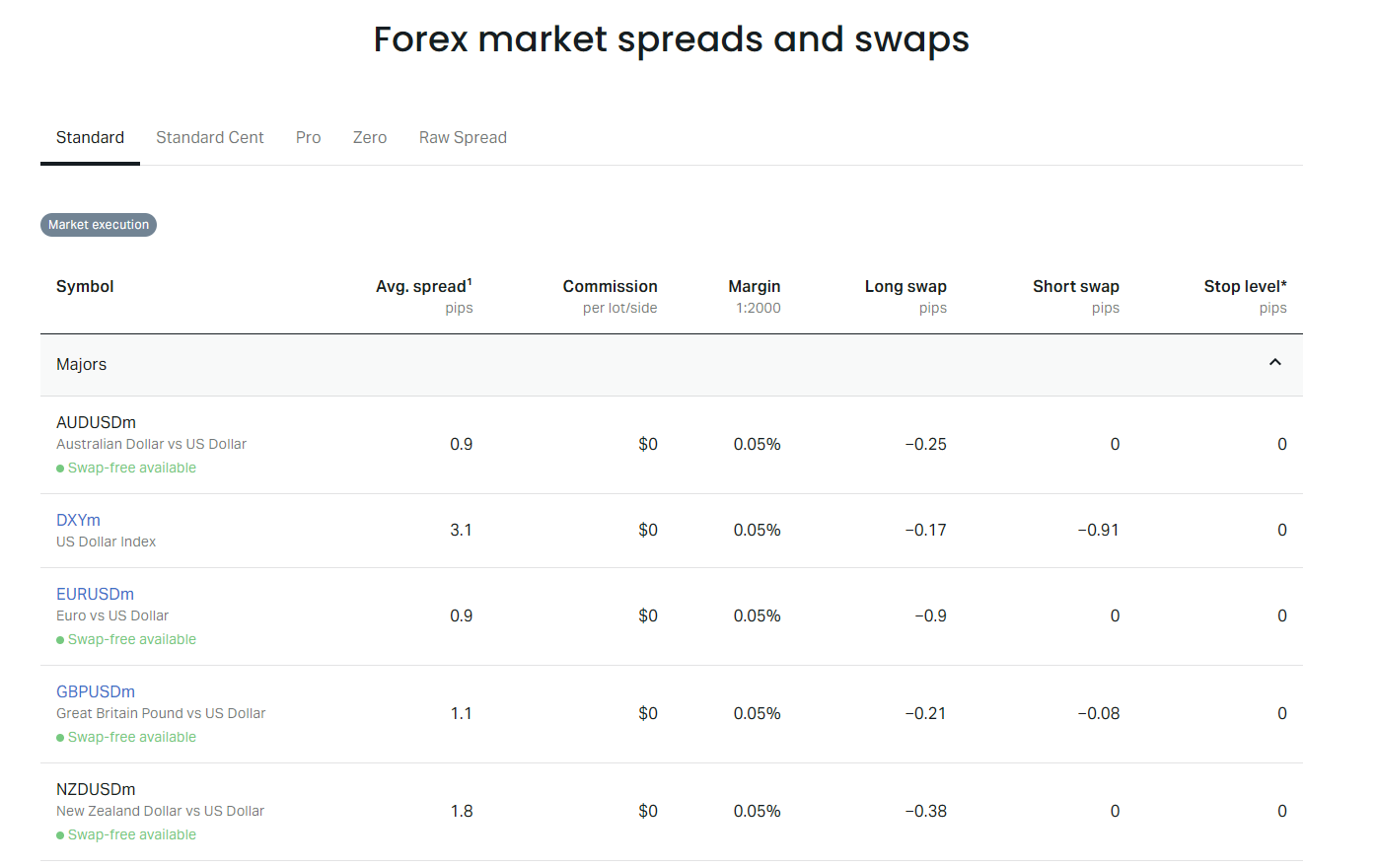
During the zero-spread window, the bid and ask prices are identical on the platform for the covered instruments. This means a trader buying and selling instantly would pay only the commission — there is no spread loss. Outside that window, spreads widen to reflect underlying liquidity conditions. The widening is usually modest for majors but can be significant for exotics. Exness publishes average spread data for each instrument on its website, updated monthly, which allows traders to estimate costs for their specific trading hours.
Execution speed is a key selling point. Exness reports average execution speeds under 25 milliseconds on its own infrastructure, with VPS hosting available for traders who need colocation-grade latency. The Zero Account benefits from the same execution engine as Raw Spread and Pro accounts. There are no minimum trade sizes beyond the standard 0.01 lot, and no maximum trade size limits other than available margin and instrument-specific exposure caps.
Commission Structure and Costs
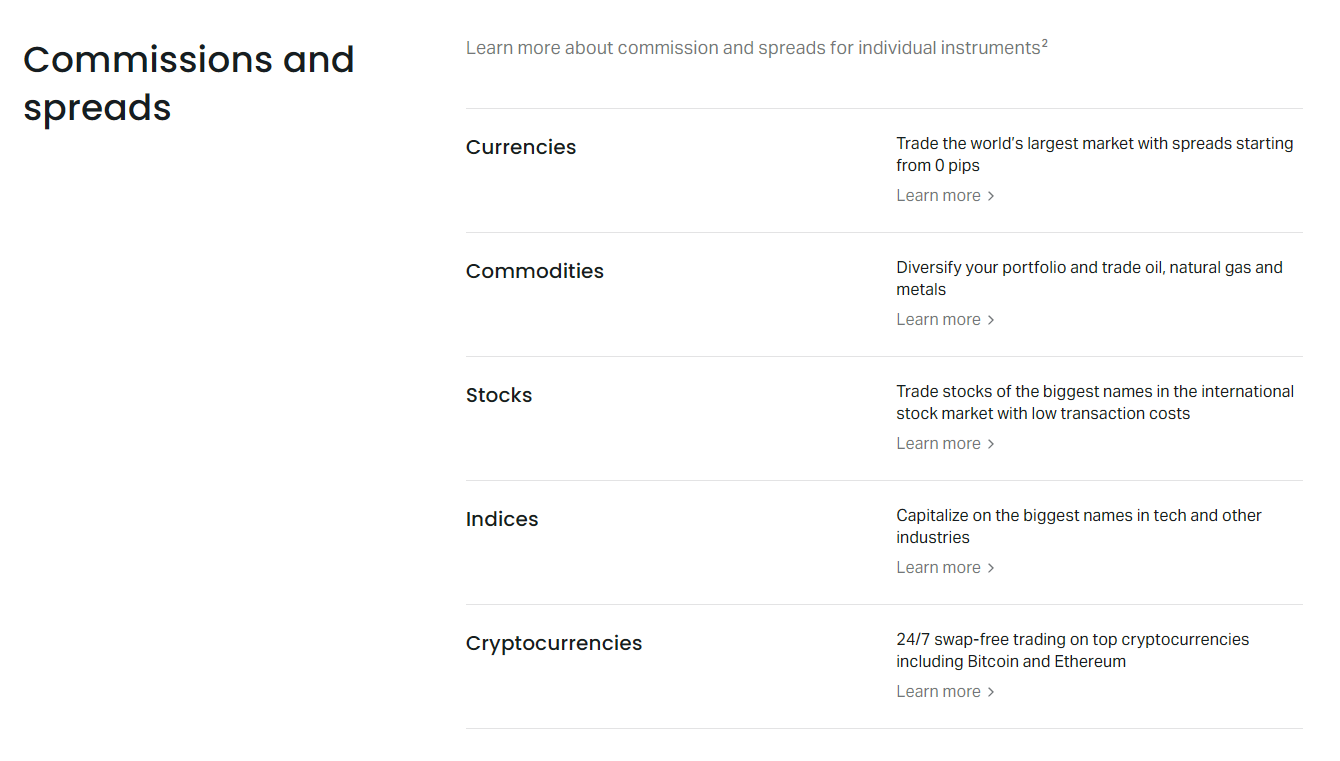
The commission is the primary cost on the Zero Account. It is charged per side per lot, meaning a round-trip trade (open and close) incurs twice the per-side rate. Commission rates differ by instrument group. For the top 30 forex pairs where spreads are zero, the commission typically ranges from 3.5 to 7 USD per lot per side depending on the pair. Major pairs like EURUSD and GBPUSD tend to sit at the lower end, while minors and crosses sit higher. Exotic pairs, which do not have zero spreads, carry higher commissions plus the variable spread.
Metals such as gold (XAUUSD) and silver (XAGUSD) have their own commission schedule, usually around 5 to 10 USD per lot per side with variable spreads. Energies, indices, stocks, and crypto each have published commission rates. The commission is deducted at trade open and again at trade close. It appears as a separate line item in the trade history and account statement, distinct from swap charges and profit or loss.
To calculate the all-in cost for a round-trip on EURUSD: if the per-side commission is 3.5 USD per lot, the round-trip commission is 7 USD per lot. With zero spread during the covered window, the total transaction cost is 7 USD per 100,000 units traded. For a 0.1 lot trade, that is 0.70 USD. Compare this to a Standard account where the EURUSD spread might average 1.0 pip (10 USD per lot round-trip) with no commission. The Zero Account becomes cheaper once the spread on a Standard account exceeds roughly 0.7 pips on average.
Scroll horizontally to see all columns
| Instrument Group | Commission (USD) | Spread Type |
|---|---|---|
| Major Forex (EURUSD, GBPUSD, USDJPY) | 3.5 – 5.0 | Zero (95% of day) |
| Minor Forex Crosses | 5.0 – 7.0 | Zero (95% of day) |
| Exotic Forex Pairs | 10.0 – 25.0 | Variable |
| Gold (XAUUSD) | 5.0 – 10.0 | Variable |
| Indices (US30, US500, USTEC) | 2.0 – 5.0 | Variable |
| Cryptocurrencies | 0.005% – 0.02% notional | Variable |
Commission rates are subject to change and can vary by registration entity. Traders should verify the current schedule in their Personal Area or the Exness contract specifications page before sizing positions. The commission is not negotiable for retail clients. Institutional or high-volume clients may qualify for custom pricing through the Exness Premier program, which has separate eligibility criteria.
Swap rates apply to positions held overnight. The Zero Account uses the same swap formulas as other account types. Swap-free status eliminates overnight charges for qualifying Islamic accounts but may introduce an administration fee after a certain holding period on some instruments. Traders holding positions for weeks or months should factor swap costs into their total cost analysis, as they can exceed commission costs on longer timeframes.
Minimum Deposit Requirements
The minimum deposit to open a Zero Account is 200 USD or the equivalent in other supported account currencies. This is a firm requirement — the account cannot be activated with less. The deposit can be made via any of the supported payment methods: bank wire, credit or debit card, electronic wallets such as Neteller, Skrill, WebMoney, Perfect Money, and various local payment systems depending on the client's country of residence.
The 200 USD minimum is higher than the Standard Account (1 USD in many regions) and Standard Cent Account (1 USD), but lower than the Pro Account which often requires 500 USD or more depending on the entity. Raw Spread typically has a 200 USD minimum as well, making it a direct peer. The minimum deposit is not a maintenance requirement — once the account is funded and trading begins, the balance can fall below 200 USD without penalty, though margin requirements will eventually trigger stop-outs if equity drops too low.
First-time depositors should note that some payment methods have their own minimums. Bank wires often require 50 USD or more per transaction. Electronic wallets may have lower minimums but can carry deposit fees from the payment provider. Exness itself does not charge deposit fees, but third-party processors might. Withdrawal minimums also vary by method. The 200 USD account opening minimum is a one-time threshold; subsequent deposits can be smaller.
Spread Behavior During Market Hours
The zero-spread promise is time-bound. Exness server time follows GMT+2 in winter and GMT+3 in summer (EET/EEST). The trading day runs 00:00 to 24:00 server time. The zero-spread window covers the bulk of this period for the top 30 instruments. The main exceptions are the daily rollover window (approximately 23:55–00:05 server time), the Sunday market open (which can have wide spreads for the first hour), and major news events where liquidity providers widen quotes.
During the rollover window, spreads on majors can widen to 10–30 pips for a few minutes. This affects swap calculation and any orders triggered during that period. Traders using tight stop-losses or running EAs that trade through the rollover should account for this. The Sunday open is similar — spreads start wide and compress as liquidity returns. By 01:00 server time on Monday, majors are usually back to zero.
Major economic releases such as US non-farm payrolls (first Friday of the month, 13:30 server time), CPI, FOMC decisions, and ECB announcements cause temporary spread widening. The duration varies from seconds to minutes. Exness does not guarantee zero spreads during these events. Traders who avoid news trading or widen stops during releases are less affected. Those who trade news should test their strategy on a demo Zero Account first to see real spread behavior.
Zero spread does not mean zero cost. The commission replaces the spread, and during the five percent of the day when spreads widen, you pay both.
Comparing Zero Account to Raw Spread and Pro
The three professional accounts share market execution, unlimited leverage (subject to equity tiers), and the same instrument list. The differences lie in the spread-commission trade-off and minimum deposit. Raw Spread offers very low variable spreads — often 0.0 to 0.2 pips on majors — with a commission similar to Zero Account. Pro offers zero commission but wider spreads, typically 0.1 to 0.5 pips on majors. Zero Account fixes spreads at zero for the covered window with a fixed commission.
For a scalper trading EURUSD 50 lots per month: Zero Account at 3.5 USD per side costs 350 USD in commission (50 lots × 2 sides × 3.5 USD). Raw Spread at 0.1 pip average spread (1 USD per lot per side) plus 3.5 USD commission costs 450 USD total. Pro at 0.3 pip spread (3 USD per lot round-trip) with no commission costs 150 USD. In this scenario Pro is cheapest, but only if the spread holds at 0.3 pips. During volatility, Pro spreads can widen to 1–2 pips, making Zero or Raw Spread more predictable.
Scroll horizontally to see all columns
| Feature | Zero Account | Raw Spread | Pro Account |
|---|---|---|---|
| Min Deposit | 200 USD | 200 USD | 500 USD |
| Major Pair Spread | Zero (95% of day) | 0.0 – 0.2 pips avg | 0.1 – 0.5 pips avg |
| Commission per Lot per Side | 3.5 – 7 USD | 3.5 – 7 USD | None |
| Best For | Predictable costs, scalping, EAs | Lowest variable spreads | Swing trading, lower frequency |
| Swap-Free Option | Yes | Yes | Yes |
The choice often comes down to trading style. High-frequency traders and EA users prefer Zero or Raw Spread for cost predictability. Swing traders holding positions for days may prefer Pro to avoid commission on each leg. Traders who mix styles sometimes run multiple accounts — Zero for scalping, Pro for swing — and allocate capital accordingly. Exness allows multiple accounts under one Personal Area, making this practical.
Platform Compatibility and Execution
The Zero Account works on MetaTrader 4, MetaTrader 5, Exness Web Terminal, and the Exness Trade mobile app. MT4 remains popular for its vast EA ecosystem and custom indicator library. MT5 adds more timeframes, depth of market, netting mode, and a built-in economic calendar. The Web Terminal requires no installation and runs in any modern browser, useful for traders who cannot install software on work computers. The mobile app provides full account management, charting, and trading on iOS and Android.
Execution is handled by the same aggregation engine across all platforms. Exness connects to multiple liquidity providers and uses smart order routing to fill at the best available price. The Zero Account does not receive priority execution over other professional accounts — all three tiers share the same infrastructure. Slippage can occur during high volatility, but positive slippage (price improvement) is also possible and passed to the client.
VPS hosting is available directly through Exness for clients who meet a minimum trading volume threshold (typically 15 lots per month). The VPS runs in the same data center as Exness trade servers, reducing latency to under 1 ms. Traders running EAs 24/7 benefit most. Those who trade manually from a stable home connection with low latency may not notice a difference. The VPS is free while the volume requirement is met; otherwise it can be rented for a monthly fee.
Who Should Use the Zero Account
The Zero Account suits traders who value cost certainty over absolute minimum cost. Scalpers placing dozens of trades per day benefit from knowing exactly what each round-trip costs regardless of momentary spread fluctuations. EA developers appreciate the fixed commission model because it simplifies backtesting — the transaction cost is a known constant during the zero-spread window. High-volume traders who exceed the VPS threshold get free low-latency hosting, which compounds the advantage.
Traders who hold positions overnight or for several days should compare total cost including swaps. The commission is paid upfront; swaps accumulate daily. On a 10-lot EURUSD position held for two weeks, the round-trip commission might be 70 USD while swaps could add another 50–100 USD depending on the interest rate differential. In that scenario the commission is only part of the picture.
Beginners should generally start on a Standard or Standard Cent account. The 200 USD minimum, commission structure, and need to understand spread windows add complexity. The Zero Account rewards precision — over-leveraging or poor risk management is punished faster because there is no spread buffer. A trader used to Standard account spreads may underestimate position sizing when spreads are zero but commission applies per lot.
The Zero Account is a tool for traders who have a strategy and need predictable execution costs. It is not a better account — it is a different cost model.
Opening and Funding the Account
Opening a Zero Account starts in the Exness Personal Area. After registration and email verification, the client selects 'Open New Account', chooses 'Professional' then 'Zero Account', picks the account currency and leverage preference, and sets a trading password. The account is created instantly but remains inactive until the first deposit of at least 200 USD clears. Identity verification (KYC) is required before withdrawals are enabled, though deposits can be made immediately after registration in most jurisdictions.
KYC requires a government-issued photo ID (passport, national ID, or driver's license) and proof of address (utility bill, bank statement, or government letter dated within three months). The process is usually completed within a few hours during business days. Some countries require additional documentation such as a selfie with the ID or source-of-funds declaration for larger deposits. Exness complies with AML regulations across its licensed entities.
Once funded, the account appears in the Personal Area with its login credentials. MT4/MT5 login uses the account number as login and the trading password set during creation. The server name is shown in the account details (e.g., Exness-MT4Trial7 or Exness-MT5Real3). The Web Terminal and mobile app log in with the Personal Area email and password, then allow switching between accounts. Demo versions of the Zero Account are available for testing — they mirror live conditions but use virtual funds.
Risk Considerations
The Zero Account carries the same market risks as any leveraged CFD trading account. Leverage up to unlimited (below 1,000 USD equity) means a 1 percent market move can wipe out the account if fully leveraged. The stop-out at 0 percent margin provides no buffer — positions are closed only when equity reaches zero. Traders must manage their own risk through position sizing, stop-losses, and equity monitoring.
Commission costs scale linearly with volume. A trader who increases position size without adjusting strategy may find commissions eating a larger share of profits. During the five percent of the day when spreads widen, the effective cost becomes commission plus spread. Strategies that trade during rollover or news should be stress-tested for these conditions. The zero-spread window is not a guarantee — Exness reserves the right to widen spreads during exceptional market conditions.
Counterparty risk exists as with any CFD provider. Exness is regulated by multiple authorities including CySEC (Cyprus), FCA (UK), FSCA (South Africa), FSA (Seychelles), and CBCS (Curaçao). Client funds are segregated from company funds. The specific regulatory protections depend on the entity the client is onboarded under, which is determined by country of residence. Traders should verify their entity's regulator and compensation scheme eligibility.
Final Assessment of Exness Zero Account
The Exness Zero Account delivers on its core promise: zero spreads on major forex pairs for most of the trading day, with a transparent per-lot commission. For traders who execute high volume on majors — scalpers, day traders, EA operators — the cost predictability is valuable. The 200 USD minimum deposit makes it accessible to serious retail traders without requiring the 500 USD or more that some competitors demand for similar conditions. Execution quality, platform choice, and free VPS for active traders round out a competitive package.
The trade-offs are clear. Commission adds up on high-frequency strategies. The zero-spread window has edges — rollover, Sunday open, news — where costs spike. Exotic pairs, metals, and CFDs on other asset classes do not get zero spreads. Traders who hold positions for days pay swaps on top of commission. The account is not inherently better than Raw Spread or Pro; it is a different cost structure that favors certain styles. A trader should test all three on demo, track actual costs for their specific strategy and hours, then decide.
For the right user, the Zero Account is a solid professional-grade tool. For the wrong user — a beginner, a low-frequency swing trader, or someone trading mostly exotics — it adds complexity without benefit. The 200 USD barrier is low enough to try but high enough to discourage casual experimentation. That may be the best filter of all.
Frequently Asked Questions
What is the minimum deposit for Exness Zero Account?
The minimum deposit to open and activate an Exness Zero Account is 200 USD or the equivalent in other supported account currencies.
How much commission does Exness Zero Account charge?
Commission ranges from 3.5 to 7 USD per lot per side for major forex pairs, with higher rates for minors, exotics, metals, and other instruments. A round-trip trade incurs twice the per-side rate.
Are spreads really zero all day on the Zero Account?
Zero spreads apply to the top 30 forex instruments for approximately 95 percent of the trading day. Spreads widen during the daily rollover window, Sunday market open, and major news events.
Can I use the Zero Account on MetaTrader 4 and MetaTrader 5?
Yes, the Zero Account is fully supported on MT4, MT5, Exness Web Terminal, and the Exness Trade mobile app for iOS and Android.
Is the Zero Account better than Raw Spread or Pro?
It depends on your trading style. Zero Account offers fixed zero spreads with commission, Raw Spread offers variable near-zero spreads with commission, and Pro offers wider spreads with no commission. Test all three on demo to compare actual costs for your strategy.
Does Exness Zero Account support swap-free Islamic trading?
Yes, swap-free status is available for clients who qualify under Islamic finance principles. The commission structure remains unchanged.
What leverage is available on the Zero Account?
Leverage follows Exness dynamic leverage model. For forex and metals, leverage can be unlimited for accounts with equity below 1,000 USD, then scales down as equity increases. Other instruments have fixed leverage caps.
How do I get free VPS hosting with the Zero Account?
Trade at least 15 lots per calendar month to qualify for free VPS hosting. The VPS runs in the same data center as Exness trade servers for sub-millisecond latency.