
Forex Trading
Exness Rebate Program: How Cashback Works for Traders
Complete guide to Exness cashback, partner tiers, and rebate calculations for active traders


Senior Forex Trader & Market Analyst
Daniel Chen is an experienced forex trader and financial market analyst with over 15 years of experience in currency trading. He specializes in technical analysis, risk management, and developing practical trading strategies to help traders make informed decisions.
Traders who execute high volume often look for ways to reduce per-trade costs without changing their strategy. A rebate program returns a portion of the spread or commission paid on each trade, effectively lowering the cost of every position. Exness operates one of the more transparent rebate structures in the industry, tied directly to its partner and introducing broker ecosystem. This article explains how the program works, who qualifies, how payouts are calculated, and what to watch for when comparing it to alternatives.
Contents
- 1. What Is a Forex Rebate and How Does It Work
- 2. Exness Partner Program Structure
- 3. Introducing Broker vs Affiliate Models
- 4. Rebate Calculation Methods
- 5. Premier Program Tiers and Benefits
- 6. How to Join the Exness Rebate Program
- 7. Payout Schedule and Withdrawal Options
- 8. Comparing Exness Rebates to Other Brokers
- 9. Common Questions About Rebate Tracking
- 10. Risks and Limitations to Consider
- 11. Tax Implications of Rebate Income
- 12. Final Assessment of Exness Rebate Program
The concept is straightforward. When a trader opens an account through a partner link or IB code, that partner earns a commission from the broker based on the trader's volume. The partner then shares a portion of that commission back to the trader as a rebate. Exness formalizes this through its Partner Program, which includes both affiliate and introducing broker tracks. The rebate amount depends on the account type, instrument traded, and the partner's tier within the program. For the trader, the result is a monthly or weekly cash credit that reduces net trading expenses.
Not all rebate arrangements are equal. Some brokers offer fixed cashback per lot regardless of spread width. Others tie rebates to a percentage of the spread paid. Exness uses a hybrid model where the partner's commission — and therefore the potential rebate — varies by instrument and account type. Professional accounts like Raw Spread and Zero typically generate lower partner commissions because the base spreads are tighter. Standard and Standard Cent accounts carry wider spreads, which means higher partner commissions and potentially larger rebates for traders using those accounts.
What Is a Forex Rebate and How Does It Work
A forex rebate is a partial refund of the trading cost you incur on each transaction. Every trade carries a cost — either a spread markup, a commission per lot, or both. When you trade through a partner's referral link, the broker pays that partner a portion of the revenue generated from your trades. The partner then passes some or all of that payment back to you. The rebate does not change your execution, spreads, or trading conditions. It simply returns cash to your account after the fact.
Rebates are typically calculated per round-turn lot. A round turn means opening and closing a position. If the rebate rate is $4 per lot on EURUSD and you trade 10 lots round turn in a month, you receive $40. Some programs pay daily, others weekly or monthly. Exness partner payouts occur daily for most tiers, and the partner decides how frequently to distribute rebates to their referred traders. Many partners automate weekly or monthly transfers to keep things simple.
- Rebates reduce effective trading cost without altering spreads or execution
- Paid per round-turn lot traded, not per winning trade
- Available on most account types and instruments
- Partner determines rebate percentage and payout frequency
- No change to leverage, margin requirements, or platform access
The rebate comes from the partner's pocket, not the broker's. Exness pays the partner a commission based on the referred trader's volume. The partner then chooses how much of that commission to share. A partner earning $8 per lot on a Standard account might offer $4 to the trader and keep $4. Another might offer $6 to attract more clients. This creates a competitive market among partners, which benefits traders who compare offers before signing up.
The rebate is a volume discount paid after the trade, not a promotional bonus with strings attached.
Exness Partner Program Structure
Exness runs a single Partner Program with two main tracks: Affiliate and Introducing Broker (IB). Both tracks earn commissions from referred traders' volume, but they differ in structure, requirements, and typical rebate models. The Affiliate track suits content creators, educators, and marketers who drive sign-ups through links and banners. The IB track suits individuals or firms with direct client relationships who provide ongoing support, signals, or managed account services.
Partners progress through tiers based on the total trading volume of their referred clients. Higher tiers unlock higher commission rates per lot. The tiers are: Standard, Silver, Gold, Platinum, and Premier. Each tier has volume thresholds measured in lots traded per month across all referred accounts. A new partner starts at Standard tier. As their clients trade more volume, the partner moves up, earning more per lot and enabling larger rebates for traders.
Scroll horizontally to see all columns
| Tier | Monthly Volume Requirement | Commission per Lot (Major Pairs) | Typical Rebate Share to Trader |
|---|---|---|---|
| Standard | 0 lots | $4 – $6 | 50% – 75% |
| Silver | 500 lots | $6 – $8 | 50% – 75% |
| Gold | 2,000 lots | $8 – $10 | 60% – 80% |
| Platinum | 5,000 lots | $10 – $12 | 70% – 85% |
| Premier | Invitation only | Negotiated | Up to 90% |
Commission rates vary by instrument. Major forex pairs pay the highest rates. Metals, energies, indices, and cryptocurrencies pay lower rates per lot because their spreads and volatility profiles differ. Partners see a detailed commission table in their dashboard showing exact rates per symbol. Traders should ask their partner for the specific rates that apply to the instruments they trade most.
Introducing Broker vs Affiliate Models
The distinction between IB and Affiliate tracks affects how rebates are managed and what additional services you might receive. IBs typically maintain direct communication with their clients. They may offer trade copying, educational resources, market analysis, or personalized support. Affiliates usually operate at scale — websites, YouTube channels, signal services — and automate rebate distribution through scripts or third-party platforms.
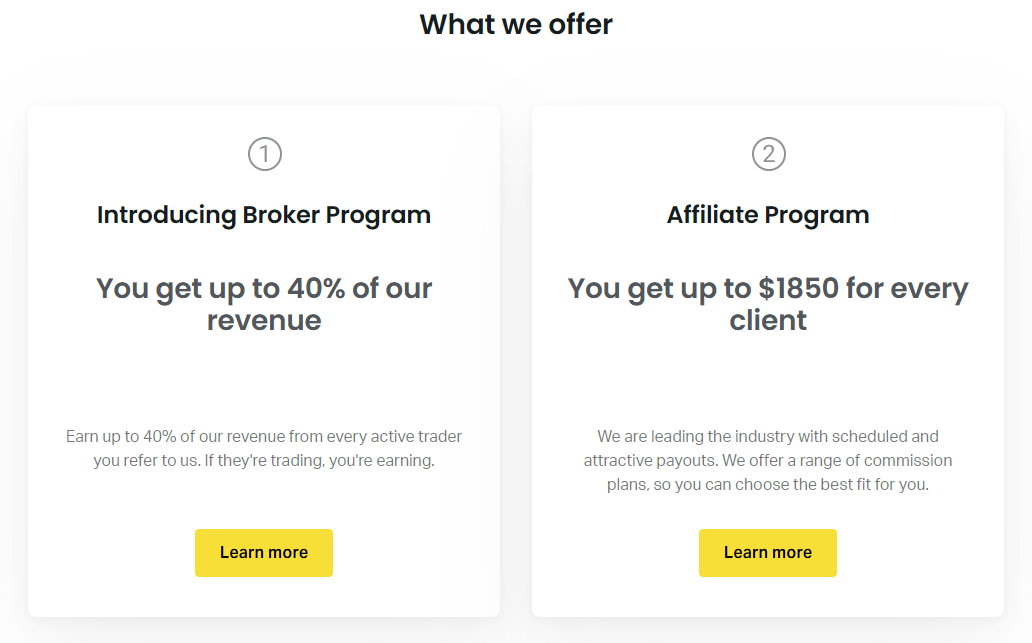
IBs often negotiate custom rebate rates for high-volume traders. If you trade 500+ lots per month, an IB may offer a higher percentage share than a mass-market affiliate can afford. Affiliates, by contrast, usually publish fixed rebate rates on their landing pages — for example, $4 per lot on majors, $2 on gold — and automate payouts to hundreds or thousands of traders. Neither model is inherently better; it depends on your volume, need for support, and preference for personal vs automated service.
- IBs: direct relationship, negotiable rates, often provide added services
- Affiliates: fixed published rates, automated payouts, scale-focused
- Both earn from same Exness commission pool
- Trader experience identical — same spreads, execution, platforms
- Switching partners requires opening a new account under new link
One practical difference: IBs can see their clients' trading activity in the partner portal (anonymized for privacy). This lets them tailor rebate offers or reach out when volume drops. Affiliates typically only see aggregate statistics. If you value privacy and want zero interaction, an affiliate's automated system may feel less intrusive. If you want a point of contact who understands your trading, an IB relationship works better.
Rebate Calculation Methods
Exness calculates partner commissions — and by extension rebates — based on the instrument, account type, and trade direction. The commission is not a flat fee across all symbols. Major pairs like EURUSD, GBPUSD, and USDJPY carry the highest commission per lot. Cross pairs pay less. Gold (XAUUSD) and silver (XAGUSD) have their own rates. Indices, energies, and cryptocurrencies pay the lowest per-lot commissions because their notional values and volatility differ significantly from forex majors.
Scroll horizontally to see all columns
| Category | Example Symbols | Standard Account Commission | Raw Spread / Zero Commission |
|---|---|---|---|
| Major Forex | EURUSD, GBPUSD, USDJPY | $8 – $12 | $4 – $6 |
| Minor / Cross Forex | EURGBP, AUDJPY, GBPCAD | $5 – $8 | $3 – $5 |
| Metals | XAUUSD, XAGUSD | $6 – $10 | $3 – $5 |
| Indices | US30, US500, USTEC | $2 – $4 | $1 – $2 |
| Energies | UKOIL, USOIL, NGAS | $2 – $4 | $1 – $2 |
| Cryptocurrencies | BTCUSD, ETHUSD | $1 – $3 | $0.5 – $1.5 |
These figures are illustrative. Exact rates appear in the partner portal and change periodically. The key takeaway: a trader running a Raw Spread account on EURUSD generates less partner commission per lot than a Standard account trader on the same pair. Therefore, the maximum sustainable rebate is lower on Raw Spread and Zero accounts. Traders on professional accounts should expect smaller rebates but benefit from tighter raw spreads and lower base costs.
Rebates are calculated on round-turn volume. Opening a 1-lot position and closing it counts as 1 lot round turn. Opening 1 lot and closing 0.5 lots counts as 0.5 lots round turn. Partial closes generate proportional rebates. Swap charges, deposit fees, and withdrawal fees do not generate rebates. Only the spread or commission component of executed trades counts.
Premier Program Tiers and Benefits
Beyond the standard five tiers, Exness operates a Premier Program for top-performing partners. Entry is by invitation only, typically requiring sustained monthly volume above 10,000 lots across referred accounts and a track record of compliance. Premier partners receive negotiated commission rates that can exceed the published Platinum maximum. They also gain access to dedicated account managers, custom reporting APIs, and co-marketing budgets.
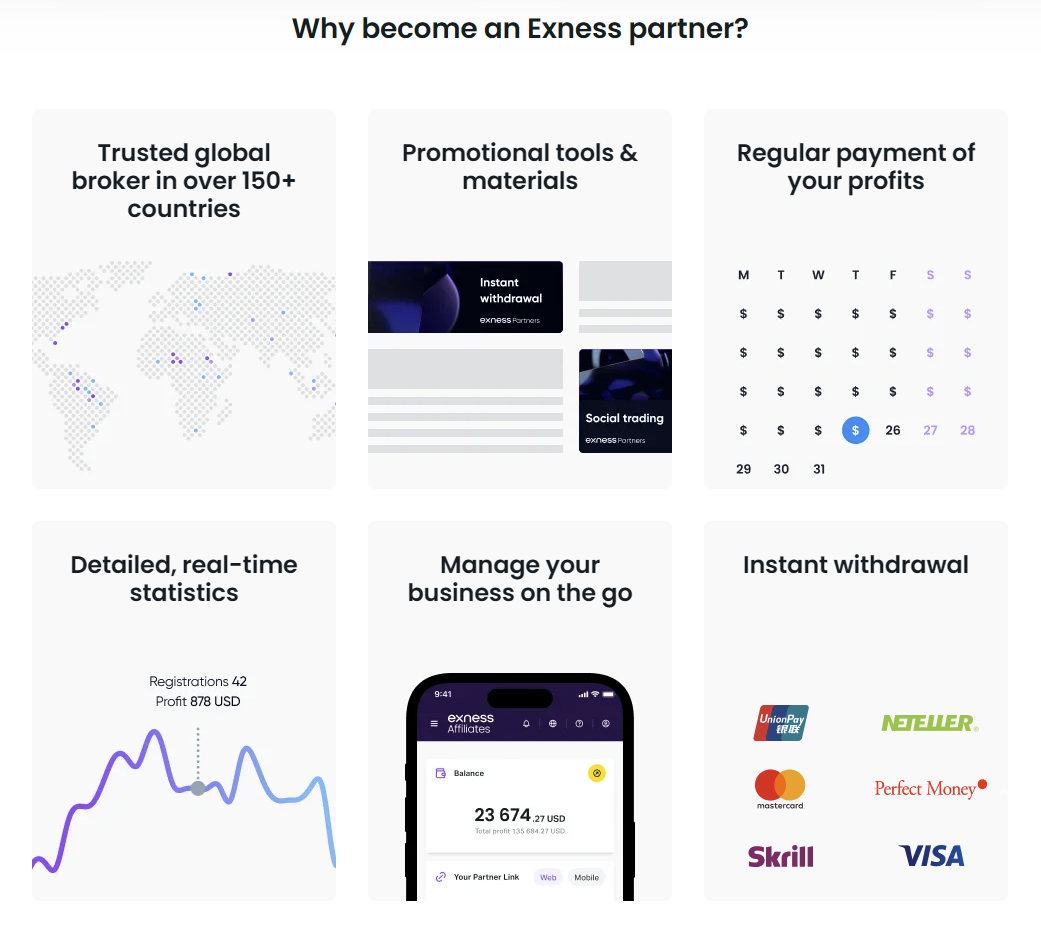
For traders, a Premier partner can offer the highest rebate percentages in the ecosystem — sometimes 85–90% of the partner's commission. However, Premier partners are selective. They often require minimum monthly volume commitments (e.g., 200+ lots) and may ask for KYC verification beyond what Exness requires. The relationship resembles a business partnership more than a simple cashback signup.
- Premier partners: invitation only, negotiated rates
- Typical rebate share: 85–90% of partner commission
- May require volume minimums and direct communication
- Access to custom reporting and faster payout processing
- Limited number of Premier partners globally
Premier partners operate like B2B service providers. The rebate is part of a broader value proposition that includes reporting, support, and sometimes technology.
How to Join the Exness Rebate Program
Joining requires opening a new Exness account through a partner's referral link or entering their partner code during registration. Existing accounts cannot be retroactively attached to a partner. This is a hard rule — Exness does not allow transfer of live accounts between partners. If you already trade with Exness and want rebates, you must open a new account under the partner's link. You can run multiple accounts simultaneously; many traders keep their original account and open a separate rebate-linked account for new volume.
The signup process: click the partner's referral link, complete Exness registration (email, password, phone verification), pass KYC (identity and address documents), and fund the account. Once the account shows as 'referred by partner X' in your Personal Area, all subsequent trades generate commission for that partner. The partner then sets up rebate payments — usually via the same method you use for deposits/withdrawals (bank transfer, crypto, e-wallet, or internal transfer).
- Must use partner referral link or code at registration
- Existing accounts cannot be linked retroactively
- Multiple accounts allowed — one per partner
- KYC required before rebates can be paid
- Rebate payment method typically matches withdrawal method
Payout Schedule and Withdrawal Options
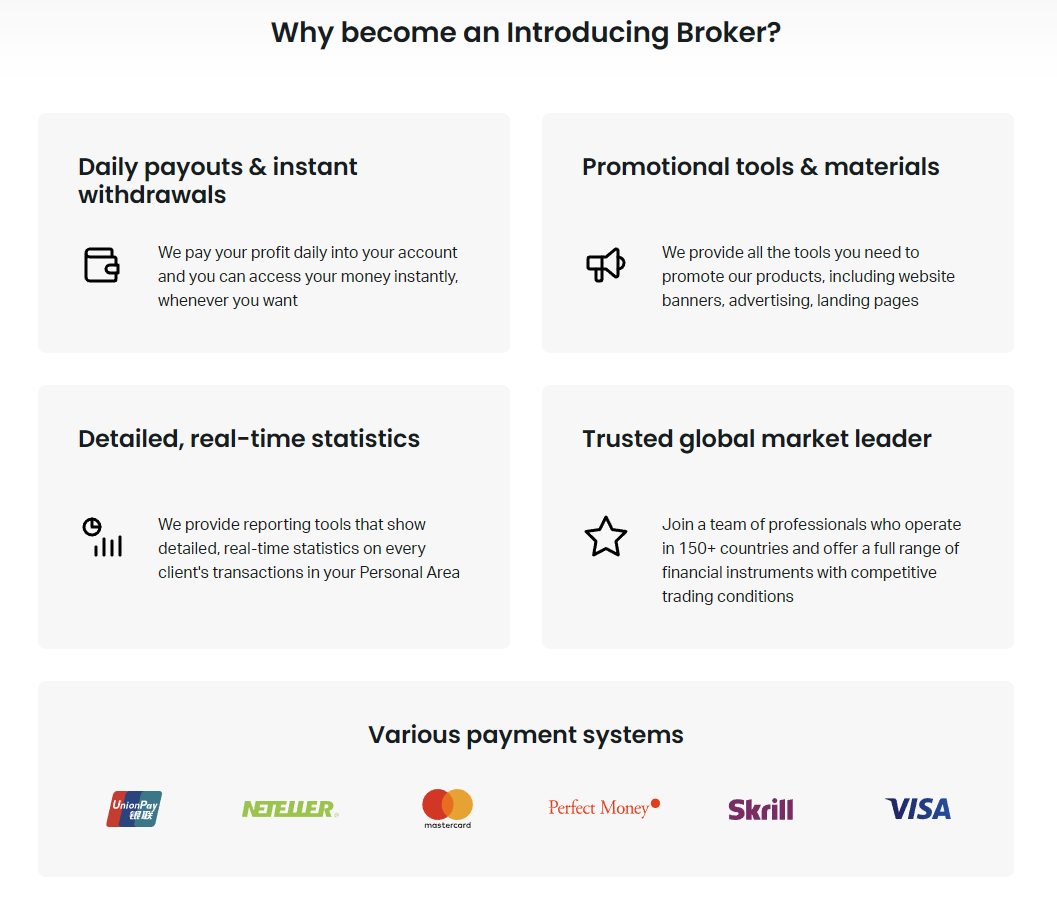
Exness pays partner commissions daily, usually by 12:00 UTC for the previous day's volume. The partner then distributes rebates to traders on their own schedule. Most established partners pay weekly (every Monday for prior week) or monthly (1st–5th for prior month). Some high-volume IBs pay daily via automated scripts. The payout currency usually matches the account base currency (USD, EUR, etc.). Partners can pay via internal Exness transfer (instant, no fee), bank wire, crypto (USDT, BTC, ETH), or e-wallets (Neteller, Skrill, WebMoney, Perfect Money).
Scroll horizontally to see all columns
| Method | Speed | Fees | Minimum |
|---|---|---|---|
| Internal Exness Transfer | Instant | Free | $1 |
| USDT (TRC20 / ERC20) | Minutes to hours | Network fee | $10 |
| Bank Wire | 1–3 business days | Bank dependent | $50 |
| Skrill / Neteller | Instant to hours | Partner may cover | $10 |
| Perfect Money / WebMoney | Instant | Low | $5 |
Internal transfer is the most efficient — no fees, instant, no minimums. Many partners default to this method. If you prefer crypto or e-wallet, confirm the partner supports it before signing up. Some partners only offer internal transfer to keep their own costs down. Also verify whether the partner covers withdrawal fees or passes them to you. A $4 per lot rebate loses appeal if $15 wire fees eat the first month's earnings.
Comparing Exness Rebates to Other Brokers
Exness is not the only broker with a rebate ecosystem. IC Markets, Pepperstone, FP Markets, and XM all operate partner programs with cashback options. The differences lie in base trading conditions, commission transparency, and partner competition. Exness stands out for instant withdrawals, no requotes on market execution, and a partner portal that shows real-time commission data. However, its Raw Spread commission ($3.5 per side per lot on majors) is higher than some competitors, which means the partner commission pool — and thus maximum rebate — is smaller on professional accounts.
Brokers with lower raw commissions (e.g., $3 per side) leave less room for partner commissions. But they also charge you less upfront. The net cost comparison depends on whether you value lower raw spreads or higher rebates. A trader on Exness Zero account pays $3.5 commission per side ($7 round turn) plus a small spread. A trader on a competitor's raw account might pay $3 per side ($6 round turn) with a similar spread but receive only $2 rebate. The Exness trader pays $7 – $4 rebate = $3 net. The competitor trader pays $6 – $2 rebate = $4 net. In this scenario, Exness wins despite higher headline commission.
A higher rebate on worse spreads can cost more than a lower rebate on better spreads. Always calculate net.
Common Questions About Rebate Tracking
Traders often ask how to verify they're receiving the correct rebate amount. Exness provides a Partner Area where partners see daily commission reports per referred account (masked for privacy). Traders do not have direct access to this portal. The partner must share reports or provide a dashboard. Reputable partners offer a login portal where traders can see their volume, rebate earned, and payout history. If a partner refuses to show tracking, that's a red flag.
Volume discrepancies sometimes arise from: trades closed on different days (rebate attributed to close date), partial closes, hedged positions (some partners count only one side), and instrument-specific commission differences. A 5–10% variance between your calculated volume and the partner's report is normal. Larger gaps warrant a conversation. Keep your own trade journal or use a trade analyzer (Myfxbook, FX Blue) to cross-check monthly volume.
- Ask for partner portal access before signing up
- Cross-check with Myfxbook or FX Blue monthly
- Expect 5–10% variance from date attribution differences
- Hedged positions may count as single-side volume
- Commission varies by symbol — verify per-instrument rates
Risks and Limitations to Consider
Rebate programs carry risks that have nothing to do with Exness. The partner is an independent entity. If they go out of business, stop paying, or disappear, your rebates stop. Exness has no obligation to honor a partner's rebate promise. The trading conditions on your account remain unchanged — you still get the same spreads and execution — but the cashback ends. This is why partner reputation and longevity matter more than the highest advertised rate.
Some partners impose hidden conditions: minimum monthly volume to qualify, minimum account balance, restrictions on EA usage, or requirements to trade specific instruments. Read the partner's terms page carefully. A $6 per lot offer that requires 100 lots/month and forbids news trading may be worse than a $4 offer with no strings. Also watch for partners who delay payouts, change rates without notice, or require manual withdrawal requests each month.
The rebate is only as reliable as the partner paying it. Exness pays the partner; the partner pays you. That chain has a weak link.
Tax Implications of Rebate Income
Rebates are generally treated as trading income or a reduction of trading expenses, depending on your jurisdiction. In many countries, cashback received from a broker or partner is taxable as ordinary income. Some tax authorities allow netting rebates against trading losses. Others treat them as separate revenue. Exness and its partners do not issue tax forms for rebate payments. You are responsible for tracking and reporting. Keep records of all rebate receipts — date, amount, currency, partner name — for your accountant.
- Rebates may be taxable income in your jurisdiction
- No tax forms issued by Exness or partners
- Maintain independent records of all rebate payments
- Consult a tax professional familiar with forex income
- Treatment varies: trading expense reduction vs separate income
Final Assessment of Exness Rebate Program
The Exness rebate ecosystem works as designed: partners earn commissions from referred volume, traders receive cashback that lowers net costs, and Exness gains clients without direct marketing spend. For active traders, the program can meaningfully reduce expenses — especially on Standard and Standard Cent accounts where partner commissions are highest. On Raw Spread and Zero accounts, the rebate ceiling is lower, but the base spreads are tighter, so the net cost often remains competitive.
The program's strength lies in daily partner payouts, transparent commission tables, and a competitive partner market that pushes rebate shares upward. Its weakness is the dependency on third-party partners who set their own terms, payout schedules, and reliability standards. Exness does not mediate rebate disputes. Traders who treat partner selection with the same diligence they apply to broker selection — checking track record, reading terms, testing payout speed with small volume first — tend to have positive experiences. Those who chase the highest advertised rate without verification often encounter delays, hidden conditions, or sudden rate cuts.
If you trade 100+ lots per month on Standard accounts, a reputable IB offering 70–80% commission share can return several hundred dollars monthly. On professional accounts, expect $100–$300 depending on instrument mix. The rebate will not make an unprofitable strategy profitable, but it improves the edge on a working one. Compare net costs across brokers, verify partner reliability, and keep your own volume records. That is the complete job.
Frequently Asked Questions
Can I get rebates on an existing Exness account?
No. Exness does not allow retroactive linking of live accounts to a partner. You must open a new account using the partner's referral link or code.
How much rebate can I expect per lot on EURUSD?
Typical range is $3–$6 per round-turn lot on Standard accounts, depending on the partner's tier and share percentage. Raw Spread and Zero accounts usually yield $1.5–$3 per lot.
Are rebates paid automatically or do I need to request them?
Most established partners automate weekly or monthly payouts. Some require manual withdrawal requests. Confirm the partner's process before signing up.
Do rebates affect my spreads or execution quality?
No. Your trading conditions remain identical to any other Exness account. The rebate is a separate cash payment from the partner.
What happens if my partner stops paying rebates?
Exness is not responsible for partner rebate commitments. Your trading account continues normally, but the cashback stops. Choose partners with proven track records.
Can I have multiple rebate accounts with different partners?
Yes. You can open separate Exness accounts under different partner links. Each account tracks volume and rebates independently.
Are swap charges included in rebate calculations?
No. Rebates are calculated only on spread or commission from executed trades. Swap fees, deposit fees, and withdrawal fees do not generate rebates.
How do I verify my rebate amount is correct?
Use a trade analyzer like Myfxbook or FX Blue to track your monthly round-turn volume per instrument. Multiply by the partner's published per-lot rate. Expect 5–10% variance from date attribution.