

Forex Broker Regulation
Exness Regulation: Licenses, Safety, and What Traders Should Know
Understanding the broker's regulatory framework and what it means for your trading safety.

Senior Forex Trader & Market Analyst
Daniel Chen is an experienced forex trader and financial market analyst with over 15 years of experience in currency trading. He specializes in technical analysis, risk management, and developing practical trading strategies to help traders make informed decisions.
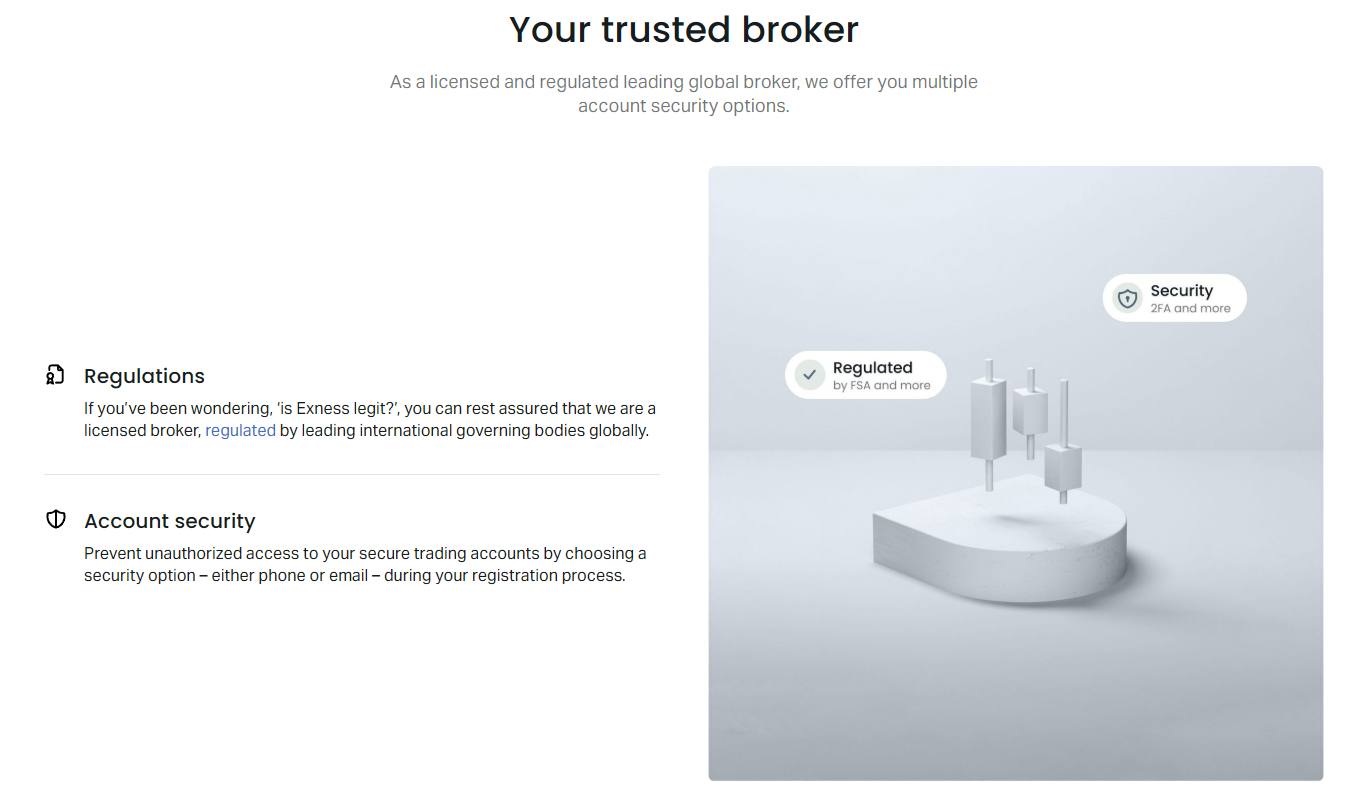
Exness operates under multiple regulatory licenses across different jurisdictions. The broker holds authorizations from the UK Financial Conduct Authority, Cyprus Securities and Exchange Commission, South Africa Financial Sector Conduct Authority, Seychelles Financial Services Authority, and several other regulators. Each license carries different protections, leverage limits, and client eligibility rules. Understanding which entity you trade under matters because it determines the safety net available if something goes wrong.
Contents
- 1. Exness Regulatory Licenses by Jurisdiction
- 2. Fund Segregation and Client Money Protection
- 3. Is Exness a Market Maker, ECN, or STP Broker?
- 4. Trading Style Permissions: Scalping, Hedging, News Trading
- 5. Islamic Account Compliance and Swap-Free Status
- 6. Legal Status in India and Other Restricted Jurisdictions
- 7. Security Measures Beyond Regulation
- 8. How to Verify Exness Regulatory Status Yourself
- 9. Common Misconceptions About Exness Regulation
- 10. Withdrawal Reliability and Regulatory Oversight
- 11. Recent Regulatory Developments and Fines
- 12. Choosing the Right Exness Entity for Your Needs
- 13. Final Assessment of Exness Regulation
The company behind the brand is Exness (SC) Ltd, registered in Seychelles, but the operational entities vary by region. European clients typically fall under Exness (Cyprus) Ltd regulated by CySEC. UK residents deal with Exness (UK) Ltd under FCA oversight. Traders in Kenya, South Africa, and other African nations often connect through Exness (SC) Ltd or Exness B.V. depending on local partnerships. This multi-entity structure is common among global brokers but creates confusion about which protections actually apply.
Regulation is not a binary status. A broker can be regulated in one jurisdiction while operating freely in another with minimal oversight. Exness publishes its license numbers and regulator names on its website, which is a positive transparency signal. However, the practical differences between an FCA-regulated account and an FSA-regulated account are substantial — compensation schemes, negative balance protection, and leverage caps all change depending on the entity.
Exness Regulatory Licenses by Jurisdiction
The broker maintains active licenses with five primary regulators. The FCA license (FRN 730729) covers UK clients and imposes the strictest requirements including 1:30 leverage caps for retail traders, mandatory negative balance protection, and Financial Services Compensation Scheme coverage up to £85,000. CySEC license 178/12 serves European Economic Area clients with similar leverage restrictions and Investor Compensation Fund protection up to €20,000.
FSCA license 51024 in South Africa offers leverage up to 1:200 for retail clients and participates in the FAIS Ombud dispute resolution scheme. The Seychelles FSA license SD025 applies to many international clients outside major regulated zones and allows leverage up to 1:2000 on certain accounts. Exness also holds a license from the Financial Services Authority of Saint Vincent and the Grenadines, though this regulator provides minimal investor protection compared to the others.
Scroll horizontally to see all columns
| Regulator | Entity | Max Leverage (Retail) | Compensation Scheme | Negative Balance Protection |
|---|---|---|---|---|
| FCA (UK) | Exness (UK) Ltd | 1:30 | FSCS £85,000 | Mandatory |
| CySEC (Cyprus) | Exness (Cyprus) Ltd | 1:30 | ICF €20,000 | Mandatory |
| FSCA (South Africa) | Exness (SC) Ltd | 1:200 | FAIS Ombud | Mandatory |
| FSA (Seychelles) | Exness (SC) Ltd | 1:2000 | None | Voluntary |
| FSA (St. Vincent) | Exness B.V. | 1:2000 | None | Voluntary |
The table above shows why entity selection matters. A trader in Germany gets FCA or CySEC protection automatically. A trader in India or Pakistan typically gets routed to the Seychelles entity unless they specifically request and qualify for a different jurisdiction. The leverage difference alone — 1:30 versus 1:2000 — changes the risk profile dramatically. Higher leverage is not a benefit for most traders; it amplifies losses faster than gains.
Client onboarding usually assigns the entity based on residence and KYC documents. You cannot simply choose the FCA entity if you live in a country where Exness operates under FSA. Some traders attempt to register through VPNs or foreign addresses to access stricter regulation, but this violates terms of service and can lead to account closure during verification. The broker's compliance systems cross-reference IP addresses, phone numbers, and document metadata.
Fund Segregation and Client Money Protection
Regulated entities must segregate client funds from operational capital. Exness states that client money is held in separate bank accounts at top-tier institutions including Barclays, Standard Chartered, and other major banks. The FCA and CySEC entities undergo regular audits to verify segregation compliance. This means if Exness becomes insolvent, client funds should be ring-fenced from creditors — but only for entities where this is legally mandated.

The Seychelles and St. Vincent entities operate under different legal frameworks. While Exness voluntarily maintains segregation for all entities, the enforcement mechanism differs. FCA and CySEC regulators can impose fines, revoke licenses, and pursue criminal charges for commingling. Offshore regulators have fewer teeth. Traders should verify which entity holds their account in the personal area and understand the corresponding protection level.
Negative balance protection is mandatory under FCA and CySEC rules. If your account goes negative during extreme volatility, the broker absorbs the loss. Under FSA Seychelles, this protection is offered voluntarily but not legally required. During the 2015 Swiss franc unpegging and 2020 oil crash, brokers without mandatory protection pursued clients for negative balances. Exness did not, but the legal obligation matters for future scenarios.
Is Exness a Market Maker, ECN, or STP Broker?
Exness operates a hybrid execution model. The broker routes orders through multiple liquidity providers including major banks and non-bank market makers. For standard accounts, execution is primarily STP (Straight Through Processing) with the broker adding a markup to raw spreads. Raw Spread and Zero accounts offer commission-based pricing with direct access to liquidity pool pricing, functioning closer to an ECN model.
The distinction matters for regulation because market makers face stricter conflict-of-interest rules. Exness discloses its execution policy and order routing practices. The broker does not operate a dealing desk that takes the opposite side of client trades as a principal. However, liquidity providers may include entities affiliated with Exness group companies, which the execution policy acknowledges. Transparency about this relationship is a regulatory requirement under MiFID II for the CySEC entity.
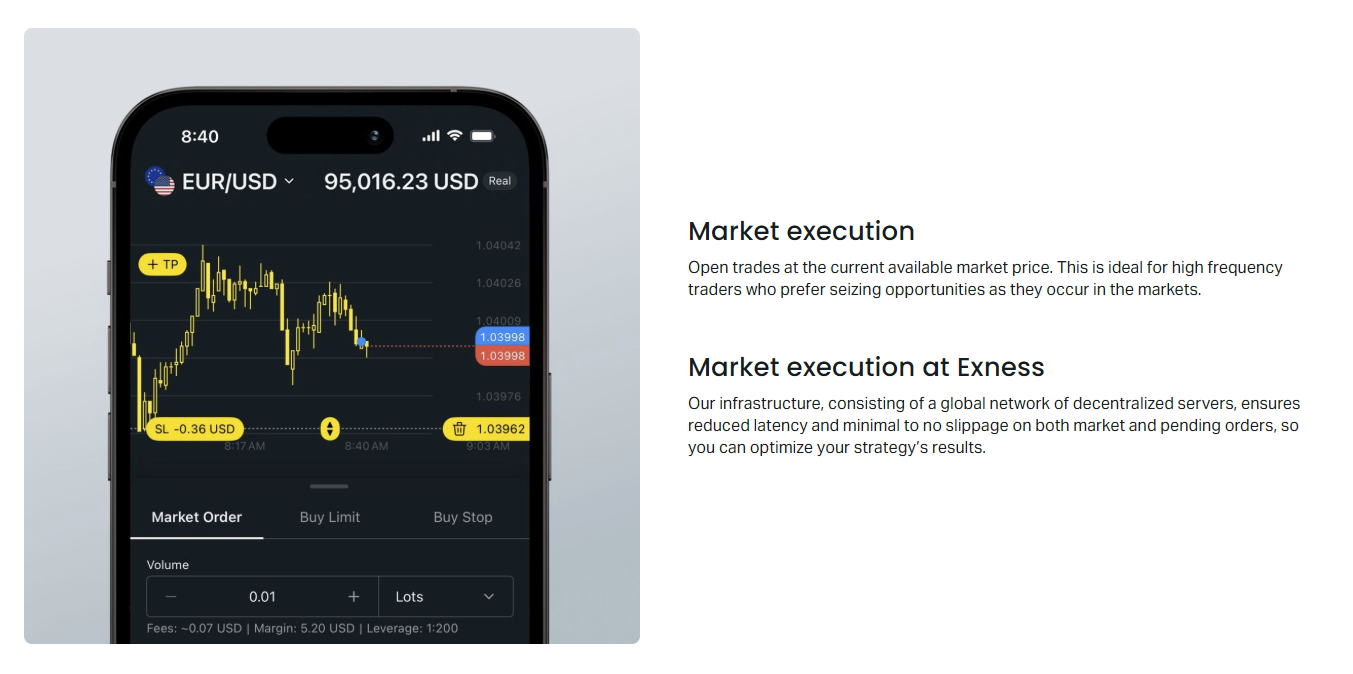
Execution quality reports published quarterly show average execution speed, slippage statistics, and price improvement frequency. These reports are required for CySEC and FCA regulated entities. The data generally shows sub-100ms execution with positive slippage occurring more frequently than negative slippage on major pairs. This suggests the hybrid model works as advertised, though individual experiences vary during news events.
Trading Style Permissions: Scalping, Hedging, News Trading
Exness explicitly permits scalping, hedging, and news trading across all account types. There are no minimum hold times, no restrictions on opening opposite positions on the same instrument, and no prohibitions on trading during high-impact economic releases. This is notable because some brokers restrict these strategies, particularly on market-maker models where they conflict with internal risk management.
The broker's execution policy states that orders are filled at the best available price from liquidity providers regardless of trading style. During news events, spreads widen and slippage increases — this is normal market behavior, not broker manipulation. Exness does not guarantee fill prices during volatile periods, which is standard industry practice. Traders using automated strategies should test thoroughly on demo during news windows.
- Scalping: Permitted on all accounts, no minimum hold time
- Hedging: Fully allowed, including same-instrument opposite positions
- News trading: No restrictions, but spreads widen significantly
- Bot trading: Permitted via MT4/MT5 Expert Advisors and API
- High-frequency trading: Supported on Raw Spread and Zero accounts
Bot trading and algorithmic strategies are supported through standard MetaTrader Expert Advisors and the Exness API for institutional clients. The broker does not restrict VPS usage or connection frequency. However, the API terms prohibit abusive patterns like quote stuffing or latency arbitrage that exploits feed delays. Normal algorithmic trading within market norms faces no obstacles.
Islamic Account Compliance and Swap-Free Status
Exness offers swap-free accounts marketed as Islamic accounts. These accounts remove overnight financing charges (swaps) on all instruments, replacing them with a fixed commission per lot on certain symbols after a grace period. The structure complies with Sharia principles prohibiting riba (interest). However, the commission replacement mechanism varies by instrument and should be reviewed before trading.
The swap-free status applies automatically to clients from certain Muslim-majority countries during registration. Other clients can request conversion through support. Exness does not charge hidden fees or widen spreads on Islamic accounts beyond the disclosed commission structure. This transparency is important because some brokers compensate for lost swap revenue through less visible channels.
Legal Status in India and Other Restricted Jurisdictions
Exness accepts clients from India, but the regulatory situation is complex. The Reserve Bank of India prohibits retail forex trading with overseas brokers under the Foreign Exchange Management Act. Indian residents can legally trade only currency pairs involving INR on recognized Indian exchanges (NSE, BSE, MCX-SX). Trading forex with Exness or any offshore broker violates FEMA regulations, though enforcement targets brokers rather than individual traders.
Exness operates in India through the Seychelles entity (FSA license SD025). The broker provides local payment methods like UPI, NetBanking, and local bank transfers. Marketing targets Indian traders aggressively. However, the RBI has issued circulars warning against unauthorized forex trading platforms. Several brokers have had websites blocked. Individual traders face account freezing risk if banks flag forex-related transactions.
Similar restrictions exist in Pakistan, Bangladesh, and several other countries where local regulators prohibit offshore forex trading. Exness still accepts clients from these regions. The broker's terms of service place responsibility on the client to comply with local laws. This is standard industry practice but creates real risk for traders who may find deposits or withdrawals blocked by local banking systems.
Scroll horizontally to see all columns
| Country | Regulatory Status | Local Entity | Risk Level |
|---|---|---|---|
| United Kingdom | FCA Authorized | Exness (UK) Ltd | Low |
| Germany/France/EU | CySEC Passported | Exness (Cyprus) Ltd | Low |
| South Africa | FSCA Licensed | Exness (SC) Ltd | Low |
| Kenya/Nigeria | FSCA/Offshore | Exness (SC) Ltd | Medium |
| India | Offshore Only (RBI Restricted) | Exness (SC) Ltd | High |
| Pakistan | Offshore Only (SECP Restricted) | Exness (SC) Ltd | High |
| United States | Not Accepted | N/A | N/A |
US clients are not accepted due to CFTC and NFA regulations requiring specific registration. Exness does not solicit US residents. Some traders attempt access via VPN, but KYC verification will fail when US documents are submitted. The broker's compliance systems are designed to detect and reject US persons during onboarding.
Security Measures Beyond Regulation
Regulatory licenses set minimum standards. Exness adds several security layers voluntarily. Two-factor authentication is available via SMS, authenticator apps, and email. Withdrawal confirmation requires 2FA by default. The personal area shows active sessions with device and location details, allowing remote logout. These features exceed what most regulators mandate.
The broker participates in the Financial Commission dispute resolution scheme, providing an external complaints mechanism with compensation fund coverage up to €20,000 per claim. This is separate from regulatory compensation schemes and covers all entities. While not a substitute for strong regulation, it adds a practical recourse layer for disputes that fall outside regulator jurisdiction.
Regular penetration testing and security audits are conducted by third-party firms. Exness publishes a bug bounty program through HackerOne, inviting ethical hackers to report vulnerabilities. The program has paid out significant rewards, indicating active engagement with security researchers. This transparency about security posture is uncommon among offshore-regulated brokers.
A license from a top-tier regulator is the baseline. What a broker builds on top — voluntary compensation funds, proactive security audits, transparent execution data — often matters more for day-to-day safety.
How to Verify Exness Regulatory Status Yourself
Do not rely solely on the broker's website. Verify licenses directly on regulator registers. For FCA, search the Financial Services Register using FRN 730729. For CySEC, check the CIF register for license 178/12. For FSCA, use the FSP search with number 51024. For FSA Seychelles, search the licensee register for SD025. Each register shows current status, permissions, and any disciplinary actions.
Check the entity name matches exactly. Scammers often use similar names. The FCA register will show "Exness (UK) Ltd" not "Exness Group" or "Exness International." The CySEC register shows "Exness (Cyprus) Ltd." Any variation suggests a clone site. Also verify the website URL matches the regulator's authorized domain list.
- FCA Register: register.fca.org.uk — search FRN 730729
- CySEC Register: cysec.gov.cy — CIF 178/12
- FSCA Register: fsca.co.za — FSP 51024
- FSA Seychelles: fsa.sc — License SD025
- Financial Commission: financialcommission.org — member verification
Review the broker's execution quality reports published quarterly. These are mandatory for MiFID II firms (CySEC entity) and show real fill statistics. Compare slippage, rejection rates, and price improvement across brokers. Exness publishes these in the legal documentation section. The data is technical but reveals whether execution matches marketing claims.
Common Misconceptions About Exness Regulation
Many traders assume "regulated by FCA" means all Exness accounts have FCA protection. This is false. Only accounts opened under Exness (UK) Ltd carry FCA protections. The brand operates multiple legal entities. Your passport and address determine the entity, not your preference. Marketing materials sometimes blur this distinction by listing all licenses together without clarifying the entity assignment logic.
Another misconception: high leverage equals better trading conditions. Exness offers 1:2000 leverage on offshore entities. Regulators cap leverage at 1:30 (FCA, CySEC) or 1:200 (FSCA) for retail clients because data shows higher leverage correlates with faster account depletion. The 1:2000 offering targets experienced traders who understand margin mechanics, but most retail traders should treat it as a risk factor, not a feature.
Some believe offshore regulation means no regulation. The Seychelles FSA does impose requirements: capital adequacy, segregation, AML/KYC compliance, and audit submissions. However, enforcement resources are limited compared to FCA or CySEC. The compensation scheme absence is the critical gap. If Exness (SC) Ltd fails, there is no government-backed fund to reimburse clients. The Financial Commission coverage helps but has lower limits and different triggers.
Withdrawal Reliability and Regulatory Oversight
Regulation directly affects withdrawal reliability. FCA and CySEC entities must process withdrawals promptly and cannot impose arbitrary limits. Client funds segregation means withdrawal capital is always available. Exness advertises instant withdrawals for most methods, and regulatory oversight ensures this claim is backed by operational reality. The offshore entity has more discretion but maintains the same processing standards voluntarily.
Withdrawal issues typically stem from payment provider delays, incomplete KYC, or bonus term violations — not regulatory barriers. Exness requires full verification before first withdrawal, which is standard AML compliance. The broker does not charge withdrawal fees, though payment processors may. Cryptocurrency withdrawals are processed on-chain and subject to network confirmation times.
Fast withdrawals are a regulatory compliance indicator. Brokers struggling with capital adequacy often delay withdrawals. Exness's consistent instant withdrawal track record across entities suggests adequate capitalization.
Recent Regulatory Developments and Fines
Exness has maintained a clean regulatory record with no major fines or sanctions from FCA, CySEC, or FSCA in recent years. The broker withdrew its Australian ASIC license in 2021 when ASIC imposed leverage caps and product intervention measures. This was a strategic exit, not a regulatory action. Exness chose to serve Australian clients through the offshore entity rather than comply with stricter local rules.
In 2022, CySEC conducted a thematic review of CFD brokers' marketing practices. Exness was not among firms fined for misleading advertising. The broker's marketing emphasizes regulation prominently but generally avoids prohibited claims like "guaranteed profits" or "risk-free trading." This compliance discipline reduces regulatory risk for clients.
The Financial Commission has ruled on several disputes involving Exness. Most decisions favored the broker on technical grounds (margin calls, stop-out execution). A few rulings required compensation for platform downtime during high volatility. These cases are public on the Financial Commission website and provide insight into how disputes are actually resolved.
Scroll horizontally to see all columns
| Year | Regulator | Action Type | Outcome |
|---|---|---|---|
| 2021 | ASIC (Australia) | License Surrender | Voluntary withdrawal |
| 2022 | CySEC | Thematic Review | No action required |
| 2023 | FCA | Routine Supervision | No enforcement |
| 2023 | Financial Commission | Dispute Rulings | Mixed outcomes |
| 2024 | FSCA | Compliance Audit | Ongoing |
The ASIC withdrawal is worth understanding. Australia banned binary options, restricted CFD leverage to 1:30, and required negative balance protection. Exness decided the Australian market wasn't worth the compliance cost under the new regime. Australian clients now onboard through the Seychelles entity. This pattern — brokers exiting strict jurisdictions — is industry-wide and reduces local protection for traders in those markets.
Choosing the Right Exness Entity for Your Needs
If you qualify for FCA or CySEC regulation through residency, accept it. The protections are objectively superior. The leverage cap (1:30) feels restrictive if you're used to 1:500 or 1:2000, but it exists because data proves high leverage destroys retail accounts. Professional client classification can restore higher leverage under FCA/CySEC, but requires meeting strict criteria: €500k portfolio, relevant professional experience, or high trading volume.
Traders in FSCA jurisdictions (South Africa, Kenya, Nigeria) get a reasonable middle ground: 1:200 leverage with local dispute resolution. The FAIS Ombud provides accessible complaint handling. This is significantly better than pure offshore regulation. If you're in an unrestricted jurisdiction but can prove ties to an FSCA country (residency, tax ID, local bank account), you may qualify for that entity.
For traders in restricted jurisdictions like India, Pakistan, or Bangladesh, the offshore entity is the only option. Accept the risks: no compensation scheme, limited regulatory recourse, potential banking blocks. Use only funds you can afford to lose. Complete KYC thoroughly to avoid withdrawal delays. Consider the Financial Commission membership as your primary dispute mechanism. Do not expect local law enforcement to help with offshore broker disputes.
Final Assessment of Exness Regulation
Exness holds legitimate licenses from respected regulators and operates transparently about its multi-entity structure. The FCA and CySEC entities provide strong protections comparable to any top-tier broker. The FSCA entity offers solid regional coverage. The offshore entities fill gaps for restricted jurisdictions but lack compensation schemes. The broker's execution quality, withdrawal reliability, and security investments exceed regulatory minimums. For traders who qualify for top-tier regulation, Exness is a safe choice. For those routed offshore, the risks are real but mitigated by the broker's track record and voluntary safeguards. Verify your entity, understand the protections, and size your deposits accordingly.
Frequently Asked Questions
Is Exness regulated by the FCA?
Yes, Exness (UK) Ltd is authorized and regulated by the Financial Conduct Authority under FRN 730729. This entity serves UK residents only.
Which Exness entity will I be assigned to?
Assignment is based on your country of residence and KYC documents. You cannot choose a different entity than the one designated for your jurisdiction.
Does Exness offer negative balance protection?
Mandatory for FCA and CySEC entities. Voluntary for FSA Seychelles and St. Vincent entities. Check your account entity to confirm.
Is Exness legal in India?
Exness accepts Indian clients through its Seychelles entity, but RBI regulations prohibit Indian residents from trading forex with offshore brokers. Proceed at your own risk.
Is Exness a market maker or ECN broker?
Exness uses a hybrid STP/ECN model. Standard accounts are STP with spread markup. Raw Spread and Zero accounts offer commission-based pricing with direct liquidity access.
Does Exness allow scalping and hedging?
Yes, both scalping and hedging are permitted on all account types with no minimum hold times or restrictions.
What compensation scheme covers my Exness account?
FCA entity: FSCS up to £85,000. CySEC entity: ICF up to €20,000. FSCA entity: FAIS Ombud. Offshore entities: Financial Commission up to €20,000 per claim.
Can US residents open an Exness account?
No. Exness does not accept US clients due to CFTC/NFA regulatory requirements.