
Trading Education
Exness CFD Trading: Markets, Conditions, and Platform Access
A practical guide to CFD markets, account types, trading costs, and platform choices on Exness.

Senior Forex Trader & Market Analyst
Daniel Chen is an experienced forex trader and financial market analyst with over 15 years of experience in currency trading. He specializes in technical analysis, risk management, and developing practical trading strategies to help traders make informed decisions.
Contract for difference trading lets you speculate on price movements without owning the underlying asset. On Exness, this covers forex pairs, major global stocks, stock indices, commodities like gold and oil, and a range of cryptocurrencies. The broker aggregates liquidity from multiple providers and routes orders through its own execution engine, which aims to keep spreads tight and fill speeds fast across all asset classes.
Contents
- 1. What CFD Trading Means on Exness
- 2. Available CFD Markets and Instruments
- 3. Account Types for CFD Trading
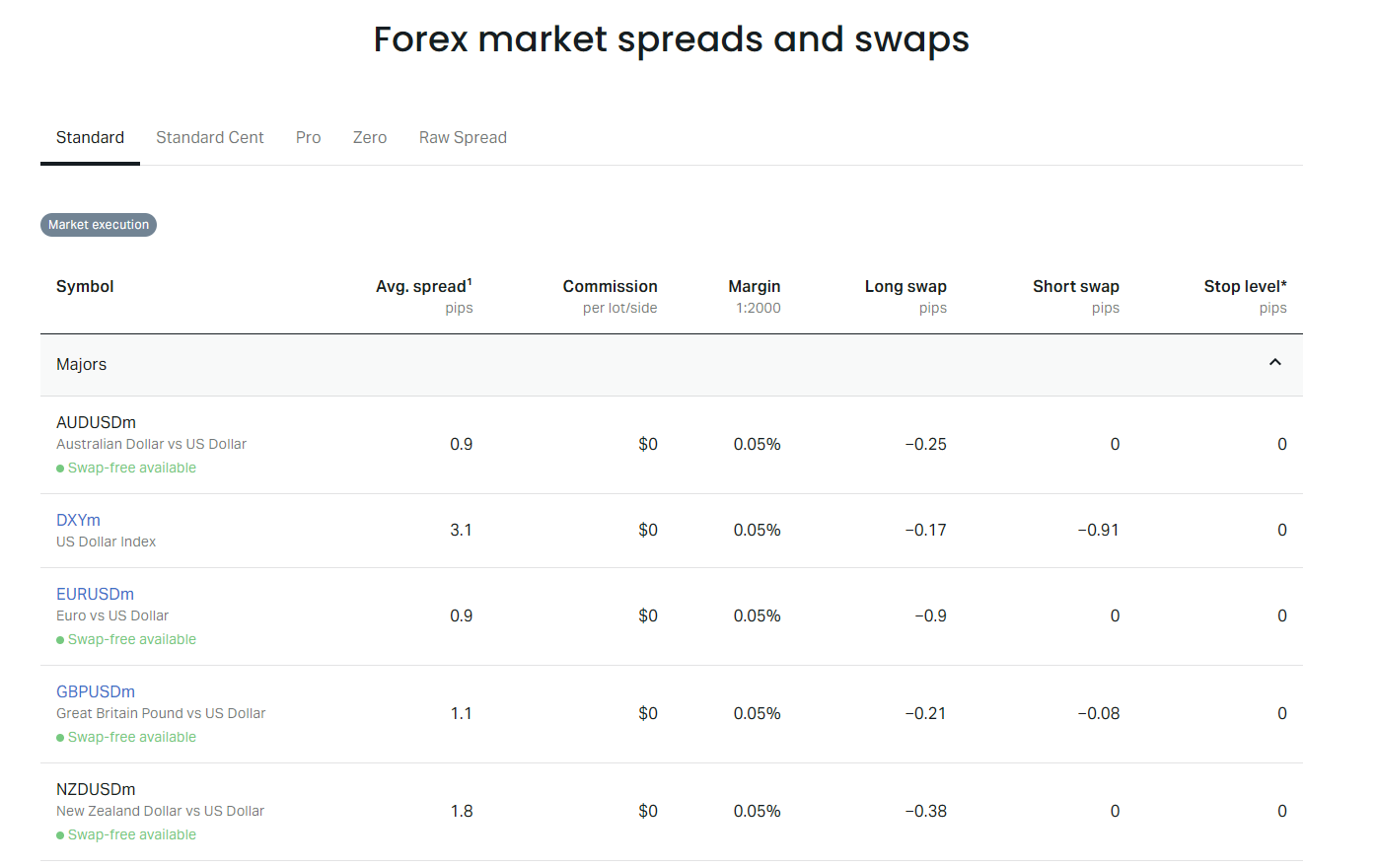
- 4. Spreads, Commissions, and Swap Costs
- 5. Leverage and Margin Requirements
- 6. Execution Models and Order Types
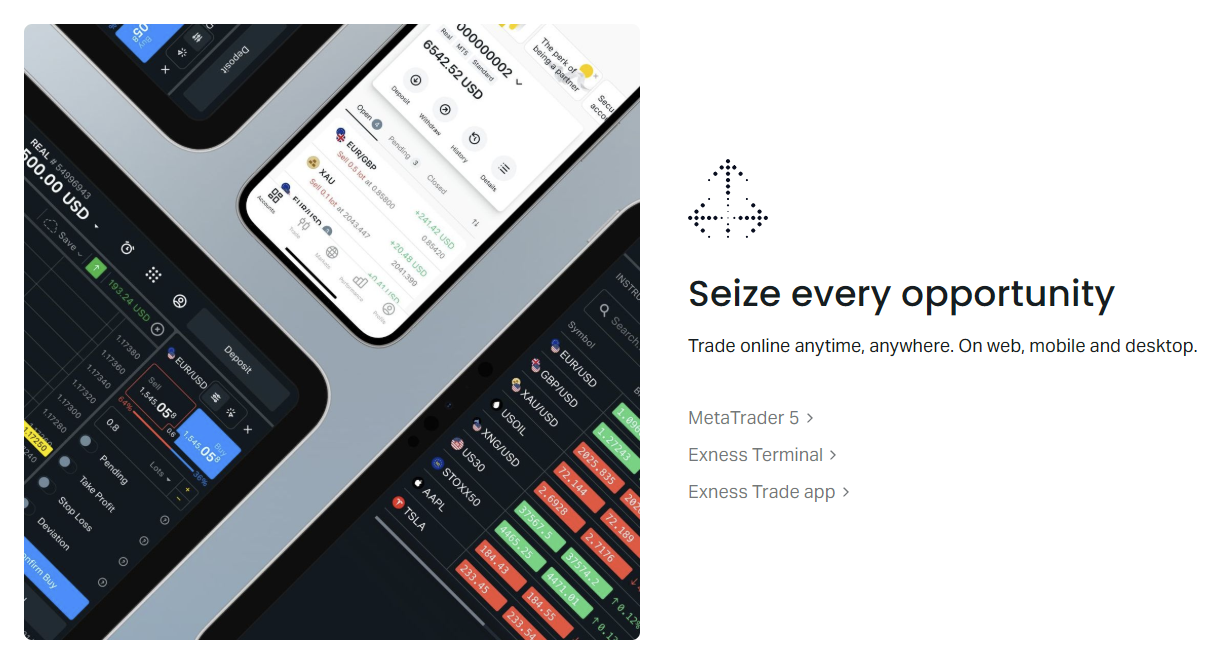
- 7. Trading Platforms for CFDs
- 8. Risk Management Tools
- 9. Opening and Funding a CFD Account
- 10. Practical Considerations for CFD Traders
- 11. Final Assessment of Exness CFD Trading
The platform supports both MetaTrader 4 and MetaTrader 5, plus a proprietary web terminal and mobile app. Each venue gives access to the same instrument list, though some features — such as depth of market or netting versus hedging modes — differ between MT4 and MT5. Understanding those differences matters when you choose where to run a strategy, especially if you rely on automated systems or need specific order types.
Account type determines the cost structure. Standard and Standard Cent accounts use spread-only pricing with no commission, while Raw Spread, Zero, and Pro accounts add a per-lot commission in exchange for tighter raw spreads. Swap rates vary by instrument and account type, and Islamic accounts swap-free status applies to most CFDs. The minimum deposit starts at one dollar for Standard Cent, but professional accounts require higher funding to unlock their full conditions.
What CFD Trading Means on Exness
A CFD is an agreement to exchange the difference in an asset's price between open and close. You never take delivery of currency, shares, or barrels of oil. Profit or loss settles in cash, usually in the account's base currency. Exness offers CFDs on over 100 forex pairs, dozens of large-cap stocks from US and EU exchanges, major indices like the US30, US500, and GER40, spot metals, energies, and more than 20 cryptocurrency pairs against USD or EUR.
Leverage amplifies both gains and losses. Exness provides dynamic leverage up to 1:2000 on forex for accounts under certain equity thresholds, dropping to 1:200 above $2,000 equity and further at higher tiers. Indices and commodities typically max out at 1:200, stocks at 1:20, and crypto at 1:10. Margin requirements adjust automatically as equity changes, so a position opened at high leverage can see its margin requirement increase if the account grows or if the broker updates its tiers.
Trading hours follow the underlying markets. Forex runs 24 hours a day, five days a week. Stock CFDs trade during the exchange's regular session plus limited pre-market and after-hours windows where liquidity allows. Indices track futures hours, which are nearly 24/5 for major US and EU contracts. Crypto CFDs trade 24/7 with brief maintenance windows on weekends. The platform displays session times in your local zone, and the economic calendar flags high-impact events that can widen spreads temporarily.
Available CFD Markets and Instruments
Forex remains the deepest pool. Major pairs like EURUSD, GBPUSD, and USDJPY often show spreads from 0.0 pips on Raw Spread and Zero accounts, with a commission of $3.5 per side per lot. Minor and exotic pairs carry wider spreads and higher swap costs. The broker groups pairs into majors, minors, and exotics in the market watch, and you can filter by spread, swap, or margin requirement to find instruments that fit a strategy.
Stock CFDs cover companies listed on NASDAQ, NYSE, and major European exchanges. You can trade Apple, Tesla, Microsoft, Amazon, and similar names with leverage up to 1:20. Dividends are credited or debited on ex-date depending on position direction. Corporate actions like splits or mergers adjust the contract automatically. Short selling is available on most liquid names, though borrow costs may apply and are reflected in the swap rate.
Index CFDs track futures prices for the US30 (Dow), US500 (S&P 500), USTEC (Nasdaq 100), GER40 (DAX), UK100 (FTSE), and others. These trade nearly around the clock with spreads that widen during the Asian session and tighten at the London and New York opens. Rollover occurs at futures expiration; the platform handles the switch to the next contract without closing your position, though a small price adjustment may appear.
Commodities include spot gold (XAUUSD), silver (XAGUSD), Brent and WTI crude oil, and natural gas. Gold and silver trade 23 hours a day with a one-hour daily break. Oil follows futures sessions. Spreads on gold can dip below 10 cents on Raw Spread accounts during peak liquidity. Crypto CFDs cover Bitcoin, Ethereum, Ripple, Litecoin, Bitcoin Cash, and several altcoins against USD and EUR. Crypto spreads are wider than forex, and weekend trading carries higher volatility risk.
Account Types for CFD Trading
Exness offers six live account types. Standard and Standard Cent use market execution with spread-only pricing. Standard Cent denominates balance in cents, so a $10 deposit shows as 1,000 cents — useful for testing real-money psychology with tiny risk. Standard accounts start at $1 minimum deposit, though practical minimums depend on the payment method. Neither charges commission.
Raw Spread and Zero accounts target cost-sensitive traders. Raw Spread shows institutional-grade spreads from 0.0 pips with a $3.5 per side per lot commission on forex. Zero account fixes spreads at 0.0 pips for the top 30 instruments during peak hours, with a higher $3.5–$5 commission depending on the pair. Both require $200 minimum deposit. Pro account blends low spreads with no commission on forex, but carries a $200 minimum and higher margin requirements on some instruments.
Islamic accounts remove swaps on all instruments for clients who qualify. The swap-free status applies automatically once the account is flagged, though the broker may widen spreads slightly on some pairs to offset the carry cost. Professional clients who meet MiFID criteria can access higher leverage tiers and different margin rules, but they lose negative balance protection and certain regulatory safeguards. Most retail traders stay on standard retail terms.
Spreads, Commissions, and Swap Costs
Spread is the primary cost on Standard accounts. EURUSD averages 0.7–1.0 pips during London–New York overlap, widening to 2–3 pips in the Asian session. GBPUSD and USDJPY behave similarly. Exotic pairs like USDTRY or USDZAR can exceed 50 pips. On Raw Spread and Zero, the same majors show 0.0–0.2 pips plus commission. A round turn on EURUSD costs $7 on Raw Spread (0.0 spread + $3.5×2), which often beats the effective cost on Standard when spreads exceed 0.7 pips.
Commissions are charged per side per lot. One standard lot equals 100,000 units of base currency. On MT5, you can trade fractional lots down to 0.01. The commission scales linearly, so a 0.1 lot trade costs $0.35 per side. Stock CFDs on Raw Spread and Zero carry a 0.02% commission per side with a $1 minimum. Index and commodity CFDs have no commission on any account; their cost is embedded in the spread.
Swap rates reflect the interest rate differential between the two currencies or the cost of carry for non-forex instruments. Long EURUSD typically pays a small positive swap; short EURUSD pays negative. Gold swaps are negative both ways due to storage cost. Crypto swaps are significantly negative for long positions, often -0.05% to -0.1% per day. The trading calculator in the personal area shows exact swap values for any position size and instrument before you enter.
Leverage and Margin Requirements
Dynamic leverage on Exness adjusts by equity bracket. For forex, accounts under $1,000 equity can use 1:2000. Between $1,000 and $2,000, max leverage drops to 1:1000. From $2,000 to $5,000, it's 1:500. Above $5,000, 1:200. These thresholds apply per account, not per position. If you have multiple accounts, each calculates leverage independently. The broker updates margin requirements in real time as equity crosses thresholds.
Indices, commodities, and stocks have fixed maximum leverage regardless of equity. Major indices cap at 1:200, gold at 1:200, other commodities at 1:100, stocks at 1:20, and crypto at 1:10. Margin is calculated as notional value divided by leverage. A 1-lot EURUSD position at 1:2000 requires $50 margin. The same position at 1:200 needs $500. The platform shows free margin, margin level, and stop-out level (0% on Exness, meaning positions close when margin level hits zero).
Hedging mode allows opposite positions on the same instrument. In MT5, you can choose netting (one net position per symbol) or hedging (multiple opposing positions). Hedging doubles margin for the overlapping volume unless the broker applies margin hedging rules. Exness uses a 50% margin hedge discount on forex and metals, meaning a 1-lot long and 1-lot short EURUSD requires margin for only 0.5 lots. Indices and stocks do not receive this discount.
Execution Models and Order Types
Exness uses market execution for all account types. Orders fill at the best available price from the liquidity pool. There is no requote, but slippage can occur during high volatility or low liquidity. The broker publishes execution statistics quarterly, showing average fill speed, slippage distribution, and price improvement frequency. Most forex orders fill in under 50 milliseconds. Stock and crypto CFDs may take longer due to underlying market structure.
Order types include market, limit, stop, stop-limit, and trailing stop. MT5 adds buy-stop-limit and sell-stop-limit for precise entry control. One-cancels-other (OCO) is not native but can be scripted via Expert Advisors. Partial fills are possible on large orders; the remainder stays active at the same price. The web terminal and mobile app support the same order types as the desktop platforms, though the UI condenses some advanced options.
Stop-out occurs at 0% margin level. When equity falls to zero, the system closes positions starting with the largest loss. There is no margin call warning at a higher threshold. Traders must monitor margin level themselves or set alerts. The platform highlights margin level in red when it drops below 100%, but positions remain open until zero. Negative balance protection applies to retail accounts — you cannot lose more than your deposit.
Trading Platforms for CFDs
MetaTrader 4 remains the most widely used platform. It supports hedging, 9 timeframes, 30 built-in indicators, and a vast library of custom indicators and Expert Advisors. MT4 does not support netting mode, depth of market, or exchange-traded instruments natively. Exness provides MT4 for Windows, macOS, Linux via Wine, web browser, iOS, and Android. The mobile app includes charting, trade management, and push notifications but lacks custom indicator support.
MetaTrader 5 adds netting mode, 21 timeframes, 38 built-in indicators, depth of market, economic calendar integration, and support for exchange-traded stocks and futures. The strategy tester handles multi-currency backtesting and forward testing. MT5 also runs on all major OSes and mobile devices. Exness offers both MT4 and MT5 downloads from the personal area, plus web terminals that require no installation. The web terminal loads in any modern browser and syncs chart layouts with the desktop version.
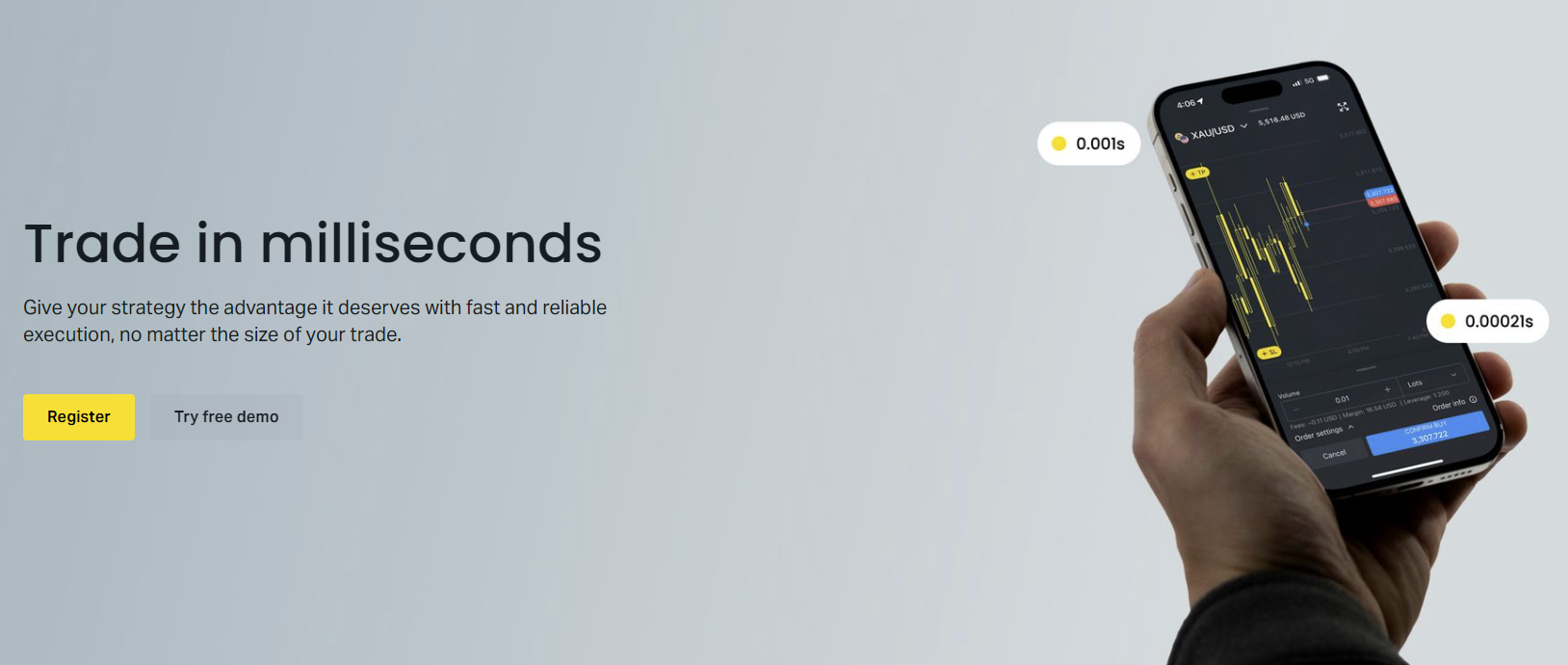
The Exness Trade app is a proprietary mobile-first platform. It includes the full instrument list, one-tap trading, integrated news from FXStreet, trading signals from Trading Central, and a simplified account management flow. The app supports biometric login, dark mode, and price alerts. It does not support automated trading or custom indicators. For algorithmic traders, MT4 or MT5 with a VPS remains the standard choice. Exness provides a free VPS for clients who trade at least 5 lots per month or maintain $500 equity.
Risk Management Tools
Stop-loss and take-profit orders attach to positions at entry or after. They can be set in pips, price, or monetary value. Trailing stop activates once price moves in your favor by a defined distance, then follows at that distance. On MT4, trailing stop runs client-side — the terminal must stay open. On MT5 and the web terminal, trailing stop runs server-side, so it works even when you're offline. This distinction matters for strategies that rely on trailing stops overnight.
The trading calculator computes margin, pip value, swap, and commission for any hypothetical trade. Input account type, leverage, instrument, volume, and direction to see the exact numbers. The margin calculator helps size positions to keep margin level above a target threshold. The pip calculator shows profit or loss per pip for a given lot size. These tools live in the personal area and on the website, accessible without login.
Negative balance protection resets equity to zero if a stop-out leaves a negative balance. This applies automatically to all retail accounts. Professional accounts waive this protection in exchange for higher leverage. The broker also offers a margin call notification via email and push when margin level drops below a custom threshold you set in the personal area. There is no guaranteed stop-loss product; slippage on stop orders can exceed the intended exit price during gaps.
Opening and Funding a CFD Account
Registration starts with email and password. The personal area then guides you through profile completion: name, date of birth, address, phone verification, and a short suitability questionnaire. Identity verification requires a government-issued ID and proof of address (utility bill or bank statement under three months old). Most verifications complete within a few hours; complex cases may take a business day. You can deposit before full verification, but withdrawals require completed KYC.
Deposit methods vary by region. Common options include Visa/Mastercard, bank wire, Skrill, Neteller, WebMoney, Perfect Money, and various local payment systems. Crypto deposits (USDT, USDC, BTC, ETH) are processed via the Exness wallet and credited after network confirmations. Minimum deposit is $1 for Standard Cent, $10 for Standard, $200 for Raw Spread, Zero, and Pro. Most methods are instant; bank wires take 1–3 business days. Exness charges no deposit fees, though payment providers may.
Withdrawals return to the same method used for deposit, up to the deposited amount. Profits can be withdrawn to any verified method. Minimum withdrawal is $1 for e-wallets and crypto, $3 for cards, $10 for bank wire. Processing is instant for e-wallets and crypto, up to 24 hours for cards, and 1–5 business days for bank wires. Exness covers withdrawal fees for most methods. The personal area shows a full transaction history with status timestamps.
Practical Considerations for CFD Traders
Spread widening around news events is normal. The economic calendar in the terminal flags high-impact releases like NFP, CPI, and central bank decisions. During these windows, spreads on affected pairs can triple. If your strategy cannot handle widened spreads, reduce position size or flatten exposure before the release. The calendar shows forecast, previous, and actual values with color-coded impact ratings.
Overnight and weekend holding costs accumulate. A long gold position held for a week incurs seven days of negative swap. Crypto positions held over weekends can see significant funding charges. Check the swap rate before entering a swing trade. The trading calculator shows the daily cost. Some traders close all positions Friday to avoid weekend gaps and swap, then re-enter Monday if the setup remains valid.
Correlation between instruments affects portfolio risk. Long EURUSD and long GBPUSD are positively correlated — a dollar rally hurts both. Long US500 and long USTEC move together. Gold often moves inversely to real yields. The platform does not show a correlation matrix, but you can export price history to Excel or use third-party tools. Diversifying across uncorrelated assets — forex, indices, commodities — reduces drawdown concentration.
Tax treatment of CFD profits varies by country. In many jurisdictions, CFDs are taxed as capital gains or speculative income. Some countries treat them as gambling winnings (tax-free), others as ordinary income. Exness does not provide tax advice or issue tax forms for most regions. Keep your own trade logs with timestamps, entry/exit prices, and net P&L. The personal area allows CSV export of trade history for any date range.
The account type that looks cheapest on paper often isn't once you factor in your typical trade size, hold time, and the instruments you actually trade.
Final Assessment of Exness CFD Trading
Exness delivers a broad CFD offering with competitive pricing, multiple platform choices, and reliable execution. The account structure lets you match cost profile to trading style — spread-only for simplicity, raw spread with commission for high frequency, swap-free for overnight holders. Execution quality is verifiable through published stats, and the free VPS threshold is reachable for active traders. The main trade-offs are the lack of guaranteed stops, no OCO orders natively, and the dynamic leverage step-downs that can catch growing accounts off guard. For most retail CFD traders, the combination of low minimums, instant withdrawals, and deep liquidity across asset classes makes Exness a practical choice worth testing on a demo account first.
Frequently Asked Questions
What is the minimum deposit to start CFD trading on Exness?
Standard Cent accounts require $1. Standard accounts need $10. Raw Spread, Zero, and Pro accounts require $200 minimum deposit.
Does Exness charge commission on all CFD trades?
No. Standard and Standard Cent accounts use spread-only pricing with no commission. Raw Spread and Zero accounts charge $3.5 per side per lot on forex. Stock CFDs on those accounts carry 0.02% commission per side. Indices, commodities, and crypto have no commission on any account.
What leverage can I use for crypto CFDs on Exness?
Cryptocurrency CFDs max out at 1:10 leverage regardless of account equity or type. This is a fixed limit applied by the broker.
Can I use Expert Advisors on the Exness web terminal?
No. The web terminal does not support automated trading. For EAs, use the desktop MT4 or MT5 platforms, ideally with a VPS for 24/7 operation.
How does Exness handle stop-outs?
Stop-out occurs at 0% margin level. Positions close automatically starting with the largest loss. Retail accounts have negative balance protection — you cannot lose more than your deposit.
Are swap-free accounts available for all CFD instruments?
Yes. Islamic accounts remove swaps on forex, metals, indices, commodities, stocks, and crypto CFDs. The swap-free status applies automatically once the account is approved.
What platforms support server-side trailing stops?
MT5 and the Exness web terminal run trailing stops server-side. MT4 trailing stops run client-side and require the terminal to stay open.
How fast are withdrawals processed on Exness?
E-wallets and crypto withdrawals are instant. Card withdrawals take up to 24 hours. Bank wires take 1–5 business days. Exness covers fees for most methods.