

Forex Trading Guides
Exness Copy Trading: Complete Guide for 2024
A practical breakdown of the Exness social trading platform for followers and providers.

Senior Forex Trader & Market Analyst
Daniel Chen is an experienced forex trader and financial market analyst with over 15 years of experience in currency trading. He specializes in technical analysis, risk management, and developing practical trading strategies to help traders make informed decisions.
Exness launched its copy trading service in 2021, adding a social layer to a broker already known for tight spreads and instant withdrawals. The feature lets regular investors mirror the trades of experienced strategy providers without needing to analyze markets themselves. For providers, it creates a way to earn commissions on copied volume. The platform sits inside the Exness mobile app and the Personal Area, so there is no separate software to install.
Contents
- 1. How Exness Copy Trading Works
- 2. Getting Started as a Follower
- 3. Exness Copy Trading Minimum Deposit
- 4. Evaluating Strategy Providers
- 5. Risk Management Tools for Followers
- 6. Fees, Commissions, and Hidden Costs
- 7. Becoming a Strategy Provider
- 8. Mobile App Experience
- 9. Pros and Cons of Exness Copy Trading
- 10. Comparison with Other Copy Trading Platforms
- 11. Tax and Regulatory Considerations
- 12. Common Mistakes to Avoid
- 13. Final Assessment of Exness Copy Trading
Most brokers treat copy trading as an afterthought. Exness built it natively, which means execution speed, margin handling, and account security work the same way as regular trading. That matters because copied trades inherit the same trading conditions — spreads, commissions, leverage limits — as if you placed them manually. The difference is purely who decides when to open and close.
This guide covers how the system works, what it costs, how to evaluate providers, and where the real risks sit. It also addresses the questions that come up most often: minimum deposit requirements, fee structures, and whether the platform suits beginners or only experienced traders looking to diversify.
How Exness Copy Trading Works
The mechanics are straightforward. A strategy provider trades on their own live account. Their trades — entries, exits, stop losses, take profits — are broadcast to the copy trading network. Followers choose a provider, allocate funds, and the system replicates every trade proportionally. If a provider opens a 1-lot position and you have allocated $1,000 to their strategy while they trade with $10,000, your position will be 0.1 lots.
Proportional copying is the only mode. There is no fixed-lot option, no reverse copying, and no partial-close control for followers. Once you start copying, every trade the provider makes appears in your account automatically. You can stop copying at any time, which closes open copied positions at market price. You cannot cherry-pick individual trades.
The platform updates provider statistics in near real time. You see total profit, monthly return, maximum drawdown, number of copiers, assets under management, and a risk score. The risk score is calculated by Exness based on volatility, leverage usage, and drawdown history. It ranges from 1 to 10, with 10 being the most aggressive. This score is the quickest filter when scanning the provider list.
Providers set their own commission model. Most charge a percentage of profitable copied trades — typically 10% to 30% of net profit. Some add a volume-based fee per lot. The commission is deducted automatically from the follower's account when a copied trade closes in profit. Losing trades do not generate commission. This aligns incentives: providers only earn when followers earn.
Getting Started as a Follower
You need a live Exness account. If you only have a demo account, you can browse providers but cannot allocate real funds. The registration process is the same as opening any Exness account: email verification, identity verification (KYC), and a deposit. Once verified, open the Exness app or log into the Personal Area, navigate to the Copy Trading section, and you will see the provider marketplace.
Filtering tools let you sort by return, risk score, number of copiers, assets under management, and trading style. Each provider has a detailed profile showing equity curve, monthly performance table, trade history, and the instruments they trade. Clicking "Start Copying" opens a screen where you choose the allocation amount. The minimum allocation per provider is $10. You can copy multiple providers simultaneously, each with its own allocation.
After confirming, the system creates a dedicated copy trading sub-account linked to your main wallet. Funds move from your wallet to the sub-account. Profits and losses stay in that sub-account until you withdraw them back to your main wallet. This separation makes it easier to track performance per provider and manage risk across different strategies.
Exness Copy Trading Minimum Deposit
Exness does not impose a special minimum deposit for copy trading. The broker's standard minimum deposit applies — $10 for most regions and payment methods. However, the practical minimum is higher because each provider requires at least $10 allocation. If you want to diversify across five providers, you need at least $50 plus enough margin to withstand drawdowns.
Margin requirements follow the same rules as regular trading. If a provider uses 1:200 leverage and opens positions requiring $50 margin, your allocation must cover that margin plus room for floating losses. A $10 allocation copying a provider trading standard lots will hit stop-out quickly. Most followers start with $100 to $500 per provider to give the strategy room to breathe.
Scroll horizontally to see all columns
| Provider Style | Typical Leverage | Suggested Min Allocation | Reason |
|---|---|---|---|
| Conservative (low leverage, wide stops) | 1:20 - 1:50 | $50 - $100 | Lower margin per trade, slower equity changes |
| Balanced (moderate leverage, defined risk) | 1:50 - 1:100 | $100 - $300 | Needs buffer for normal drawdown sequences |
| Aggressive (high leverage, scalping) | 1:200 - 1:2000 | $300 - $1000+ | Large position sizes relative to equity, fast stop-out risk |
Deposits are instant for most methods — cards, e-wallets, and local bank transfers in supported countries. Crypto deposits require network confirmations. Withdrawals from the copy trading sub-account back to your main wallet are instant and free. From there, standard Exness withdrawal times apply: instant for most e-wallets, up to 24 hours for cards, and 1-3 business days for bank wires.
Evaluating Strategy Providers
The provider list shows hundreds of options. Most followers gravitate toward the top of the leaderboard — highest return, most copiers. That is often a mistake. A provider with 300% monthly return and a risk score of 9 is likely using martingale, grid, or excessive leverage. The equity curve will show a smooth climb with occasional sharp drops. Those drops can wipe out followers who joined near the peak.
Look for consistency over raw return. A provider averaging 8-15% monthly with a maximum drawdown under 20% and a risk score of 3-5 is more sustainable than one posting 50% months followed by 40% drawdowns. Check the monthly performance table. Green months should outnumber red months. The equity curve should trend upward without cliff-like drops.
Trade history reveals the strategy type. Scalpers open dozens of positions daily with tight stops. Swing traders hold for days or weeks. Grid traders add to losing positions. Martingale traders double down. The platform does not label these styles explicitly, but the trade list makes them obvious. If you see many small winning trades and a few huge losers, that is a red flag.
A smooth equity curve with no visible drawdowns usually means the provider is hiding risk — either through wide stops, no stops, or accounting tricks. Real trading has scars.
Risk Management Tools for Followers
Exness provides three main risk controls for followers. First, you set the allocation amount per provider. This is your hard capital limit for that strategy. Second, you can enable a stop-out level for the copy trading sub-account. If equity falls below a percentage of the allocation — default is 50% — copying pauses automatically. Existing positions remain open but no new trades are copied until you reactivate or add funds.
Third, you can manually stop copying at any time. This closes all copied positions at current market prices. There is no "pause and keep positions" option. Once you stop, the relationship with that provider ends. You can restart later, but it creates a new copying session with a fresh high-water mark for commission calculations.
Notably absent: you cannot set a per-trade stop loss, maximum daily loss limit, or maximum open positions limit. You also cannot adjust position sizing independently of the provider. If the provider opens 50 positions, you get 50 positions scaled to your allocation. This all-or-nothing design simplifies the system but removes granular control that some followers want.
Diversification across providers is the primary risk tool available. Copying three to five providers with different styles — one trend follower, one mean reversion, one breakout — reduces reliance on any single approach. Keep total copy trading allocation to a portion of your overall trading capital, not 100%.
Fees, Commissions, and Hidden Costs
The cost structure has three layers. First, the provider's commission — typically 10-30% of net profit per copying period (usually weekly or monthly). This is deducted automatically from profitable trades. Second, the underlying trading costs: spreads and commissions on the instruments traded. These are the same costs you would pay trading manually on the same account type. Third, swap fees for positions held overnight.
Providers choose their account type. Most use Standard or Pro accounts with market execution and no commission, meaning costs are embedded in the spread. Some use Raw Spread or Zero accounts where a commission per lot applies ($3.50 per side per lot on Raw Spread). The follower bears these costs proportionally. A provider trading on a Raw Spread account passes the commission savings via tighter spreads but adds the per-lot fee.
Scroll horizontally to see all columns
| Account Type | Spread Style | Commission | Best For |
|---|---|---|---|
| Standard | Variable, no commission | None | Simplicity, lower volume strategies |
| Pro | Tighter variable, no commission | None | Balanced cost structure |
| Raw Spread | Raw interbank spreads | $3.50/lot/side | High-frequency, scalping strategies |
| Zero | Fixed near-zero spreads | $3.50-$20/lot/side | Specific instruments, news trading |
There are no platform fees, no subscription fees, and no performance fees to Exness. The broker earns from the spreads and commissions on the copied volume, same as regular trading. This is cleaner than platforms that charge monthly access fees or take a cut of provider commissions.
Becoming a Strategy Provider
Any verified Exness client with a live account can apply to become a provider. The requirements are minimal: complete KYC, have a trading history of at least 30 days, and maintain a minimum equity of $500 in the strategy account. Once approved, the account appears in the marketplace after a short review.
Providers set their commission model: percentage of profit (10-50%), fixed fee per lot, or a combination. They also choose a nickname, description, and risk disclosure. The platform tracks all metrics automatically. Providers cannot edit or delete trade history. This transparency protects followers but also means every drawdown is public permanently.
Providers earn only when followers profit. If a follower joins mid-period and the strategy loses money, no commission is generated for that follower. The high-water mark principle applies: commission is paid only on new profits above the previous peak equity for each follower. This prevents providers from churning followers to reset commission baselines.
The best providers treat their strategy account like a fund — consistent risk, documented process, and communication with copiers. The ones chasing leaderboard rank usually blow up within six months.
Mobile App Experience
Copy trading is fully integrated into the Exness Trade app (iOS and Android). The interface mirrors the web version: provider marketplace, filtering, allocation management, and performance tracking. Push notifications alert you when copied trades open or close, when a provider hits your stop-out threshold, or when commission is charged.
The app also lets you deposit, withdraw, and move funds between your main wallet and copy trading sub-accounts. This is convenient but creates a temptation to add funds during drawdowns — often the worst time. The app does not restrict this behavior, so discipline remains the follower's responsibility.
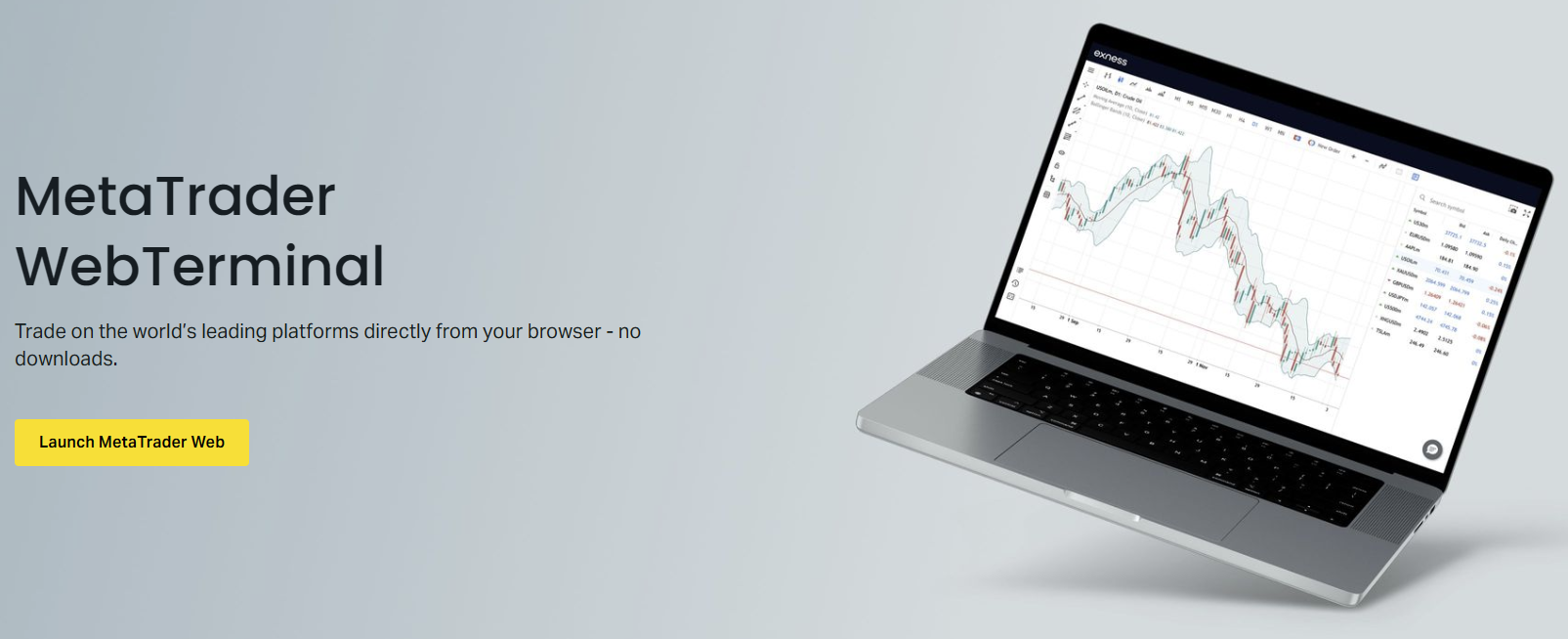
One limitation: you cannot browse or start copying new providers from the MetaTrader 4 or 5 platforms. Copy trading management is exclusive to the Exness app and Personal Area. If you trade manually on MT4/MT5, you must switch contexts to manage copied strategies.
Pros and Cons of Exness Copy Trading
The strengths are clear. Native integration means no third-party plugins, no API latency, and no separate login. Execution quality matches the broker's core offering — fast, reliable, with minimal slippage. The provider marketplace is transparent: real accounts, real money, verified histories. No demo accounts masquerading as live strategies. The fee model is simple and aligned: providers only earn when followers earn.
The weaknesses are equally clear. No granular risk controls for followers. No partial copying, no trade filtering, no custom position sizing. The all-or-nothing approach means you accept the provider's full strategy — including their bad trades. The minimum $10 allocation per provider sounds low but is practically useless for anything but micro-testing. Serious diversification requires meaningful capital.
Scroll horizontally to see all columns
| Aspect | Pros | Cons |
|---|---|---|
| Integration | Native, no plugins, same execution | Only in Exness app/Personal Area |
| Transparency | Verified live accounts, full history | No provider strategy classification tags |
| Fees | Performance-only, aligned incentives | No cap on provider commission % |
| Risk Controls | Stop-out pause, easy stop copying | No per-trade limits, no custom sizing |
| Accessibility | $10 min allocation, mobile-first | Practical minimums much higher |
Comparison with Other Copy Trading Platforms
eToro is the most obvious alternative. It offers a broader social experience — news feed, comments, portfolio sharing — and supports stocks, ETFs, and crypto alongside forex. Exness focuses purely on forex and CFDs. eToro charges spread markups and withdrawal fees; Exness passes raw trading costs. eToro allows manual trade copying (copy individual trades); Exness does not. eToro has a $200 minimum per provider; Exness asks $10.
ZuluTrade and Myfxbook AutoTrade connect to multiple brokers. They offer more provider choice and advanced filters (Sharpe ratio, Calmar ratio, custom risk scores). But they add a technology layer between you and execution, which can mean slippage or delays. Exness keeps it in-house. For an Exness client, the native option removes a point of failure.
MetaTrader Signals (MQL5) works inside MT4/MT5. It has thousands of providers and deep statistics. However, signal execution depends on VPS quality, latency to the broker, and synchronization settings. Many followers experience trade copying delays or missed entries. Exness copy trading avoids this by executing on the same trade server as the provider.
Tax and Regulatory Considerations
Copy trading profits are taxable in most jurisdictions, typically as capital gains or investment income. The tax treatment depends on your country of residence, not Exness's registration. Exness provides account statements and trade history exports (CSV, PDF) for tax reporting. They do not issue tax forms like 1099 for non-US clients.
Regulatory protection follows your Exness entity. Clients onboarded under Exness (SC) Ltd (Seychelles) have different protections than those under Exness B.V. (Curaçao) or Exness ZA (South Africa FSCA). The copy trading feature itself is not separately regulated — it falls under the broker's existing licenses. Segregated accounts and negative balance protection apply to copy trading sub-accounts the same as main accounts.
Don't assume copy trading changes your regulatory status. You are still a retail client of Exness. The same leverage limits, margin rules, and investor compensation schemes apply.
Common Mistakes to Avoid
Chasing the leaderboard is the most expensive mistake. The top-ranked provider this month is often the worst performer next month. High returns attract copiers, increasing assets under management, which can force the provider to trade larger size or change strategy to maintain percentage returns. The system does not cap AUM per provider.
Over-concentration is the second mistake. Putting 80% of copy trading capital into one provider because "they've been consistent for a year" ignores that past consistency does not guarantee future survival. A single strategy change, market regime shift, or personal issue for the provider can erase months of gains.
Ignoring correlation is the third. Copying five providers who all trade EURUSD breakout strategies gives you five times the exposure to the same market move. Check the instruments each provider trades. Diversify across asset classes (forex, gold, indices, crypto) and timeframes (scalping, swing, position).
Final Assessment of Exness Copy Trading
Exness copy trading is a solid, no-frills implementation. It does what it promises: lets followers replicate verified providers with the same execution quality as manual trading, at the same cost structure, without extra platform fees. The integration is clean, the mobile experience is good, and the transparency is better than most broker-native offerings.
It is not a set-and-forget wealth builder. The lack of granular risk controls means you must actively manage allocations, monitor provider behavior, and accept that you cannot customize the strategy. The $10 minimum allocation is marketing — real diversification starts around $500 total across multiple providers. If you want deep customization, social features, or multi-broker access, look at ZuluTrade or eToro. If you are already at Exness and want a straightforward way to allocate a portion of capital to other traders, the native tool works well.
Frequently Asked Questions
Does Exness have copy trading?
Yes, Exness launched its native copy trading platform in 2021. It is available in the Exness Trade mobile app and the Personal Area web portal. No separate registration or software is required beyond a verified live Exness account.
How does Exness copy trading work?
Strategy providers trade on their live Exness accounts. Followers choose providers and allocate funds. The system replicates every trade proportionally based on the allocation ratio. Providers earn a commission on profitable copied trades. Followers can stop copying at any time, which closes copied positions at market price.
What is the Exness copy trading minimum deposit?
The broker's standard minimum deposit applies — $10 for most regions. However, each provider requires a minimum $10 allocation. Practical minimums are higher: $100-$500 per provider to withstand normal drawdowns and margin requirements.
Can I copy trade on MetaTrader 4 or 5 with Exness?
No. Exness copy trading management is exclusive to the Exness Trade app and Personal Area. You cannot start, stop, or configure copying from MT4/MT5. You can still trade manually on MetaTrader while copying runs separately.
What fees does Exness charge for copy trading?
Exness charges no platform fees, subscription fees, or performance fees. Costs are the provider's commission (10-30% of profit typically) plus the underlying trading costs — spreads, commissions per lot, and swaps — which match the provider's account type.
How do I choose a good strategy provider on Exness?
Look for consistent monthly returns (8-15%), maximum drawdown under 20%, risk score 3-5, at least 6 months of live history, and a transparent trade history without martingale or grid patterns. Avoid providers with risk scores 8-10 or equity curves showing vertical drops.
Is copy trading on Exness regulated?
Copy trading falls under Exness's existing regulatory licenses (FSCA, CySEC, FSA, etc. depending on your entity). Sub-accounts have the same protections as main accounts: segregated funds, negative balance protection, and investor compensation where applicable.