

Forex Trading Accounts
Exness Raw Spread Account: Features and Trading Conditions
Understanding the Raw Spread Account for professional forex trading

Senior Forex Trader & Market Analyst
Daniel Chen is an experienced forex trader and financial market analyst with over 15 years of experience in currency trading. He specializes in technical analysis, risk management, and developing practical trading strategies to help traders make informed decisions.
The Exness Raw Spread Account sits in the professional tier of the broker's lineup, designed for traders who want direct market pricing with a transparent commission structure. Unlike standard accounts that bake costs into wider spreads, this account type separates the spread from the commission, giving you a clearer view of what each trade actually costs. It's built for scalpers, high-frequency traders, and anyone running automated strategies where fractions of a pip matter.
Contents
- 1. What Is the Exness Raw Spread Account
- 2. Raw Spread vs Zero Account: Key Differences
- 3. Spread Structure and Commission Model
- 4. Trading Instruments Available
- 5. Execution Quality and Order Types
- 6. Minimum Deposit and Account Requirements
- 7. Leverage and Margin Rules
- 8. Platform Compatibility
- 9. Swap Rates and Overnight Costs
- 10. Who Should Use the Raw Spread Account
- 11. Opening and Verifying the Account
- 12. Cost Comparison: Raw Spread vs Standard Account
- 13. Risk Management Considerations
- 14. Regional Availability and Entity Differences
- 15. Final Assessment of Exness Raw Spread Account
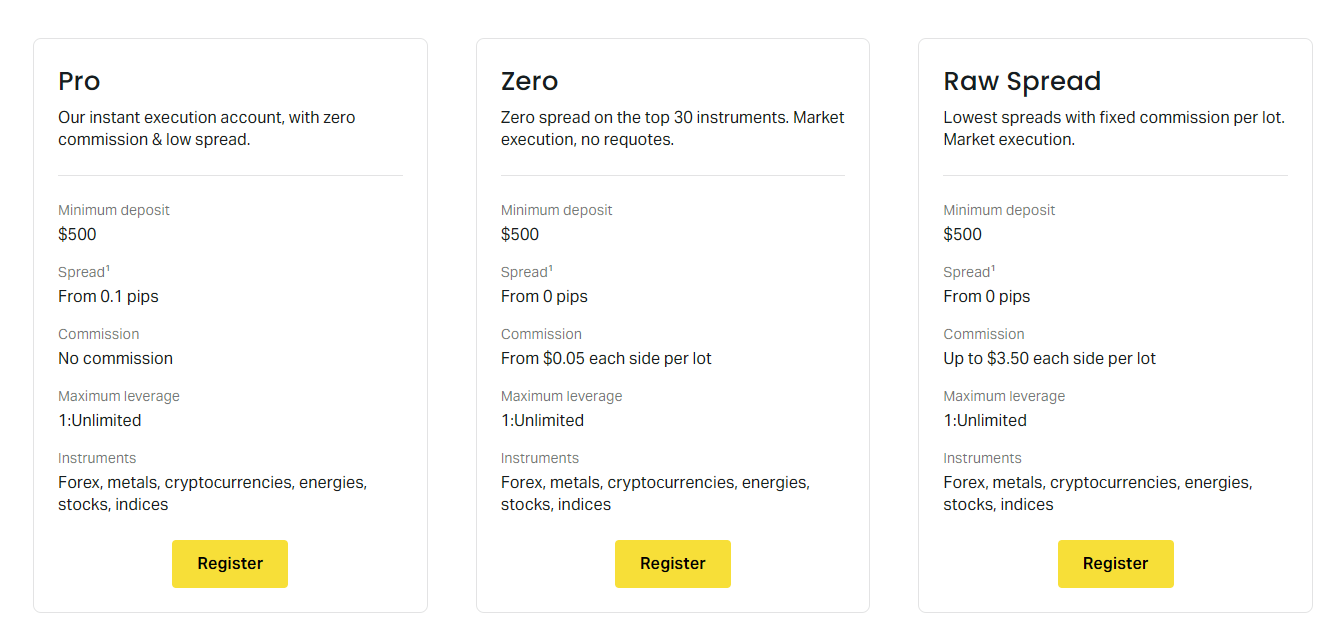
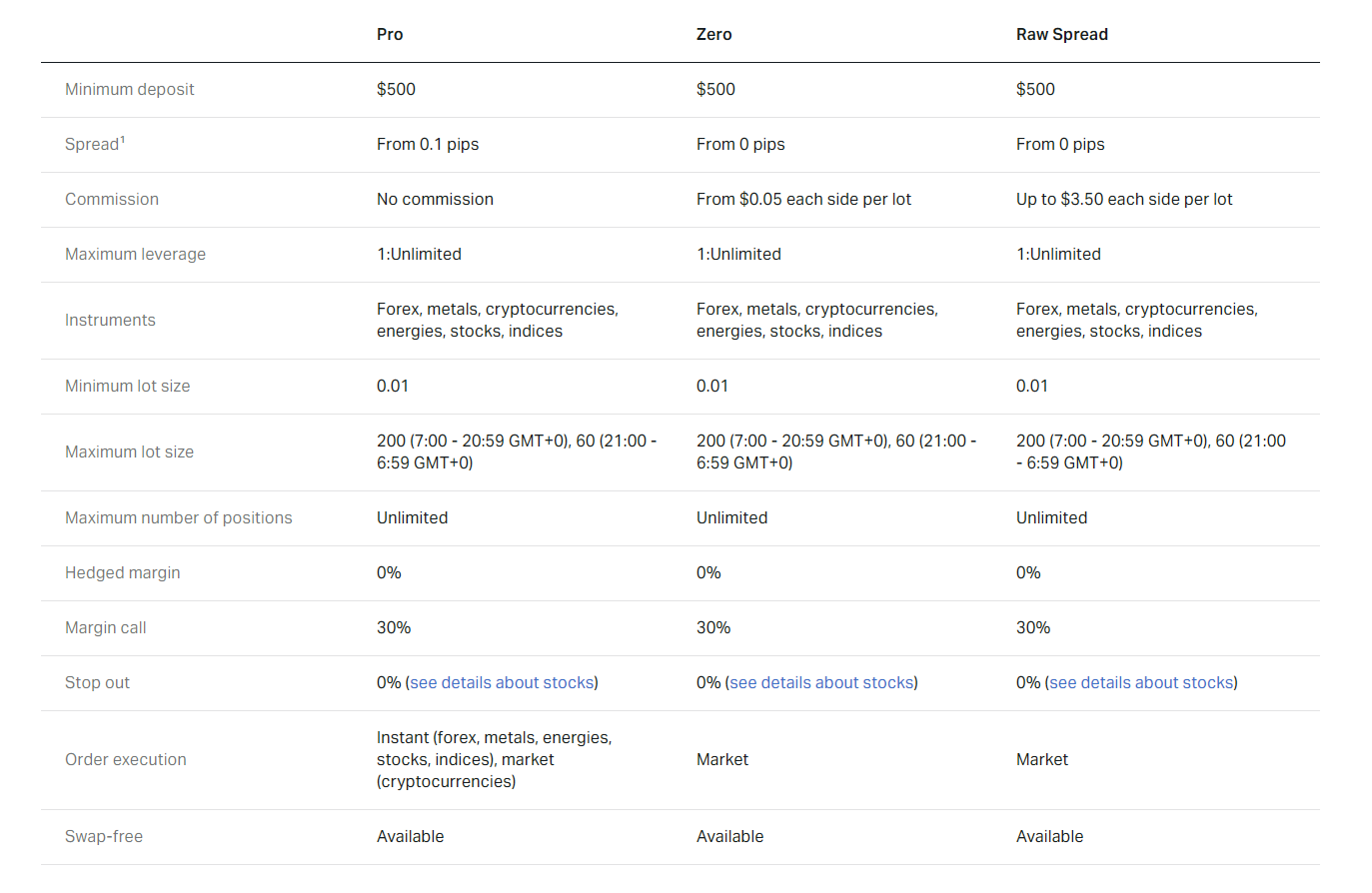
Exness positions the Raw Spread Account alongside the Zero Account as its two main professional offerings. Both use market execution and both charge commissions, but the way they handle spreads differs. The Raw Spread Account offers variable spreads that can go as low as 0.0 pips on major pairs, with a fixed commission per lot. The Zero Account aims for 0.0 pips on a select group of instruments during specific hours, with a different commission schedule. Understanding which one fits your trading style comes down to how you weigh spread consistency against commission rates.
This article walks through every practical aspect of the Raw Spread Account: the cost structure, the instruments you can trade, execution quality, platform support, leverage rules, and the type of trader it actually suits. I'll also compare it directly with the Zero Account since that's the most common cross-shop decision. By the end you should know whether this account belongs in your rotation or if another Exness account type makes more sense.
What Is the Exness Raw Spread Account
The Raw Spread Account is one of two professional account types Exness offers, the other being the Zero Account. Both require a higher minimum deposit than standard accounts and both use market execution, meaning orders are filled at the best available price in the market with no dealing desk intervention. The defining feature of the Raw Spread Account is in the name: you get raw spreads sourced from liquidity providers, with a separate commission charged per round-turn lot.
On major forex pairs like EURUSD, spreads frequently sit at 0.0 to 0.1 pips during liquid hours. The commission is $3.50 per side per lot, so a round turn costs $7.00 per standard lot. That commission stays fixed regardless of market conditions. When spreads widen during news events or low-liquidity periods, you still pay the same $7.00 per lot round turn. This predictability is what many professional traders prefer over variable all-in costs.
The account supports all major trading platforms Exness offers: MetaTrader 4, MetaTrader 5, the Exness Web Terminal, and the Exness mobile app. You can also connect via API for algorithmic trading. There's no restriction on trading styles — scalping, hedging, news trading, and expert advisors are all permitted. The minimum deposit to open a Raw Spread Account is $200, though Exness recommends $500 or more to comfortably manage margin requirements on standard lot sizes.
One detail that catches some traders off guard: the Raw Spread Account uses a different margin calculation for certain instruments compared to standard accounts. Forex majors typically allow up to 1:2000 leverage (subject to equity thresholds), but metals, energies, indices, and cryptocurrencies have fixed maximum leverage caps that apply regardless of account equity. I'll cover those caps in the leverage section.
Raw Spread vs Zero Account: Key Differences
The most common question traders ask is how the Raw Spread Account differs from the Zero Account. Both are professional accounts. Both charge commissions. Both offer raw spreads. The difference lies in which instruments get the tightest spreads, how commissions are structured, and the minimum deposit requirement.
The Zero Account targets a specific set of instruments — primarily major forex pairs, gold, and a few indices — with 0.0 pip spreads during peak trading hours. Outside those hours or on other instruments, spreads widen. The commission on the Zero Account is $3.50 per side per lot on forex, but $0.20 per side per lot on gold (XAUUSD), which works out cheaper for gold traders. The minimum deposit for the Zero Account is $200, same as Raw Spread.
The Raw Spread Account doesn't promise 0.0 pips on a curated list. Instead, it delivers consistently low spreads across a broader range of instruments — all forex pairs, metals, energies, indices, stocks, and crypto. The commission is a flat $3.50 per side per lot on forex and metals, and varies by instrument class for other markets. If you trade a diverse portfolio, the Raw Spread Account often works out simpler because you don't need to track which instruments are in the 'zero spread' window at any given hour.
Scroll horizontally to see all columns
| Feature | Raw Spread Account | Zero Account |
|---|---|---|
| Minimum Deposit | $200 | $200 |
| Forex Commission (per side/lot) | $3.50 | $3.50 |
| Gold Commission (per side/lot) | $3.50 | $0.20 |
| Spread Model | Variable, low across all instruments | 0.0 pips on select instruments during peak hours |
| Execution Type | Market Execution | Market Execution |
| Allowed Strategies | All (scalping, hedging, EA, news) | All (scalping, hedging, EA, news) |
For a trader who focuses almost exclusively on EURUSD, GBPUSD, and gold during London/New York overlap, the Zero Account can be cheaper on gold. For someone trading crosses, minors, indices, and crypto alongside majors, the Raw Spread Account removes the guesswork. Neither account is universally better — it depends on your instrument mix and trading hours.
Spread Structure and Commission Model
The Raw Spread Account uses a pure spread-plus-commission model. You see the raw interbank spread in your platform, and the commission is added separately in the trade history. This transparency lets you calculate exact costs per trade without reverse-engineering an all-in spread. During high-liquidity periods — London open through New York close — major pairs often show 0.0 to 0.2 pips. Crosses and minors typically run 0.5 to 2.0 pips. Exotic pairs are wider, often 10 to 50 pips depending on the pair.
The commission is $3.50 per side per standard lot on forex and metals. That means a round turn on one lot of EURUSD costs $7.00 in commission plus whatever the raw spread was at execution. If the spread was 0.1 pips, the total cost is 0.1 pips + $7.00. On a standard lot of EURUSD, 0.1 pips equals $1.00, so the all-in cost is roughly $8.00 per round turn lot. Compare that to a Standard Account where the same trade might carry a 1.0 pip spread ($10.00) with no commission — the Raw Spread Account saves about $2.00 per lot on that example.
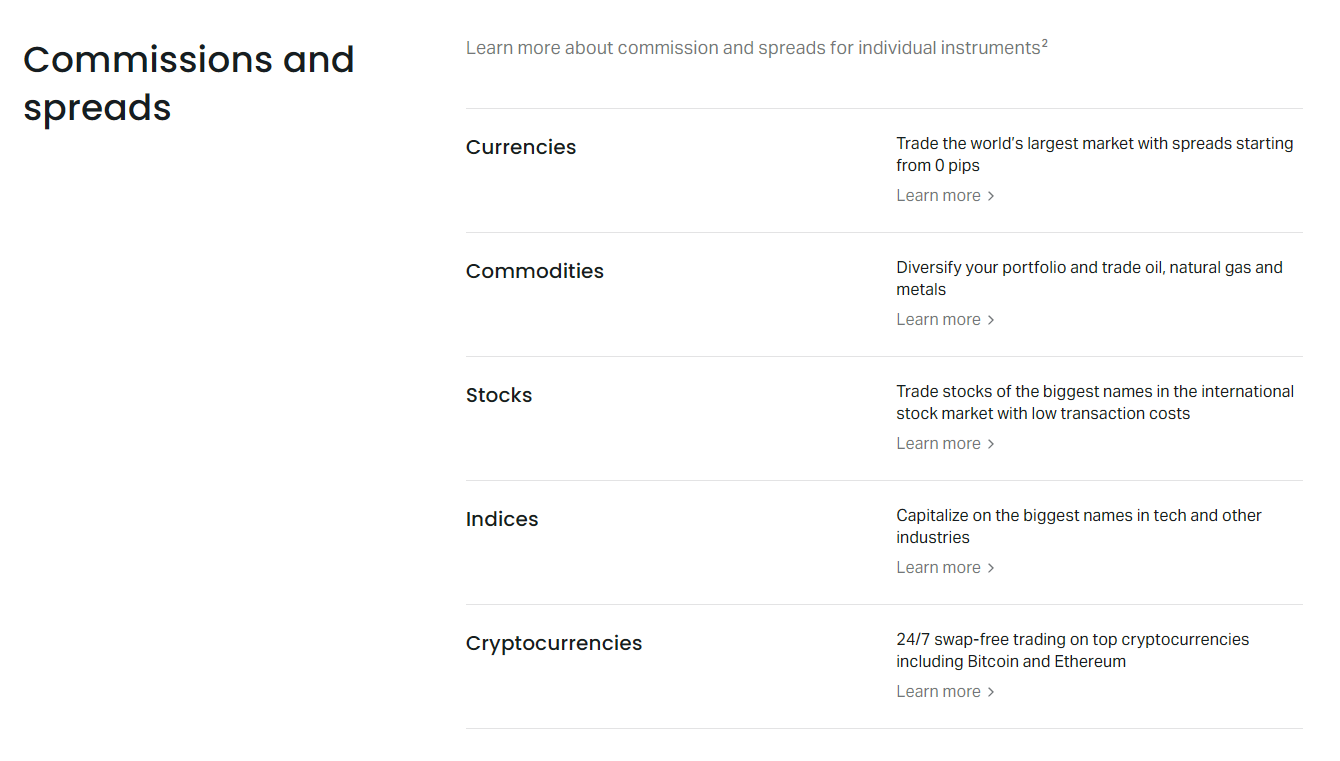
Commissions for non-forex instruments follow a different schedule. Indices typically charge a percentage of notional value or a fixed amount per lot. Cryptocurrencies use a percentage-based commission. Stocks have their own per-lot or per-share structure. Exness publishes the full commission schedule in the contract specifications section of their website, and it's also visible in the trading platform's symbol properties window. Always check the current rate before trading a new instrument — commissions can change with liquidity provider updates.
One practical note: the commission is charged at position opening and again at closing. If you open a 0.5 lot position, you pay $1.75 upfront. When you close, another $1.75. Partial closes trigger proportional commission. This matters for position sizing — if you scale in and out frequently, the commission adds up faster than on an all-in spread account where you only pay the spread once per round turn regardless of how many partial fills occur.
Separating spread from commission makes cost analysis honest. You always know exactly what the market charged and what the broker charged.
Trading Instruments Available
The Raw Spread Account gives access to the full Exness instrument catalog. That includes over 100 forex pairs covering majors, minors, crosses, and exotics. Metals cover gold (XAUUSD), silver (XAGUSD), platinum, and palladium against USD. Energies include US crude (WTI), UK crude (Brent), and natural gas. Indices cover major global benchmarks — US30, US500, USTEC, UK100, GER40, FRA40, JP225, HK50, AU200, and more. Stocks CFDs span US, EU, and UK equities. Cryptocurrencies include BTC, ETH, LTC, XRP, BCH, ADA, DOT, LINK, and several others against USD.
Each instrument class has its own spread behavior. Forex majors are tightest. Gold often runs 0.1 to 0.5 pips during peak hours. Indices vary — US500 might sit at 0.4 to 1.0 points, while less liquid indices can be 5 to 20 points. Crypto spreads are wider by nature, often 0.1% to 0.5% of mid-price depending on the coin and time of day. Stock CFDs follow the underlying exchange spread plus a small markup. The key point: you're seeing raw spreads across the board, not a curated zero-spread list.
- Forex: 100+ pairs including majors, minors, crosses, exotics
- Metals: Gold, silver, platinum, palladium vs USD
- Energies: WTI, Brent, natural gas
- Indices: 15+ global benchmarks
- Stocks: 100+ US, EU, UK equities as CFDs
- Crypto: 10+ major coins vs USD
Trading hours follow the underlying markets. Forex runs 24/5 with a daily server-time break. Metals and energies follow CME/ICE sessions with brief daily pauses. Indices track their respective exchange hours. Crypto trades 24/7 with a brief weekend maintenance window. Stock CFDs are only available during the underlying exchange's regular session. The Exness platform shows session times for each symbol, and the economic calendar in the personal area highlights upcoming events that affect spreads.
Execution Quality and Order Types
Market execution is the only execution mode on the Raw Spread Account. There's no instant execution, no requotes, and no dealing desk. Orders are routed to Exness's liquidity pool and filled at the best available price. This means you can get positive slippage — your buy order fills below the requested price, or your sell fills above it. Negative slippage also happens during volatile conditions. Both are normal with market execution and reflect genuine market depth.
The platform supports all standard order types: market orders, pending orders (buy limit, sell limit, buy stop, sell stop, buy stop limit, sell stop limit), stop loss, and take profit. One-click trading is available on MT4, MT5, and Web Terminal. Trailing stops work on MT4 and MT5 but not on the Web Terminal. Partial close is supported everywhere. There's no minimum distance for stops and limits — you can place them as close to the current price as the spread allows, which is useful for scalpers.
Execution speed is a strong point for Exness overall. The broker publishes average execution times under 100 milliseconds for most instruments, with many trades filling in under 50 ms. The Raw Spread Account benefits from the same infrastructure. For algorithmic traders, Exness offers a free VPS service (subject to volume requirements) and API access via FIX and REST protocols. The VPS runs in Equinix data centers near Exness's liquidity bridges, minimizing latency for EAs and high-frequency strategies.
One limitation: there's no guaranteed stop loss on the Raw Spread Account. During extreme volatility or gaps, your stop loss will fill at the first available price after the gap, which can be significantly worse than your set level. This is standard for market execution accounts. If you need guaranteed stops, you'd need to look at brokers offering that feature (usually with a wider spread or insurance premium). Exness does offer negative balance protection across all account types, so you can't lose more than your account equity.
Minimum Deposit and Account Requirements
The Raw Spread Account requires a minimum deposit of $200 to open. That's the same as the Zero Account and higher than the Standard Account ($10) or Standard Cent Account ($1). The $200 threshold is low enough for serious retail traders but high enough to filter out completely casual users. There's no maximum deposit limit. You can fund via bank wire, credit/debit card, electronic wallets (Skrill, Neteller, WebMoney, Perfect Money), and various local payment methods depending on your region.
Account verification (KYC) is required before you can withdraw. The process involves uploading a government-issued ID (passport, national ID, or driver's license) and a proof of address (utility bill, bank statement, or government letter) dated within the last three months. Exness typically verifies documents within a few hours during business days. Until verification completes, you can deposit and trade but cannot withdraw. This is standard regulatory compliance across all Exness entities.
There's no inactivity fee on the Raw Spread Account. Some brokers charge monthly fees after 90 or 180 days of no trading activity. Exness doesn't. You can leave the account funded and dormant indefinitely without penalty. The only ongoing cost is the swap (overnight financing) on positions held past the daily rollover, which applies to all account types. Islamic/swap-free accounts are available on request for clients who qualify under Sharia compliance — the Raw Spread Account can be converted to swap-free status, though the commission structure remains unchanged.
No inactivity fee means you can keep a Raw Spread Account funded as a strategic reserve without watching a monthly drain.
Leverage and Margin Rules
Leverage on the Raw Spread Account follows Exness's dynamic leverage model for forex majors, with fixed caps for other instrument classes. For forex majors (EURUSD, GBPUSD, USDJPY, USDCHF, AUDUSD, USDCAD, NZDUSD), maximum leverage scales with account equity: up to 1:2000 for equity under $1,000, 1:1000 for $1,000–$5,000, 1:500 for $5,000–$30,000, 1:200 for $30,000–$100,000, and 1:100 above $100,000. This applies per account, not per position. You can manually set lower leverage in the personal area if you prefer.
Forex minors, crosses, and exotics have lower fixed maximums regardless of equity — typically 1:200 for minors, 1:100 for exotics. Metals (gold, silver) cap at 1:200. Energies cap at 1:100. Indices cap at 1:200 for major indices, lower for minor ones. Stock CFDs are 1:20. Cryptocurrencies are 1:100 for major coins, 1:50 or lower for altcoins. These caps are non-negotiable and apply even if your forex leverage is higher. The platform will reject orders that exceed the instrument's maximum leverage.
Scroll horizontally to see all columns
| Instrument Class | Maximum Leverage |
|---|---|
| Forex Majors (dynamic) | Up to 1:2000 |
| Forex Minors/Crosses | 1:200 |
| Forex Exotics | 1:100 |
| Metals (Gold, Silver) | 1:200 |
| Energies | 1:100 |
| Major Indices | 1:200 |
| Stock CFDs | 1:20 |
| Major Cryptocurrencies | 1:100 |
Margin calls and stop-outs work the same as other Exness accounts. Margin call triggers at 60% margin level (equity/used margin × 100). Stop-out triggers at 0% margin level — positions are closed automatically starting with the largest losing position until margin level recovers above 0%. This is more generous than many brokers who stop out at 20% or 50%. The 0% stop-out gives you maximum room to manage positions, but it also means you can lose nearly all equity before the broker intervenes. Monitor margin level actively, especially with high leverage.
Platform Compatibility
The Raw Spread Account works on every platform Exness offers. MetaTrader 4 remains the most popular choice for forex traders due to its massive ecosystem of indicators, expert advisors, and community support. MT4 on Raw Spread supports hedging, one-click trading, trailing stops, and all order types. The Exness MT4 build includes custom symbols for some instruments not in standard MT4, and the server connection is optimized for low latency.
MetaTrader 5 adds more timeframes, more order types (including buy/sell stop limit), a built-in economic calendar, depth of market (DOM) display, and netting/hedging account modes. The Raw Spread Account on MT5 uses hedging mode by default but can be switched. DOM is particularly useful for scalpers on raw spread accounts because you can see the order book depth and place orders directly at specific price levels. MT5 also handles multi-currency backtesting better if you develop EAs.
The Exness Web Terminal runs in any modern browser with no installation. It supports the full instrument list, one-click trading, charting with indicators, and account management. It doesn't support trailing stops or custom indicators/EAs. For discretionary traders who switch devices or can't install software, it's a solid option. The Exness mobile app (iOS and Android) mirrors the Web Terminal's functionality with push notifications for price alerts, margin calls, and order fills. Both web and mobile show raw spreads and commissions transparently.
Web Terminal and mobile app show the same raw spreads as desktop MT4/MT5. No hidden markup on browser or phone.
Swap Rates and Overnight Costs
Swap (rollover) charges apply to positions held past the daily server-time cutoff (typically 22:00 or 23:00 UTC depending on daylight saving). The Raw Spread Account uses the same swap rates as other Exness account types — they're derived from the interest rate differential between the two currencies in a forex pair, plus a broker markup. For metals, energies, indices, and crypto, swaps reflect the cost of carry in the underlying futures or spot markets.
On major forex pairs, swaps can be positive or negative depending on the direction and the rate differential. Long EURUSD typically pays negative swap (you pay), short EURUSD may receive positive swap (you earn) — but the broker markup often flips marginally positive swaps to negative. Gold swaps are usually negative both ways due to storage cost assumptions. Indices and stocks often have negative swaps on long positions (financing cost) and positive or negative on shorts depending on dividend adjustments. Crypto swaps are negative both ways and relatively large due to volatility risk premium.
Triple swap applies on Wednesdays for forex and metals (to account for weekend rollover), and on Fridays for indices, energies, and stocks (depending on the instrument). Crypto typically has daily swaps with no triple day since it trades 24/7, but check the specific symbol — some crypto CFDs still apply a weekend adjustment. The exact swap values for each symbol are visible in the platform's specification window and update daily. If you hold positions for weeks, swap can become a meaningful cost or credit. Scalpers and day traders who close before rollover avoid it entirely.
Scroll horizontally to see all columns
| Instrument | Long Swap | Short Swap |
|---|---|---|
| Forex Majors | Varies (often negative) | Varies (often negative) |
| Gold (XAUUSD) | Negative | Negative |
| Major Indices | Negative | Positive or Negative |
| Stock CFDs | Negative | Varies |
| Cryptocurrencies | Negative | Negative |
Who Should Use the Raw Spread Account
The Raw Spread Account isn't for everyone. If you trade small position sizes (0.01–0.1 lots) on a $200–$500 account, the $7.00 per lot commission translates to $0.07–$0.70 per trade. That's negligible, but the spread advantage over a Standard Account (which might be 0.8–1.2 pips on EURUSD) only saves you $0.80–$1.20 per lot. On micro-lots, the dollar difference is pennies. The Standard Account's zero-commission simplicity often makes more sense for small accounts.
The Raw Spread Account shines when you trade standard lots (1.0+) or high volume. A trader doing 50 lots per month on EURUSD saves roughly $100–$200 in spread costs versus a Standard Account, minus the $350 commission. The net benefit depends on the actual spreads you receive. During tight spread windows, the math works. During wide spread periods (news, rollover), the commission stays fixed while the Standard Account's spread widens — that's where the Raw Spread Account protects you.
Ideal candidates: scalpers targeting 1–5 pip moves who need the tightest possible entry/exit costs; algorithmic traders running high-frequency EAs where commission predictability matters; swing traders holding positions for days who want to avoid spread widening at rollover; multi-asset traders who want one account for forex, gold, indices, and crypto without switching account types. Less ideal: beginners learning on micro-lots, very low-volume traders, anyone who prefers an all-in spread for mental accounting simplicity.
- Scalpers and high-frequency traders
- Algorithmic/EA traders needing cost predictability
- Swing traders avoiding rollover spread spikes
- Multi-asset portfolio traders
- Accounts typically $1,000+ with standard lot volume
Opening and Verifying the Account
Opening a Raw Spread Account starts in the Exness Personal Area. If you're new to Exness, you register with email and password, then complete the profile questionnaire (trading experience, financial knowledge, source of funds). Existing clients just add a new account from the dashboard. Select 'Raw Spread' from the professional account list, choose your base currency (USD, EUR, GBP, CHF, AUD, CAD, JPY, and others), and set your leverage preference. The account is created instantly.
Funding options vary by region. Bank wire takes 1–3 business days. Cards (Visa, Mastercard) are instant. E-wallets (Skrill, Neteller, WebMoney, Perfect Money, Sticpay) are instant. Local methods like Pix (Brazil), UPI (India), PromptPay (Thailand), and various bank transfer networks in Africa, Southeast Asia, and LatAm are supported with varying speeds. Minimum deposit is $200 or currency equivalent. No deposit fees from Exness, though your payment provider may charge.
Verification (KYC) is mandatory before first withdrawal. Upload a clear photo/scan of your ID (passport preferred) and a proof of address document (utility bill, bank statement, government letter) issued within 90 days. Documents must show your full name, address, and date matching your profile. Exness reviews within a few hours on business days. Once verified, withdrawals process automatically — most methods are instant or within a few hours. Bank wires take 1–3 business days. There's no withdrawal fee from Exness on most methods.
Verification is the only gate between funding and withdrawing. Complete it early to avoid delays when you need funds.
Cost Comparison: Raw Spread vs Standard Account
To make the account choice concrete, here's a side-by-side cost scenario. Assume you trade 10 lots of EURUSD per month. On the Raw Spread Account: average spread 0.1 pips = $10.00 total spread cost. Commission: 10 lots × $7.00 = $70.00. Total: $80.00. On the Standard Account: average spread 1.0 pips = $100.00 total spread cost. No commission. Total: $100.00. The Raw Spread Account saves $20.00 in this scenario.
Now assume a volatile month where spreads average 0.5 pips on Raw Spread and 2.0 pips on Standard. Raw Spread: spread cost $50.00 + commission $70.00 = $120.00. Standard: spread cost $200.00. Raw Spread saves $80.00. The commission acts as a ceiling — your cost per lot never exceeds commission plus the raw spread. On the Standard Account, the spread is the only cost but it has no ceiling. During news events, Standard Account spreads can hit 5–10 pips or more. Raw Spread stays at commission + raw spread.
Scroll horizontally to see all columns
| Scenario | Raw Spread Total | Standard Total | Difference |
|---|---|---|---|
| Normal spreads (0.1 vs 1.0 pip) | $80.00 | $100.00 | Raw Spread saves $20 |
| Wide spreads (0.5 vs 2.0 pips) | $120.00 | $200.00 | Raw Spread saves $80 |
| Extreme spreads (1.0 vs 5.0 pips) | $170.00 | $500.00 | Raw Spread saves $330 |
The break-even volume depends on your typical spread differential. If Raw Spread averages 0.2 pips tighter than Standard, that's $2.00 per lot savings. At $7.00 commission, you need 3.5 lots per month to break even. Most active traders exceed that quickly. The real value isn't just the average savings — it's the protection against spread blowouts during high-impact events.
Risk Management Considerations
The Raw Spread Account's high leverage availability (up to 1:2000 on majors for small accounts) is a double-edged sword. It allows efficient capital use — you can control a standard lot of EURUSD with $50 margin at 1:2000. But a 50-pip move against you wipes out that $50. At 1:500 (typical for accounts over $5,000), the same position needs $200 margin, giving you more buffer. The dynamic leverage model forces deleveraging as your account grows, which is a built-in risk control.
Negative balance protection applies across all Exness entities. If a flash crash or gap blows through your stop loss and margin call, you won't owe the broker money. Your loss is capped at your account equity. This is regulatory standard for the jurisdictions Exness operates in (CySEC, FCA, FSCA, FSA, CBCS). However, negative balance protection doesn't prevent large drawdowns — it just prevents debt. Position sizing, stop losses, and diversification remain your responsibility.
The 0% stop-out level is more generous than most brokers (typically 20–50%). It means Exness won't close your positions until your equity is essentially zero relative to used margin. This gives you maximum control but also maximum rope. If you're not monitoring margin level, you can lose nearly everything before the automatic liquidation kicks in. Set your own mental stop-out at 50% or 100% margin level and treat the broker's 0% as a last-resort backstop.
0% stop-out gives you control. It also demands discipline. Don't treat the broker's margin call as your risk management.
Regional Availability and Entity Differences
Exness operates through multiple legal entities: Exness (Cy) Ltd regulated by CySEC (EU), Exness (UK) Ltd regulated by FCA (UK), Exness (SC) Ltd regulated by FSA (Seychelles), Exness (VG) Ltd regulated by FSC (BVI), and Exness (ZA) Ltd regulated by FSCA (South Africa). The Raw Spread Account is available across most entities, but leverage limits, maximum leverage, and some instrument availability differ by regulator.
Under CySEC (EU retail clients), maximum leverage is capped at 1:30 for forex majors, 1:20 for minors/gold, 1:10 for other CFDs. The dynamic leverage up to 1:2000 is only available to professional-classified clients or clients under the Seychelles/BVI/South Africa entities. FCA (UK) has similar retail caps. If you're an EU or UK resident registering under the local entity, you won't get the high leverage — but you do get stronger regulatory protections (FSCS compensation up to £85,000 in UK, ICF up to €20,000 in Cyprus). Non-EU/UK residents typically fall under the Seychelles or BVI entity with full dynamic leverage.
Instrument availability also varies. Crypto CFDs are restricted for retail clients under CySEC and FCA. Some stock CFDs may be unavailable. The Raw Spread Account itself exists in all entities, but the trading conditions attached to it reflect the local regulator's rules. During signup, Exness routes you to the appropriate entity based on your residence. You can't choose an entity to bypass leverage caps — that would violate KYC/AML policies and terms of service.
Final Assessment of Exness Raw Spread Account
The Exness Raw Spread Account delivers what it promises: raw spreads with a fixed, transparent commission across a broad instrument range. It's a professional-grade account priced accessibly at $200 minimum deposit. The cost structure favors active traders — the more you trade, the more the commission model pays off versus all-in spreads. The dynamic leverage on majors is a genuine advantage for growing accounts, though it tapers as equity builds. Execution quality is solid, platform support is comprehensive, and the lack of inactivity fees means you can keep it as a strategic option without penalty.
The main trade-off is complexity. You have to track commission separately from spread, calculate all-in costs per instrument, and understand that swap rates apply on top. For a beginner or low-volume trader, the Standard Account's simplicity often wins. The Zero Account remains a strong alternative if your volume concentrates on gold and major forex during peak hours. But for a trader running a diversified, active strategy across forex, metals, indices, and crypto, the Raw Spread Account is the most versatile professional option Exness offers. It earns its place in a serious trader's toolkit.
Frequently Asked Questions
What is the minimum deposit for the Exness Raw Spread Account?
The minimum deposit is $200 or the equivalent in your account base currency.
How much commission does the Raw Spread Account charge?
Forex and metals: $3.50 per side per standard lot ($7.00 round turn). Other instruments have different commission schedules — check the contract specifications for each symbol.
Can I use the Raw Spread Account on MetaTrader 4 and 5?
Yes. The Raw Spread Account works on MT4, MT5, Exness Web Terminal, and the Exness mobile app. All platforms show raw spreads and separate commissions.
What is the difference between Raw Spread and Zero Account?
Raw Spread offers consistently low spreads across all instruments with a flat $3.50/lot commission on forex/metals. Zero Account offers 0.0 pips on select instruments during peak hours with a lower gold commission ($0.20/lot) but wider spreads elsewhere.
Is there an inactivity fee on the Raw Spread Account?
No. Exness does not charge inactivity fees on any account type, including Raw Spread.
What leverage is available on the Raw Spread Account?
Forex majors use dynamic leverage up to 1:2000 (equity-dependent). Other instruments have fixed caps: minors 1:200, exotics 1:100, metals 1:200, energies 1:100, indices 1:200, stocks 1:20, crypto 1:100. EU/UK retail clients are capped at 1:30 forex by regulation.
Can I get a swap-free Raw Spread Account?
Yes. The Raw Spread Account can be converted to Islamic/swap-free status on request with a declaration of Sharia compliance. Commissions remain unchanged.
Does the Raw Spread Account support expert advisors and scalping?
Yes. All trading styles are permitted including scalping, hedging, news trading, and automated strategies via EA or API.