
Forex Broker Comparisons
Exness Alternatives: Best Similar Brokers and Apps for 2024
Detailed comparison of brokers offering Exness-like trading conditions, platforms, and account types.

Senior Forex Trader & Market Analyst
Daniel Chen is an experienced forex trader and financial market analyst with over 15 years of experience in currency trading. He specializes in technical analysis, risk management, and developing practical trading strategies to help traders make informed decisions.
Traders looking for Exness alternatives usually want the same combination of tight spreads, instant withdrawals, and access to both MetaTrader and a proprietary web platform. Exness built its reputation on raw spread accounts, high leverage options, and a mobile app that handles account management and trading in one place. Several brokers now match or come close to those conditions, but the differences show up in regulation, regional availability, and the fine print on swap fees or commission structures.
Contents
- 1. What Makes Exness a Benchmark for Comparison
- 2. Top Global Alternatives Matching Exness Core Features
- 3. Exness Like Brokers in India: Regional Considerations
- 4. Detailed Feature Comparison Table
- 5. Trading Platforms: Proprietary Apps vs MetaTrader Ecosystem
- 6. Account Types and Cost Structures Beyond Raw Spreads
- 7. Regulation and Fund Safety: Entity Assignment Matters
- 8. Deposit and Withdrawal Methods for Indian Traders
- 9. Mobile Trading Experience: Apps Compared
- 10. Social and Copy Trading Alternatives
- 11. VPS, Signals, and Ancillary Tools
- 12. How to Choose Based on Your Trading Profile
- 13. Common Pitfalls When Switching from Exness
- 14. Testing Before Committing: A Practical Checklist
- 15. Final Assessment of Exness Alternatives
This guide breaks down the most relevant alternatives for 2024, with extra attention to brokers that serve Indian residents. The Hindi search terms "exness jaisa broker" and "exness jaisa dusra app" reflect real demand for platforms that feel familiar but may offer better local support, INR deposits, or regulatory coverage under SEBI-recognized frameworks. We compare regulation, trading costs, platforms, account types, and withdrawal speed across each candidate.
No single broker replicates Exness perfectly. Some beat it on spreads but lack instant withdrawals. Others match the app experience but restrict leverage for retail clients. The right choice depends on which Exness features you actually use daily versus which ones you only notice when they're missing.
What Makes Exness a Benchmark for Comparison
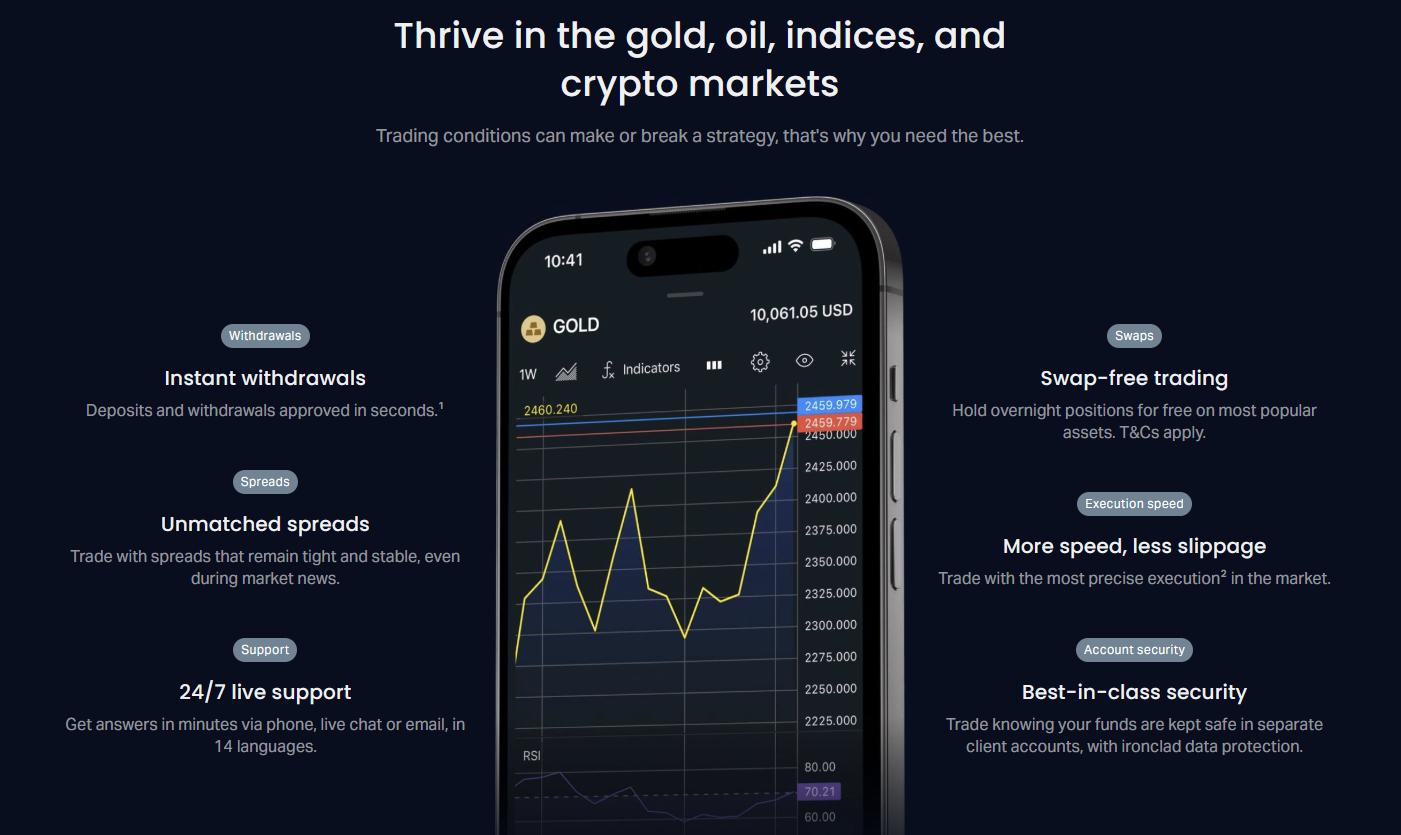
Exness stands out in three areas that traders consistently cite when searching for alternatives. First, the Raw Spread and Zero accounts offer commission-based pricing with spreads often starting from 0.0 pips on major pairs. Second, the withdrawal system processes most requests automatically within minutes, including weekends for crypto and certain e-wallets. Third, the Exness Trade app combines charting, news, economic calendar, and full account management without forcing a separate MetaTrader login.
The broker holds licenses from FCA (UK), CySEC (EU), FSCA (South Africa), and CBCS (Curaçao). That multi-jurisdictional coverage means different entity assignments depending on residence, which affects leverage caps and negative balance protection. Indian traders typically fall under the Seychelles or Curaçao entities, where leverage up to 1:2000 is advertised but comes with higher stop-out risk.
Platform access includes MT4, MT5, WebTerminal, and the proprietary mobile app. Social trading via Exness Social Trading app adds copy-trading functionality. The broker also offers VPS hosting, Trading Central signals, and a currency converter built into the personal area. These extras raise the bar for any alternative claiming to be "like Exness."
When evaluating alternatives, weight each feature by how often you use it. A scalper cares about raw spreads and execution speed. A swing trader prioritizes swap rates and weekend withdrawal access. An Indian trader using UPI or local bank transfer needs a broker that supports those methods without excessive fees or delays. The sections below group alternatives by how closely they match these priority clusters.
Top Global Alternatives Matching Exness Core Features
Three brokers consistently appear in side-by-side comparisons with Exness: IC Markets, Pepperstone, and FP Markets. All three offer raw spread accounts, MT4/MT5/cTrader access, and strong regulatory profiles. Each has distinct trade-offs that matter depending on your trading style and residence.
IC Markets runs on an ECN model with spreads from 0.0 pips on the Raw Spread account and a $3.50 per side commission per lot. The broker holds ASIC (Australia), CySEC (EU), and FSA (Seychelles) licenses. Australian clients get 1:30 leverage; international clients can access 1:500. Withdrawals process same-day for most methods, but not instantly like Exness. The cTrader platform is a major draw for algorithmic traders who prefer it over MetaTrader.
Pepperstone offers Razor accounts with similar 0.0 pip spreads and $3.50 per side commission. Regulation covers ASIC, FCA, CySEC, DFSA (Dubai), and CMA (Kenya). The broker supports MT4, MT5, cTrader, and TradingView integration. Leverage caps mirror IC Markets by jurisdiction. Pepperstone's edge is its UK entity for British residents and a well-rated mobile app that handles deposits, withdrawals, and trading in one interface.
FP Markets provides Raw ECN accounts with 0.0 pip spreads and $3 per side commission. Licenses include ASIC, CySEC, FSCA, and SVG. The broker stands out for offering IRESS platforms alongside MT4/MT5/cTrader, which appeals to DMA stock traders. Leverage reaches 1:500 internationally. Withdrawal speed is same-day for e-wallets, 1-3 days for bank wires. FP Markets also runs a proprietary mobile app with account management features comparable to Exness Trade.
Exness Like Brokers in India: Regional Considerations
Indian traders searching for "exness like broker in india" or "exness jaisa broker" face a specific constraint: SEBI does not permit retail forex trading with overseas brokers unless the broker holds a local license. Most international brokers, including Exness, operate under offshore entities for Indian clients. This creates legal ambiguity and banking friction. Several brokers have addressed this by obtaining licenses from IFSC (Gujarat) or partnering with Indian payment gateways for smoother INR deposits.
Octa (formerly OctaFX) holds an IFSC license and supports UPI, NetBanking, and local bank transfers. Spreads on the Raw Spread account start from 0.0 pips with $3.50 per lot commission. The broker offers MT4, MT5, and cTrader plus a proprietary app. Leverage up to 1:500. Withdrawals to Indian banks typically take 1-2 business days. Octa's Indian entity provides a clearer regulatory path than pure offshore brokers.
XM Group operates under an IFSC license for Indian residents. The Ultra Low account offers spreads from 0.6 pips with no commission, while the Zero account charges $3.50 per lot with 0.0 pip spreads. MT4 and MT5 are supported. Leverage up to 1:1000 for international entities, but IFSC clients may face lower caps. XM's strength is local language support and regular seminars in major Indian cities.
HFM (HotForex) also holds IFSC authorization. The Zero Spread account charges $3 per lot with spreads from 0.0 pips. Platforms include MT4, MT5, and a proprietary HFM app. The broker offers a copy-trading platform (HFcopy) similar to Exness Social Trading. Indian bank withdrawals process in 1-3 days. HFM's loyalty program (HFM Rewards) provides cashback on volume, which can offset trading costs for active traders.
Exness itself does not hold an IFSC license. Indian clients onboard through the Seychelles or Curaçao entities. Deposits via UPI or local banks work through third-party payment processors, which adds a layer of counterparty risk. Withdrawals return via the same channels. For traders who prioritize regulatory clarity within India, the IFSC-licensed alternatives above reduce that specific friction.
A practical note: even with IFSC licenses, forex trading in India remains restricted to currency pairs involving INR (USD/INR, EUR/INR, GBP/INR, JPY/INR) on recognized exchanges like NSE and BSE. Trading major pairs like EUR/USD with an offshore or IFSC broker exists in a gray zone. Many Indian traders accept this risk, but it's worth understanding before funding an account.
Detailed Feature Comparison Table
The table below compares Exness against the most cited alternatives across the dimensions traders ask about most. Values reflect typical conditions for international entities; regional entities may differ.
Scroll horizontally to see all columns
| Broker | Min Spread (EURUSD) | Commission (Round Turn) | Max Leverage (Intl) | Withdrawal Speed | Platforms | Key License |
|---|---|---|---|---|---|---|
| Exness | 0.0 pips | $7/lot (Raw Spread) | 1:2000 | Instant (auto) | MT4, MT5, WebTerminal, App | FCA, CySEC, FSCA |
| IC Markets | 0.0 pips | $7/lot (Raw Spread) | 1:500 | Same day | MT4, MT5, cTrader | ASIC, CySEC |
| Pepperstone | 0.0 pips | $7/lot (Razor) | 1:500 | Same day | MT4, MT5, cTrader, TV | FCA, ASIC, CySEC |
| FP Markets | 0.0 pips | $6/lot (Raw ECN) | 1:500 | Same day | MT4, MT5, cTrader, IRESS | ASIC, CySEC, FSCA |
| Octa (IFSC) | 0.0 pips | $7/lot (Raw Spread) | 1:500 | 1-2 days | MT4, MT5, cTrader, App | IFSC, CySEC |
| XM (IFSC) | 0.0 pips (Zero) | $7/lot (Zero) | 1:1000 | 1-2 days | MT4, MT5 | IFSC, CySEC, ASIC |
| HFM (IFSC) | 0.0 pips | $6/lot (Zero Spread) | 1:1000 | 1-3 days | MT4, MT5, HFM App | IFSC, CySEC, FCA |
Commission values are per standard lot round turn. Leverage figures represent maximum available for professional or international clients; retail caps apply under FCA, ASIC, and CySEC (typically 1:30). Withdrawal speed assumes verified accounts and e-wallet or crypto methods; bank wires add 2-5 business days universally.
Trading Platforms: Proprietary Apps vs MetaTrader Ecosystem
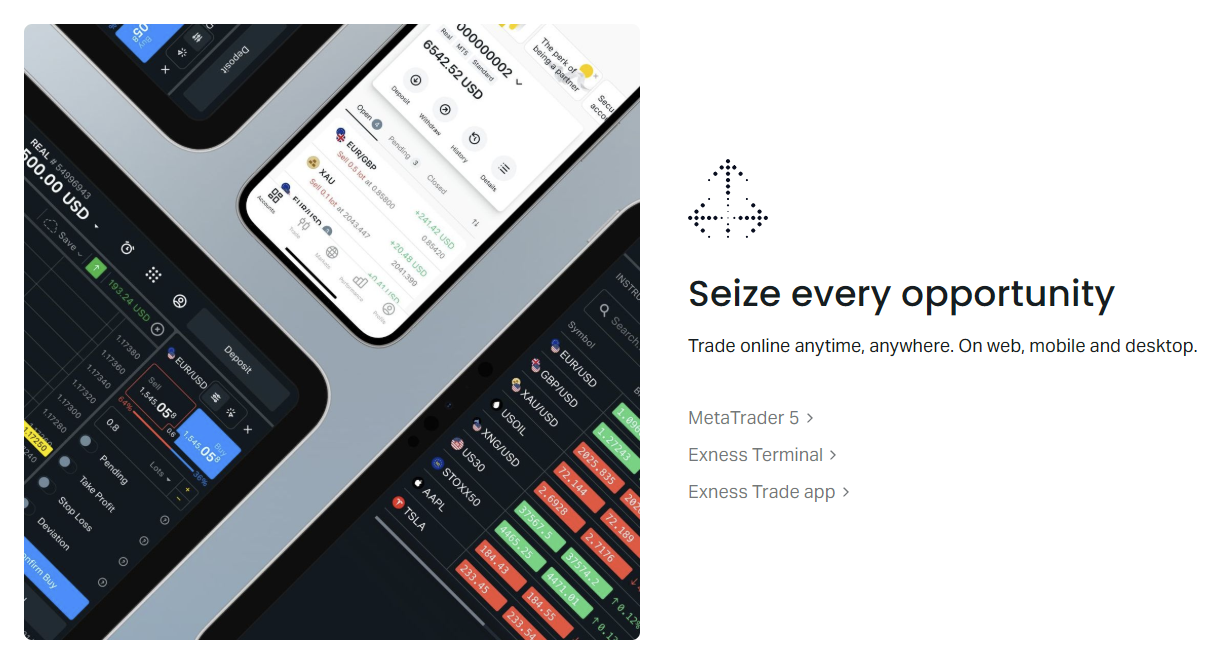
Exness Trade app sets a high bar for proprietary platforms. It handles charting with 15+ timeframes, 30+ indicators, economic calendar, news feed, deposit/withdrawal, account switching, and trade copying in one interface. Most alternatives rely on MetaTrader for charting and build lighter companion apps for account management.
IC Markets and Pepperstone both offer cTrader, which many traders consider superior to MetaTrader for execution transparency, depth of market, and algorithmic flexibility. cTrader's mobile app is polished but separates trading from account management — you still need the client portal for deposits and withdrawals. FP Markets adds IRESS for DMA stock trading, which is irrelevant for pure forex/CFD traders but valuable for multi-asset portfolios.
Octa, XM, and HFM provide proprietary mobile apps that approach Exness Trade's feature density. Octa's app includes copy-trading (Octa CopyTrader), economic calendar, and deposit/withdrawal. XM's app is more basic, focusing on account management with trading redirected to MT4/MT5. HFM's app integrates HFcopy for social trading and includes a news feed. None quite match Exness Trade's all-in-one flow, but the gap has narrowed significantly since 2022.
Account Types and Cost Structures Beyond Raw Spreads
Exness offers Standard, Standard Cent, Pro, Raw Spread, and Zero accounts. The Cent account (minimum deposit $10, lots of 0.01 cent lots) is popular for beginners testing live conditions with minimal risk. Most alternatives have dropped cent accounts or hide them. IC Markets and Pepperstone no longer advertise cent accounts. FP Markets offers a Micro account on MT4 with 1 micro lot = 1,000 units, which serves a similar purpose.
Swap rates differ meaningfully across brokers. Exness advertises swap-free on majors for all accounts, but this applies only to specific symbols and conditions; exotic pairs and metals still incur swaps. IC Markets and Pepperstone charge standard institutional swap rates. FP Markets offers swap-free accounts for Islamic clients only. Octa and HFM provide swap-free options on all accounts for Muslim traders, but verification is required. XM's swap-free status is account-wide for eligible clients.
Commission structures look similar on paper ($6-7 per lot round turn) but volume rebate programs create divergence. Exness has no formal rebate program. IC Markets offers active trader discounts above 50 lots/month. Pepperstone's Active Trader program reduces commissions to $5.50/lot at 150 lots/month. FP Markets runs a tiered rebate up to $2/lot. For high-volume traders, these rebates can outweigh raw spread differences.
Regulation and Fund Safety: Entity Assignment Matters
Every multi-jurisdictional broker assigns clients to entities based on residence. This determines leverage caps, negative balance protection, compensation scheme eligibility, and dispute resolution venue. Exness routes Indian clients to Exness (SC) Ltd (Seychelles) or Exness VG Ltd (Curaçao). Neither entity offers investor compensation fund coverage. FCA and CySEC entities are reserved for UK and EU residents respectively.
IC Markets assigns Indian clients to the Seychelles entity (Raw Trading Ltd), similar to Exness. Pepperstone routes to the Bahamas entity (Pepperstone LLC) for most non-regulated jurisdictions. FP Markets uses the SVG entity (FP Markets LLC). Octa, XM, and HFM stand out by offering IFSC-licensed entities for Indian residents, which provides a local regulatory address and clearer complaint escalation within India.
Negative balance protection is mandatory under FCA, CySEC, and ASIC retail rules. Offshore entities (Seychelles, Curaçao, Bahamas, SVG) may offer it voluntarily but are not legally bound. Exness, IC Markets, and Pepperstone extend negative balance protection globally as policy. FP Markets, Octa, XM, and HFM also apply it across entities. Verify the current policy in the client agreement before assuming coverage.
Regulatory entity assignment affects your protections more than the brand name on the website. Always check which legal entity holds your funds.
Deposit and Withdrawal Methods for Indian Traders
Exness supports UPI, NetBanking, and local Indian bank transfers via payment processors like Paytm, PhonePe, and Razorpay integrations. Deposits are instant; withdrawals return to the same method within hours for e-wallets, 1-3 days for bank transfers. Minimum deposit is $10 (approx. ₹830). No deposit fees; withdrawal fees vary by processor.
Octa's IFSC entity integrates directly with UPI and major Indian banks. Minimum deposit ₹500. Withdrawals to Indian banks process in 1-2 business days with no broker fee. XM supports NetBanking and UPI via third-party gateways; minimum deposit $5. HFM offers similar local methods with ₹700 minimum. IC Markets, Pepperstone, and FP Markets rely on international e-wallets (Skrill, Neteller, PayPal) or crypto for Indian clients, adding conversion fees and KYC steps.
Crypto deposits (USDT, BTC, ETH) work across all brokers listed and bypass banking friction. Exness processes crypto withdrawals instantly 24/7. IC Markets and Pepperstone process same-day during business hours. FP Markets, Octa, XM, and HFM typically complete crypto withdrawals within a few hours. For traders comfortable with stablecoins, this is often the smoothest funding route regardless of broker.
Mobile Trading Experience: Apps Compared
The search term "exness like app in india" reflects demand for a mobile experience that doesn't feel like a compromised desktop port. Exness Trade app loads charts in under a second, switches accounts instantly, and executes market orders with one tap from the chart. Push notifications for margin calls, news, and filled orders work reliably.
Octa's app matches this responsiveness and adds a social feed for copy-trader signals. HFM's app integrates HFcopy with performance stats and risk scores for each signal provider. XM's app is functional but feels dated; charting redirects to MT4/MT5 mobile. IC Markets and Pepperstone rely on cTrader mobile for trading and separate client portal apps for funding. FP Markets' app covers both but lacks the polish of Exness Trade.
If you trade primarily from a phone, test the app before funding. Download the demo version, place a few orders, check chart loading on cellular data, and verify that deposit/withdrawal flows work with your preferred Indian payment method. Screenshots and feature lists don't reveal latency or UX friction.
One practical difference: Exness Trade allows full account verification (KYC) inside the app via camera upload. Most alternatives still require the web portal for document submission. This matters if you onboard entirely on mobile.
Social and Copy Trading Alternatives
Exness Social Trading app lets investors copy verified strategy providers with transparent stats, risk scores, and no management fees beyond spread markup. The platform takes a percentage of copied profits (typically 10-30%) paid to the strategy provider. Investors can start with $10.
Octa CopyTrader operates similarly with a larger provider pool but less granular risk metrics. HFcopy (HFM) offers detailed drawdown charts and equity curves. Pepperstone and IC Markets integrate with third-party platforms (Myfxbook AutoTrade, ZuluTrade) rather than running native copy trading. FP Markets offers no native copy platform. For traders who want the Exness Social experience without Exness, Octa and HFM are the closest functional matches.
VPS, Signals, and Ancillary Tools
Exness provides free VPS for clients trading 5+ lots/month or maintaining $500+ equity. The VPS runs on Equinix infrastructure with 1-2ms latency to Exness servers. IC Markets and Pepperstone offer free VPS through third parties (ForexVPS, BeeksFX) with similar volume thresholds. FP Markets includes free VPS for Raw ECN accounts with 15+ lots/month. Octa, XM, and HFM do not include free VPS; paid options start around $15-30/month.
Trading Central signals are integrated into Exness WebTerminal and the personal area. Pepperstone and FP Markets also provide Trading Central. IC Markets offers Autochartist instead. Octa and HFM have proprietary signal services. XM provides daily technical analysis but no automated signal plugin. If you rely on Exness's built-in signals, Pepperstone or FP Markets replicate that specific tool.
How to Choose Based on Your Trading Profile
Scalpers and high-frequency traders should prioritize raw spread accounts with the lowest commission and fastest execution. IC Markets and FP Markets edge out Exness on cTrader latency. Pepperstone matches them. Exness holds advantage on instant withdrawals, which matters when moving profits between accounts daily.
Swing and position traders care more about swap rates and weekend position holding costs. Exness's swap-free majors policy (where applicable) can save significant carry costs. Compare actual swap tables for your held pairs across brokers; published rates often differ from charged rates during rollover.
Indian residents who want regulatory clarity should start with Octa, XM, or HFM under their IFSC entities. Accept slightly slower withdrawals (1-3 days vs instant) in exchange for a local license, direct UPI support, and a clearer escalation path if disputes arise. Traders comfortable with offshore entities and prioritizing speed keep Exness or move to IC Markets/Pepperstone for cTrader.
Algorithmic traders need cTrader or MT5 with VPS. IC Markets, Pepperstone, and FP Markets lead here. Exness supports MT5 and VPS but lacks cTrader. Octa added cTrader recently but VPS is not free. Test your EAs on each broker's demo before committing capital.
Common Pitfalls When Switching from Exness
Traders moving from Exness often underestimate three adjustments. First, withdrawal speed: no other major broker matches Exness's instant auto-approval for 90%+ of requests. Plan for same-day or next-day processing elsewhere. Second, account switching: Exness Trade lets you toggle between multiple MT4/MT5 accounts inside the app. Most alternatives require logging out of one MetaTrader profile and into another, or running multiple terminal instances.
Third, leverage behavior: Exness offers unlimited leverage (1:2000) on accounts with equity under $1,000, then tapers. Other brokers cap at 1:500 or 1:1000 regardless of equity. If your strategy depends on extreme leverage for small accounts, the alternatives will feel restrictive. Also, Exness's stop-out level is 0% on most accounts; others use 20-50%, meaning positions close earlier during drawdowns.
A fourth friction point: Exness Personal Area handles deposits, withdrawals, account creation, verification, IB tracking, and settings in one dashboard. Alternative client portals vary in completeness. IC Markets and Pepperstone have modern portals. FP Markets' client area is functional but dated. Octa, XM, and HFM portals cover basics but lack Exness's depth on partner/IB tools.
The features you miss after switching are rarely the ones you compared on a spreadsheet. They're the daily workflow conveniences you took for granted.
Testing Before Committing: A Practical Checklist
Open demo accounts on your top two candidates. Run through this sequence over 3-5 trading sessions:
- Place 10+ market and limit orders on major pairs during London/New York overlap; note slippage and fill speed
- Test the mobile app on cellular data: chart loading, order placement, account switching
- Initiate a demo withdrawal (if supported) or review the withdrawal form for your actual payment method
- Check swap rates on your held pairs at 5 PM EST rollover for three consecutive days
- Contact support via live chat with a specific question (e.g., "What is the swap on EURUSD for a 1 lot position held Wednesday to Thursday?") and rate response quality
- Verify the regulatory entity assigned to your residence in the client agreement
- Test any EAs or indicators you use regularly on the broker's MT4/MT5/cTrader demo
Demo conditions differ from live (no slippage, infinite liquidity), but the platform feel, app responsiveness, and support quality are representative. Skip brokers that fail any of these checks.
Frequently Asked Questions
Which broker is most similar to Exness for Indian traders?
Octa (IFSC entity) offers the closest match: raw spreads, cTrader, UPI/NetBanking, proprietary app with copy trading, and local regulation. HFM and XM are close alternatives with IFSC licenses.
Does any alternative offer instant withdrawals like Exness?
No major broker matches Exness's instant auto-approval for most withdrawal methods. IC Markets, Pepperstone, and FP Markets process same-day for e-wallets. Crypto withdrawals are fastest across all brokers, typically within hours.
Can I use Exness leverage (1:2000) with other brokers?
Most alternatives cap at 1:500 (international) or 1:1000 (offshore). XM and HFM offer 1:1000 on international entities. Exness's 1:2000 is unique but applies only to accounts under $1,000 equity.
Is cTrader better than MetaTrader for Exness-style trading?
cTrader offers better depth of market, faster order routing, and native algo support (cAlgo). Exness does not offer cTrader. If you value those features, IC Markets, Pepperstone, FP Markets, or Octa are stronger choices.
Are swap-free accounts truly free of overnight charges?
Swap-free (Islamic) accounts eliminate interest-based swaps but may charge administration fees or widen spreads on certain symbols. Exness offers swap-free on majors for all accounts conditionally. Verify the exact terms per broker and symbol.
Which alternative has the best mobile app for all-in-one trading?
Exness Trade remains the most complete. Octa App and HFM App come closest with integrated copy trading, funding, and charting. Pepperstone and IC Markets split functions between cTrader mobile and client portal apps.
Do any alternatives offer cent accounts like Exness Standard Cent?
FP Markets offers a Micro account (1 micro lot = 1,000 units) on MT4. IC Markets, Pepperstone, Octa, XM, and HFM do not currently advertise cent/micro accounts for new clients.
Final Assessment of Exness Alternatives
Exness remains the benchmark for instant withdrawals, unlimited leverage on small accounts, and a genuinely unified mobile app. Traders who prioritize those three features will find every alternative a compromise. The brokers that come closest on trading costs — IC Markets, Pepperstone, FP Markets — trade off withdrawal speed and app integration. The brokers that match the app experience and local access for Indians — Octa, HFM, XM — trade off raw spread depth and execution technology.
For Indian residents, the IFSC-licensed options (Octa, XM, HFM) reduce banking and regulatory friction enough to justify slightly wider spreads or slower withdrawals. Octa stands out for adding cTrader and a native copy-trading platform. HFM adds a loyalty cashback program that benefits high-volume traders. XM offers the lowest minimum deposit ($5) and extensive local education.
Global traders not constrained by Indian banking should test IC Markets and Pepperstone on cTrader demo alongside Exness. The execution quality difference is measurable. FP Markets adds IRESS for stock DMA traders. If you trade forex and CFDs only, the cTrader trio outperforms Exness on platform technology; Exness wins on operational convenience.
No single alternative dominates across all criteria. Match the broker to your most frequent pain points with Exness. If withdrawals are the issue, stay with Exness. If you need cTrader, move to IC Markets or Pepperstone. If you need Indian regulatory clarity and UPI, open an Octa IFSC account. Run the demo checklist above before moving real capital.