

Forex Trading Platforms
Exness Social Trading: Copy Trading Features and Platform Guide
Complete guide to copy trading features, strategy providers, and getting started

Senior Forex Trader & Market Analyst
Daniel Chen is an experienced forex trader and financial market analyst with over 15 years of experience in currency trading. He specializes in technical analysis, risk management, and developing practical trading strategies to help traders make informed decisions.
Exness social trading lets regular investors replicate the trades of experienced strategy providers without needing deep market knowledge. The feature integrates directly into the Exness ecosystem, meaning you use the same account infrastructure, payment methods, and regulatory protections as standard trading. For someone new to forex or CFDs, it removes the steep learning curve of technical analysis, risk management, and emotional discipline. For experienced traders, it offers a way to diversify across multiple strategies or earn additional income by becoming a strategy provider themselves.
Contents
- 1. How Copy Trading Works on Exness
- 2. Finding and Evaluating Strategy Providers
- 3. Minimum Deposit and Account Requirements
- 4. Risk Management Tools for Copiers
- 5. Exness Social Trading App Features
- 6. Fees and Cost Structure
- 7. Comparing Exness Copy Trading with Alternatives
- 8. Getting Started Step by Step
- 9. Common Questions and Practical Considerations
- 10. Performance Attribution and Tracking
- 11. Scaling and Portfolio Management
- 12. Regulatory and Safety Considerations
- 13. Final Assessment of Exness Social Trading
The concept isn't unique to Exness. Platforms like eToro, ZuluTrade, and NAGA have offered copy trading for years. What distinguishes the Exness version is its tight integration with raw-spread accounts, instant withdrawal infrastructure, and a fee structure that avoids the markup layers common elsewhere. You're not paying a platform fee on top of spread markups. The strategy provider sets a commission, Exness takes its standard spread or commission depending on account type, and that's it. This transparency matters because hidden costs compound quickly when you're copying dozens of trades per week.
Before committing real money, it's worth understanding the mechanics. When you copy a provider, your account executes the same positions proportionally based on your allocated funds. If a provider opens a 1.0 lot EURUSD position and you've allocated $1,000 to their strategy while they trade with $10,000, your position will be 0.1 lots. The ratio adjusts automatically as equity changes. Stop-outs, margin calls, and swap charges apply to your copied positions exactly as they would to manual trades. You retain full control to stop copying, adjust allocation, or close individual positions at any time.
The platform separates strategy providers into two categories: those trading on Exness live accounts and those verified through third-party track records. Providers on Exness infrastructure show real-time performance with verified execution data. Third-party providers import history from other brokers, which introduces verification gaps. Exness flags this distinction clearly in the provider directory. For most users, sticking to native Exness providers reduces the risk of curve-fitted backtests or demo-account performance that doesn't survive live conditions.
How Copy Trading Works on Exness
The copy trading workflow starts in the Exness Personal Area or the dedicated social trading app. After logging in, you navigate to the Copy Trading section where providers are listed with performance metrics: total return, monthly return, maximum drawdown, number of copiers, assets under management, and trading history length. Each metric links to a detailed breakdown showing equity curves, trade-by-trade history, risk scores, and instrument breakdown. You can filter by return targets, risk tolerance, minimum investment, and trading style.
Once you select a provider, you choose an allocation amount. The minimum varies by provider but typically starts around $10. Some providers set higher minimums to ensure their strategy scales properly. After confirming, the system creates a copy relationship. From that moment, every trade the provider opens replicates in your account at the proportional size. You'll see these positions in your MT4, MT5, or Web Terminal alongside any manual trades. The interface shows which positions are copied versus manual, and you can close copied positions independently without affecting the provider relationship.
Commission handling deserves attention. Providers set a performance fee — usually a percentage of profits calculated weekly or monthly. This fee only applies when the copied strategy generates net profit over the period. If the strategy loses money, you pay no performance fee. Exness doesn't add a platform fee on top. The spread or commission you pay depends on your account type: Standard accounts pay spread only, Raw Spread and Zero accounts pay commission per lot plus raw spreads. This means your effective cost differs from the provider's if you're on different account types.
Finding and Evaluating Strategy Providers
The provider directory is the most critical tool for copy trading success. Exness displays several key metrics, but not all carry equal weight. Total return since inception looks impressive but hides recent deterioration. Monthly return consistency matters more — a provider averaging 3-5% monthly with low drawdown often outperforms one with 20% months followed by 15% drawdowns. Maximum drawdown reveals the worst peak-to-trough decline. Anything above 30% suggests aggressive risk-taking that may not suit conservative capital.
Look at the equity curve shape. A smooth upward slope with small, frequent dips indicates disciplined risk management. Sharp cliffs followed by flat periods often mean martingale or grid strategies that hide risk until a blowup. The trade history tab shows individual positions: entry/exit times, lot sizes, hold durations, and profit/loss per trade. Check whether profits come from many small wins or a few large ones. Strategies dependent on rare large winners tend to have long dry spells that test copier patience.
The risk score aggregates volatility, drawdown, leverage usage, and concentration into a 1-10 scale. Lower scores mean more conservative approaches. However, the score doesn't capture strategy type. A mean-reversion strategy might show low risk score but carry tail risk during strong trends. A trend-following strategy might show higher score but actually have better risk-adjusted returns. Read the provider's description and trade comments. Many explain their methodology, which helps you judge whether their approach aligns with your risk tolerance.
Scroll horizontally to see all columns
| Metric | What to Look For | Red Flags |
|---|---|---|
| Monthly Return Consistency | Steady 2-8% range | Wild swings >20% or negative months >3 in a row |
| Maximum Drawdown | Below 20% for conservative | Above 35% suggests excessive risk |
| Profit Factor | Above 1.5 | Below 1.2 indicates marginal edge |
| Average Hold Time | Matches stated strategy | Seconds-scale for non-scalping strategies |
| Copier Count Trend | Growing or stable | Sharp drops signal copier losses |
| Strategy Age | 6+ months minimum | Under 3 months: insufficient track record |
Diversification across providers reduces single-strategy risk. The platform allows copying multiple providers simultaneously, each with independent allocation. A balanced approach might combine a low-volatility mean-reversion provider, a trend-following provider, and a breakout specialist. Their uncorrelated drawdown periods smooth the combined equity curve. However, over-diversification dilutes returns and increases commission drag. Three to five providers with different methodologies usually strikes the right balance for accounts under $10,000.
Provider verification status adds another filter. Exness verifies providers trading on their live accounts automatically — execution data, deposits, withdrawals, and identity are confirmed. Third-party providers undergo a lighter verification focusing on identity and track record import integrity. The platform marks verified providers with a badge. While not a guarantee of future performance, verification eliminates the most obvious fraud vectors: fake track records, demo accounts presented as live, and identity theft.
Minimum Deposit and Account Requirements
Exness doesn't impose a separate minimum deposit for social trading. The standard account minimums apply: $1 for Standard and Standard Cent accounts, $200 for Raw Spread, $200 for Zero, and $500 for Pro accounts. However, individual strategy providers set their own minimum copy amounts. These range from $10 to several thousand dollars. A provider requiring $500 minimum with a $10,000 strategy equity means you're copying at 5% scale. If their typical position is 2 lots, you'll get 0.1 lots — well within micro-lot territory for Standard Cent accounts.
The practical minimum depends on your account type and the provider's trade sizing. Standard Cent accounts allow 0.01 lot minimums (1,000 units), making them ideal for small allocations. A $50 allocation on a Cent account copying a provider trading 1 lot positions gives you 0.005 lots — below the minimum. You'd need at least $100 to copy that provider effectively. Raw Spread and Zero accounts have 0.01 lot minimums too but higher per-lot commissions, so very small positions become cost-inefficient.
Leverage settings affect copied position sizing. Exness offers up to 1:2000 leverage on Standard and Pro accounts, 1:200 on Raw Spread and Zero. The provider's leverage doesn't dictate yours — your account leverage determines margin requirements for copied positions. Higher leverage frees more margin for other trades or withdrawals but increases stop-out risk during drawdowns. Most copiers keep leverage at 1:100 or 1:200 as a safety buffer. The platform shows margin usage in real time, so you can monitor whether copied positions threaten your free margin.
Withdrawal flexibility is a strong point. You can withdraw funds from your copying allocation at any time, provided sufficient free margin exists. The system automatically reduces position sizes proportionally. If you withdraw 50% of allocated funds, all copied positions shrink by 50%. This differs from some platforms that lock funds for weekly or monthly cycles. Exness processes withdrawals instantly for most methods, so you're never trapped in a losing strategy longer than it takes to click stop copying and request withdrawal.
Risk Management Tools for Copiers
Exness provides several risk controls specifically for copy trading. The most important is the stop-copy loss feature. You set a maximum drawdown percentage or absolute dollar amount for each provider relationship. If the copied strategy hits that threshold, the system automatically stops copying and closes all open copied positions. This acts as a circuit breaker preventing a single provider from destroying your account. You can also set a daily loss limit that pauses copying for the day if cumulative copied losses exceed your threshold.
Allocation caps prevent over-concentration. You can limit a single provider to a maximum percentage of your total equity — say 20%. If the provider's performance grows their allocation beyond that cap, the system stops accepting new copied trades until the percentage drops back. This forces rebalancing without manual intervention. Combined with the ability to copy multiple providers, these tools let you build a portfolio approach rather than betting everything on one trader.
The best risk management in copy trading isn't picking the perfect provider — it's limiting what any single provider can do to your account.
Margin monitoring deserves attention. Copied positions consume margin exactly like manual trades. During high volatility or correlated drawdowns across multiple providers, margin usage can spike. The platform sends margin call notifications at 50% and stop-out at 0% margin level. You can configure additional alerts at custom thresholds. Some experienced copiers maintain a cash buffer — keeping 20-30% of equity unallocated — specifically to absorb margin pressure without forced liquidation.
Scroll horizontally to see all columns
| Control | Function | Configuration |
|---|---|---|
| Stop-Copy Loss | Auto-stops copying at defined drawdown | Percentage or absolute amount per provider |
| Daily Loss Limit | Pauses copying after daily loss threshold | Resets each trading day |
| Allocation Cap | Limits provider weight in portfolio | Percentage of total equity |
| Margin Alerts | Notifies at custom margin levels | Email, push, SMS options |
| Manual Position Close | Close any copied trade independently | Available in terminal and app |
| Instant Stop Copying | Ends relationship immediately | Closes or retains open positions |
The ability to close individual copied positions manually is a double-edged sword. It lets you exit a specific trade you disagree with, but it breaks the replication logic. If the provider's strategy depends on that position for hedging or recovery, your manual close creates tracking error. The platform warns you when closing copied positions. Most copiers should avoid manual intervention unless a position clearly violates the provider's stated strategy — for example, a swing trader holding a position for weeks suddenly opening a high-frequency scalp.
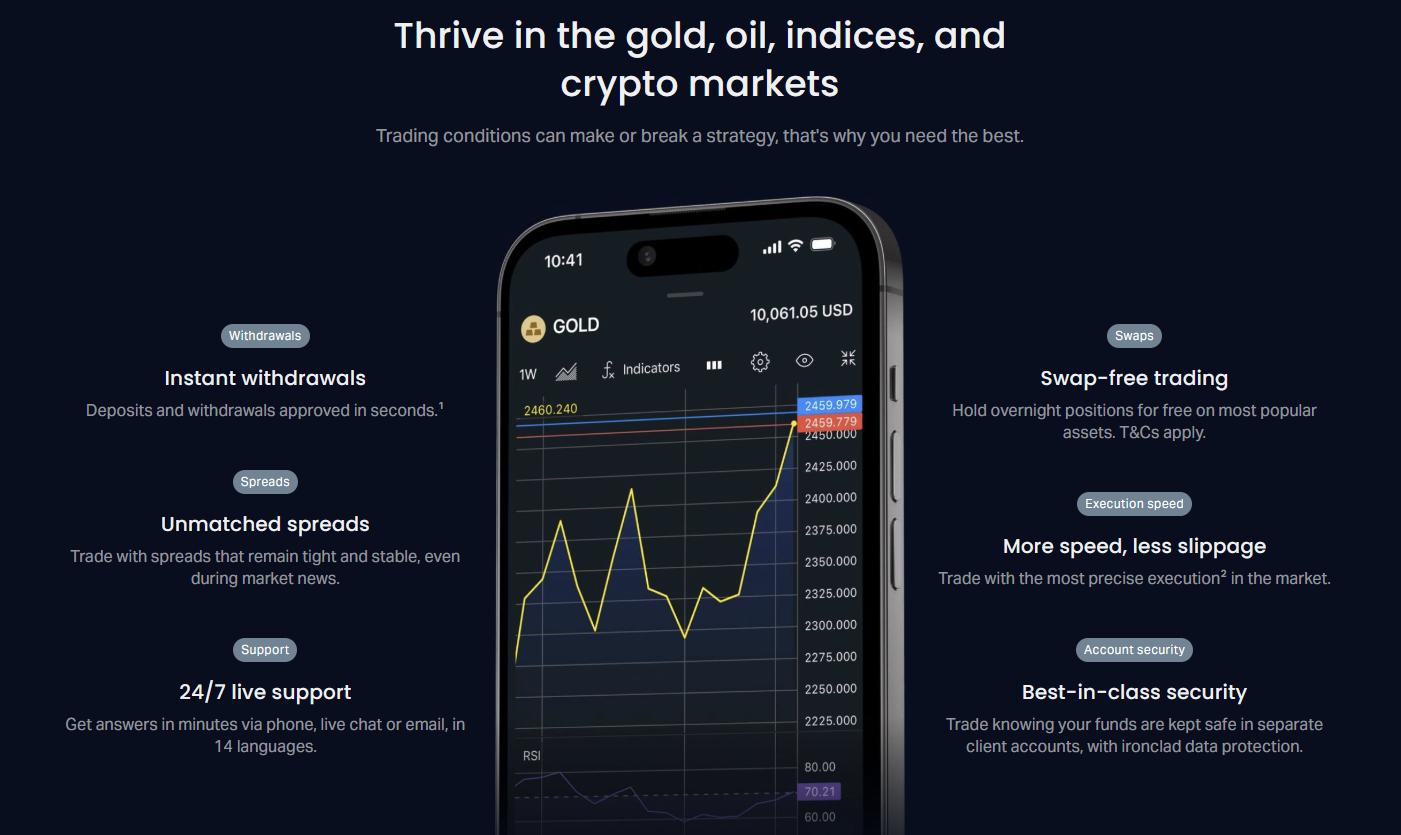
Exness Social Trading App Features
The dedicated social trading app (accessible via https://www.exness.com/social-trading/app) provides full copy trading management on mobile. It mirrors the Personal Area functionality but optimizes for phone screens. You can browse providers, analyze metrics, start/stop copying, adjust allocations, and monitor real-time copied positions. Push notifications alert you to margin calls, stop-copy triggers, provider strategy changes, and commission charges. The app also includes a news feed with market analysis from Exness analysts, though this is separate from copy trading signals.
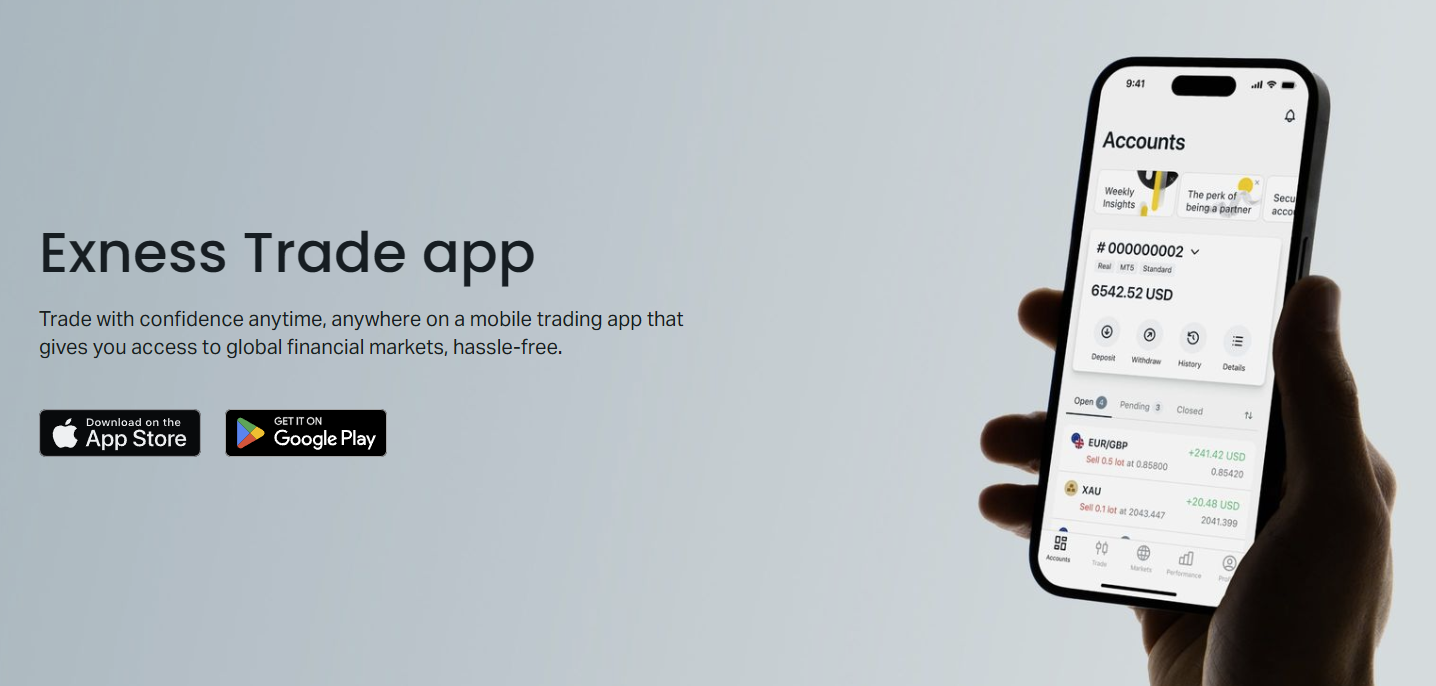
Provider discovery on mobile uses a card-based layout showing key metrics at a glance: 30-day return, max drawdown, copier count, and risk score. Tapping a card opens the full profile with equity curve, trade history, and risk breakdown. The app caches data for offline viewing of previously loaded profiles. Real-time updates require connection. For active copiers, the positions tab shows all copied trades grouped by provider with current P/L, swap charges, and hold time. You can close any position with two taps.
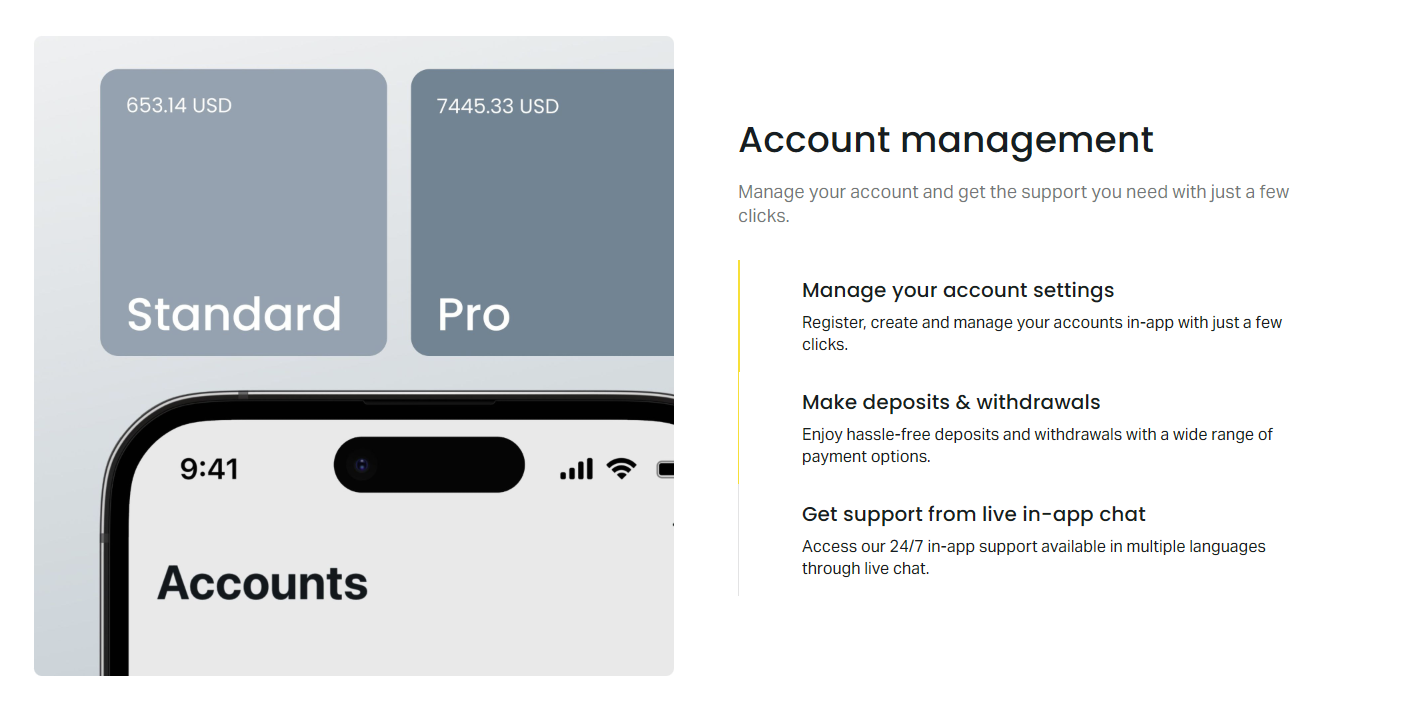
Account management features integrate seamlessly. Deposits, withdrawals, and internal transfers between trading accounts work within the app. This matters for copy trading because you often need to top up allocation quickly when a provider hits a drawdown and you want to maintain position sizing. The app supports all Exness payment methods: cards, crypto, e-wallets, and local bank transfers. Withdrawal requests process through the same instant system as the web platform.
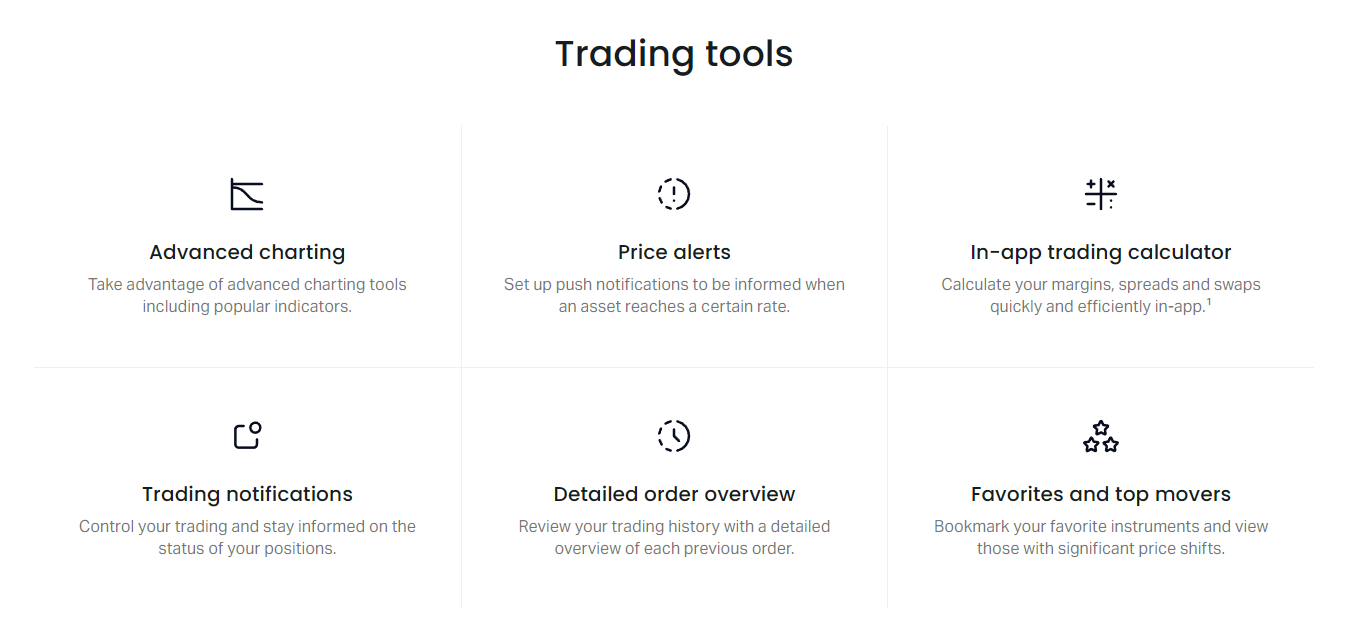
The app's notification system is configurable per provider. You can enable alerts for: new trades opened, trades closed, daily P/L summary, commission charged, allocation changes, and strategy description updates. High-frequency providers generate many notifications — a scalper opening 50 trades daily will flood your phone. The app lets you batch notifications into a daily digest or disable trade-level alerts entirely while keeping risk alerts active. This granularity prevents notification fatigue without missing critical events.
Fees and Cost Structure
Understanding the complete cost stack is essential because fees compound on every copied trade. There are three layers: provider performance fee, Exness trading costs (spread/commission), and swap charges. The performance fee is the only one unique to copy trading. Providers typically charge 10-30% of net profits calculated weekly or monthly. High-water marks apply — if a provider loses 5% then gains 5%, they only charge on the net gain above the previous peak. This prevents double-charging for recovery periods.
Exness trading costs depend entirely on your account type, not the provider's. If you copy a Raw Spread provider but use a Standard account, you pay Standard spreads on every copied trade. This can significantly reduce net returns, especially for high-frequency strategies where spread costs dominate. The provider's profile shows their account type. Match yours to theirs for accurate performance replication. Switching account types requires opening a new trading account in your Personal Area and reallocating copy funds.
Scroll horizontally to see all columns
| Account Type | Spread Cost | Commission | Best For |
|---|---|---|---|
| Standard | From 0.3 pips EURUSD | None | Low-frequency, small allocations |
| Standard Cent | From 0.3 pips EURUSD | None | Micro allocations under $500 |
| Raw Spread | From 0.0 pips EURUSD | $3.50 per lot/side | High-frequency, allocations $500+ |
| Zero | 0.0 pips on majors | $3.50 per lot/side | Major pairs focus, $500+ |
| Pro | From 0.1 pips EURUSD | None | High volume, $500+ |
Swap charges apply to copied positions held overnight. The provider's swap costs replicate proportionally in your account. Some strategies avoid swaps by closing all positions daily. Others hold for weeks, accumulating significant swap costs or credits. The provider profile shows average hold time and swap impact. For strategies holding positions over weekends, triple swap applies Wednesday-to-Thursday rollover. This can add 0.1-0.5% weekly cost for certain pairs. Check the instrument breakdown — exotic pairs and crypto often carry much higher swap rates than majors.
Comparing Exness Copy Trading with Alternatives
eToro remains the most recognizable competitor. Their social features are deeper — comments, discussions, and a true social network around trading. Exness focuses purely on execution and performance data. eToro charges spread markups on all instruments, often 2-3x raw spreads. Exness passes raw spreads or low commissions. For cost-sensitive copiers, Exness wins. For users who value community interaction and learning from provider commentary, eToro offers more. eToro also requires higher minimums ($200 per provider typically) and doesn't support MT4/MT5 integration.
ZuluTrade and Myfxbook AutoTrade operate as third-party layers connecting to multiple brokers. They offer broader provider universes but add platform fees (typically 0.5-1 pip markup or per-trade fees). Execution latency increases because trades route through their servers to your broker. Exness native copy trading executes directly on Exness servers with zero added latency. For high-frequency strategies, this matters. ZuluTrade's advantage is broker choice — you can copy providers while keeping your account at Pepperstone, IC Markets, or others. Exness locks you into their ecosystem.
NAGA and Darwinex occupy the middle ground. NAGA combines social features with multi-broker support but charges both performance fees and spread markups. Darwinex focuses on regulated strategy assets (DARWINs) with institutional-grade risk scoring, but minimums start at $500 and the learning curve is steep. Exness sits at the practical end: low minimums, transparent costs, native execution, and sufficient provider variety for most retail needs. It lacks the social depth of eToro or the institutional rigor of Darwinex, but for straightforward copy trading, it's efficient.
Platform choice often comes down to whether you want a social network that happens to offer copy trading, or a trading platform that happens to offer copy trading.
Scroll horizontally to see all columns
| Platform | Min Investment | Cost Structure | Execution | Best For |
|---|---|---|---|---|
| Exness | $10-500 per provider | Provider fee + raw spreads | Native, zero latency | Cost-sensitive, MT4/MT5 users |
| eToro | $200 per provider | Spread markups only | Native | Social learners, beginners |
| ZuluTrade | $100-500 | Platform fee + broker costs | Via middleware | Multi-broker flexibility |
| Darwinex | $500+ | Performance fee + spread | Native | Institutional-grade vetting |
| NAGA | $50-250 | Provider fee + markup | Native | Social + multi-asset |
Getting Started Step by Step
Opening an Exness account takes about five minutes if you have documents ready. Register with email, verify phone number, complete the KYC questionnaire (trading experience, financial situation, risk tolerance), then upload ID and proof of address. Verification usually completes within hours. Once approved, open a trading account — choose Standard Cent for smallest allocations, Standard for simplicity, or Raw Spread/Zero if you plan copying high-frequency providers. Fund the account via your preferred method. Card and crypto deposits are instant; bank transfers take 1-3 business days.
Navigate to the Copy Trading section in Personal Area or download the social trading app. Browse providers using filters: minimum 6 months history, max drawdown under 25%, monthly return 2-8%, risk score 3-5. Click three providers that use different strategies — check their trade history for methodology clues. Start with minimum allocations ($50-100 each on Standard Cent). Monitor for two weeks without adding funds. Watch how they handle news events, weekend gaps, and losing streaks. This observation period costs little but reveals more than any backtest.
Set risk controls before scaling up. Configure stop-copy loss at 15-20% per provider. Set daily loss limit at 3-5% of allocated amount. Cap each provider at 20% of total copy trading equity. Enable margin alerts at 100% and 50% margin level. These settings take two minutes but prevent the most common blowup scenarios. After the observation period, if performance matches expectations, increase allocations gradually. Add a fourth provider only when you understand the first three. Resist the urge to chase recent hot performers — they often revert.
Tax reporting requires attention. Exness provides annual statements showing all trades, commissions, swaps, and performance fees. Copy trading profits are typically taxed as capital gains or ordinary income depending on your jurisdiction. The performance fees paid to providers may be deductible as investment expenses in some countries. Exness doesn't provide tax advice or localized tax forms. Keep monthly screenshots of provider performance and fee breakdowns. Some providers change commission structures mid-year, creating tracking complexity. A simple spreadsheet logging monthly net P/L per provider saves hours at tax time.
Common Questions and Practical Considerations
Providers can change their strategy without notice. The platform shows a strategy description field that providers update. Major changes — switching from swing trading to scalping, adding new instruments, increasing leverage — should trigger your review. Exness doesn't enforce strategy consistency. Some providers drift toward higher risk as assets under management grow, chasing returns to attract more copiers. Monitor the instrument breakdown monthly. A sudden appearance of exotic pairs or crypto in a major-pair strategy signals style drift.
Correlation risk across providers is real. During March 2020, many uncorrelated strategies correlated perfectly — everything dropped together. Diversification across strategy types helps but doesn't eliminate systemic risk. The only true hedge is keeping cash unallocated. Some copiers maintain 30-40% cash permanently, accepting lower returns for survival during crises. Others use the stop-copy loss as their primary defense, accepting that they'll exit providers during drawdowns and re-enter later. Neither approach is wrong; they reflect different risk philosophies.
The social trading app and web platform occasionally show brief data delays during high volatility. Provider equity curves may lag by 30-60 seconds. Copied positions execute at market prices regardless — the delay is only in display. During major news (NFP, CPI, central bank decisions), spreads widen on all accounts. Copied positions experience the same slippage as manual trades. Providers using tight stop losses may get stopped out more frequently during these events. This isn't a platform flaw; it's market mechanics. Factor news events into your risk expectations.
Copy trading doesn't remove market risk — it just delegates the decision-making. The drawdowns still belong to you.
Performance Attribution and Tracking
Separating skill from luck in provider performance requires more than glancing at total return. Look at the Sharpe ratio if available, or calculate a rough version: (annualized return - risk-free rate) / annualized volatility. Providers with Sharpe above 1.5 demonstrate consistent risk-adjusted returns. Below 1.0 suggests returns come from risk-taking rather than edge. The platform doesn't show Sharpe directly, but you can estimate from monthly returns and drawdown data. A provider with 20% annual return and 10% max drawdown likely has better risk-adjusted performance than one with 40% return and 35% drawdown.
Attribution analysis breaks down returns by instrument, direction, and time. Some providers make all their money on gold during trend periods but lose on ranging EURUSD. Others profit consistently across instruments but give back gains during high-volatility weeks. The trade history export (CSV available in provider profile) lets you run this analysis in Excel or Python. Monthly attribution reviews reveal whether a provider's edge is structural or circumstantial. Structural edges persist; circumstantial ones vanish when market regime changes.
Scroll horizontally to see all columns
| Check | Target | Action If Missed |
|---|---|---|
| Max drawdown vs historical | Within 1.5x historical max | Reduce allocation 50% |
| Instrument concentration | No single instrument >40% volume | Query provider or stop copy |
| Win rate stability | Within 10% of 6-month average | Monitor next month closely |
| Avg R:R ratio | Above 1.5:1 | Evaluate strategy change |
| Commission charged | Matches agreed percentage | Contact support if discrepancy |
| Strategy description | Unchanged or announced | Review for style drift |
Tracking your own copy trading performance separately from the platform's reporting adds accountability. The platform shows aggregate P/L but mixes copied and manual trades if you do both. Create a simple log: date, provider, allocation, net P/L after fees, cumulative return. This reveals which providers actually contribute after all costs. Platform reporting sometimes shows gross provider returns without netting your specific commission tier or spread costs. Your personal log captures the true net result.
Scaling and Portfolio Management
As your copy trading capital grows, management complexity increases. At $5,000-10,000, three to five providers with $1,000-2,000 each works well. At $50,000+, you face new challenges: some providers cap copier capital or set maximum AUM limits. High-AUM providers may close to new copiers. You'll need to research newer providers with capacity. The platform shows provider capacity status — open, limited, or closed. Closed providers won't accept new allocations but existing copiers continue. Limited providers accept small additions.
Rebalancing becomes necessary when provider performances diverge. A provider returning 50% while others return 5% will grow to dominate your portfolio, concentrating risk. Quarterly rebalancing — trimming winners, adding to laggards (if you still believe in them) — maintains your intended risk distribution. Some copiers automate this by setting allocation caps that trigger automatic redistribution. Others rebalance manually to reassess each provider's current methodology. The manual approach takes more time but catches style drift that automatic rebalancing misses.
Becoming a strategy provider is an option once you have a verifiable track record. Exness requires a live trading account with at least 3 months history, minimum equity (varies by region), and completed identity verification. Providers earn performance fees from copiers. The platform takes no cut of provider fees. Top providers on Exness manage hundreds of thousands in copier funds. However, the responsibility is significant — your trades directly affect others' money. Most successful providers started as copiers themselves, learning what works by observing others before launching their own strategies.
Regulatory and Safety Considerations
Exness operates under multiple regulatory licenses: FCA (UK), CySEC (Cyprus), FSCA (South Africa), FSA (Seychelles), and others depending on entity. Your account entity determines your regulatory protections. FCA and CySEC entities offer negative balance protection, segregation of client funds, and access to compensation schemes (FSCS up to £85,000, ICF up to €20,000). Offshore entities (Seychelles, St. Vincent) offer fewer protections but higher leverage. Copy trading doesn't change your regulatory status — you're still a client of whichever Exness entity holds your account.
Strategy providers are not regulated as fund managers. They're individual traders sharing their personal account signals. Exness verifies their identity and execution data but doesn't vet their competence, suitability, or compliance with investment advice regulations. This distinction matters: if a provider blows up your account, you have no regulatory recourse against the provider. Your only protections are the platform's risk controls (stop-copy loss, allocation caps) and your own due diligence. Treat provider selection with the same skepticism you'd apply to any unregulated investment recommendation.
Regulation protects you from broker misconduct, not from bad trading decisions — yours or a provider's.
Fund segregation applies to your entire account balance, including allocated copy trading funds. Exness keeps client funds in segregated accounts at top-tier banks. This means if Exness faces insolvency, your funds (including those allocated to copy trading) are protected from creditors up to regulatory limits. However, this doesn't protect against trading losses. If copied trades lose money, that's market risk, not broker risk. The segregation ensures the broker can't use your funds for their operations, not that your trades can't lose.
Final Assessment of Exness Social Trading
Exness social trading delivers a competent, cost-efficient copy trading experience with native execution and transparent fees. Its strengths are clear: low minimums, instant withdrawals, no platform markup, MT4/MT5 integration, and solid risk controls. The provider directory offers enough variety for meaningful diversification, and the verification system filters obvious fraud. For traders who want copy trading as a portfolio component without paying premium fees or locking into social-network ecosystems, it's a practical choice.
The limitations are equally clear. No social features for learning or interaction. Provider vetting is minimal — identity and execution verification only. No institutional-grade risk scoring like Darwinex. The platform assumes you can evaluate providers yourself. If you need hand-holding, community discussion, or curated provider selection, eToro or NAGA serve better despite higher costs. Exness also locks you into their broker ecosystem; you can't copy Exness providers while keeping your account at another broker.
The sweet spot is experienced retail traders who understand risk management, want low-cost execution, and prefer building their own provider portfolio. Beginners can start here too — the minimums are low enough for safe experimentation — but they must invest time learning to evaluate providers. The platform won't protect you from picking a high-risk provider that blows up. That responsibility remains yours. Used thoughtfully, Exness social trading adds a legitimate diversification tool. Used casually, it's just another way to lose money efficiently.
Frequently Asked Questions
Does Exness have copy trading?
Yes, Exness offers social trading with copy trading functionality through their Personal Area and dedicated mobile app. You can browse verified strategy providers and replicate their trades automatically.
How does Exness copy trading work?
You select a strategy provider, allocate funds, and the system automatically replicates their trades in your account proportionally. You pay the provider a performance fee on profits plus standard Exness trading costs based on your account type.
What is the minimum deposit for Exness copy trading?
Exness has no separate minimum for copy trading. Standard account minimums apply ($1 for Standard/Standard Cent, $200 for Raw Spread/Zero, $500 for Providers). Individual providers set their own minimum copy amounts, typically $10-500.
Can I stop copying a provider at any time?
Yes, you can stop copying instantly. The system closes all copied positions at market prices or lets you retain them as manual positions. You can then withdraw funds immediately through standard Exness withdrawal methods.
Are copied trades executed on my MT4 or MT5 account?
Yes, copied positions appear in your MT4, MT5, or Web Terminal alongside manual trades. You can manage them from any connected platform, though copy-specific controls (start/stop copying, allocation changes) require the Personal Area or social trading app.
What fees do I pay for copy trading on Exness?
You pay the provider's performance fee (typically 10-30% of net profits) plus your account's standard trading costs (spreads and/or commissions). Exness charges no additional platform fee for copy trading.
How do I evaluate if a strategy provider is reliable?
Check minimum 6-month track record, maximum drawdown under 25%, consistent monthly returns, risk score 3-5, verified status, and trade history matching their stated strategy. Monitor for style drift monthly.
Is Exness social trading available in my country?
Availability depends on your residence and the Exness entity serving your region. Some jurisdictions restrict copy trading or leverage. Check the Exness website or contact support for country-specific availability.