

Forex Trading Guides
Exness EURJPY Trading Conditions and Platform Features
Complete guide to trading the euro-yen pair on Exness with practical details on costs, tools, and account types.

Senior Forex Trader & Market Analyst
Daniel Chen is an experienced forex trader and financial market analyst with over 15 years of experience in currency trading. He specializes in technical analysis, risk management, and developing practical trading strategies to help traders make informed decisions.
EURJPY sits in an unusual spot among forex pairs. It's a cross pair, meaning neither currency is the US dollar, yet it trades with volume and liquidity that often rivals the majors. The euro and Japanese yen represent two of the world's largest economies with fundamentally different monetary policy approaches. The European Central Bank and Bank of Japan rarely move in sync, which creates persistent trends and clean technical setups that many traders prefer over the choppier EURUSD or USDJPY.
Contents
- 1. What Makes EURJPY Different from Major Pairs
- 2. Exness Account Types for EURJPY Trading
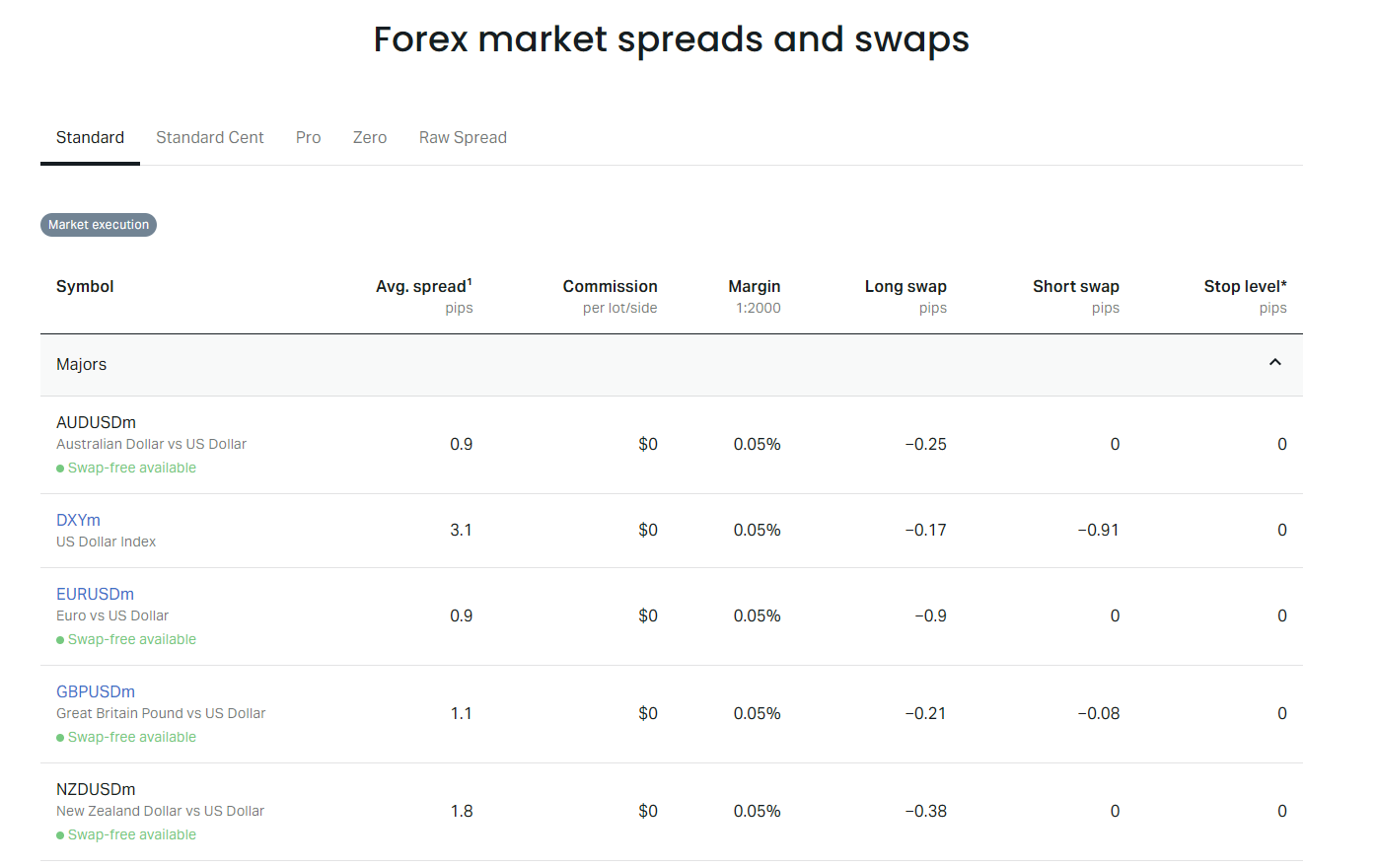
- 3. Spreads and Commissions on EURJPY
- 4. Trading Platforms Available for EURJPY
- 5. Leverage and Margin Requirements
- 6. Trading Hours and Session Overlap
- 7. Risk Management Tools for EURJPY
- 8. Using Exness Trading Calculator for EURJPY
- 9. Mobile Trading Experience
- 10. Deposit and Withdrawal for EURJPY Traders
- 11. EURJPY Strategy Considerations on Exness
- 12. Technical Analysis Tools for EURJPY
- 13. Correlation Awareness When Trading EURJPY
- 14. Final Assessment of Exness EURJPY Trading
On Exness, EURJPY is available across all account types with consistent pricing. The broker's execution model handles this pair the same way it handles EURUSD — market execution with no requotes, no dealing desk intervention, and spreads that reflect actual interbank liquidity rather than a markup buffer. For traders who size positions based on pip value, EURJPY offers a straightforward calculation: one pip on a standard lot equals 1,000 JPY, which converts to roughly $6.50–$7.00 depending on the USDJPY rate at the time.
What Makes EURJPY Different from Major Pairs
Most traders approach EURJPY expecting it to behave like a major pair with slightly wider spreads. That assumption misses the structural drivers. EURJPY moves on the interest rate differential between the eurozone and Japan, but it also acts as a risk sentiment proxy. When global equities rally, the yen tends to weaken against the euro. When risk aversion spikes, the yen strengthens as Japanese investors repatriate capital. This dual nature — rate differential plus risk barometer — means EURJPY often trends cleanly during risk-on or risk-off regimes while ranging during transitional periods.
The pair also responds sharply to Bank of Japan policy shifts. Even verbal intervention from Japanese officials can move EURJPY 100–150 pips in minutes. ECB press conferences produce similar reactions. Traders who track central bank calendars and understand the policy divergence narrative gain an edge. Exness provides an economic calendar integrated into the Personal Area and Web Terminal, flagging high-impact events for both currencies with expected versus previous readings.
Exness Account Types for EURJPY Trading
Exness offers five live account types, and EURJPY is tradable on all of them. The Standard and Standard Cent accounts use spread-only pricing with no commission. The Raw Spread, Zero, and Pro accounts charge a round-turn commission per lot but offer tighter raw spreads. For EURJPY specifically, the commission-based accounts often work out cheaper for high-frequency or scalping strategies because the spread can drop to 0.0–0.2 pips during peak liquidity, while the all-in cost on Standard accounts typically sits around 1.0–1.5 pips.
Standard Cent accounts denominate balance in cents rather than dollars, which lets traders test EURJPY strategies with real market conditions at 1/100th the position size. A 0.01 lot on a cent account equals 1,000 EUR notional — roughly $1,070 at current rates — with margin requirement around $10–$15 depending on leverage. This makes cent accounts practical for forward-testing EAs or discretionary approaches without risking meaningful capital.
Scroll horizontally to see all columns
| Account Type | Typical Spread (pips) | Commission (per lot round-turn) | Best For |
|---|---|---|---|
| Standard | 1.0–1.5 | None | Swing traders, lower frequency |
| Standard Cent | 1.0–1.5 | None | Strategy testing, small accounts |
| Raw Spread | 0.0–0.3 | $3.50 per side | Scalpers, high volume |
| Zero | 0.0–0.2 | $3.50 per side | Algorithmic, EA traders |
| Pro | 0.1–0.4 | $5.00 per side | Professional classification |
Spreads and Commissions on EURJPY
Spread behavior on EURJPY follows the Tokyo–London overlap pattern. During the Asian session (00:00–08:00 UTC), spreads widen to 1.5–2.5 pips on Standard accounts as liquidity thins. The London open at 08:00 UTC brings a sharp compression, often dropping Raw Spread and Zero accounts to 0.0–0.1 pips for several hours. The New York afternoon (17:00–21:00 UTC) sees a secondary liquidity pulse as European desks close and US desks handle residual flow. Exness publishes average spread data per instrument in the Personal Area, updated daily, so you can verify recent conditions before committing to a session.
Commission on Raw Spread and Zero accounts is $3.50 per side per standard lot, or $7.00 round-turn. On a 0.1 pip raw spread, the all-in cost equals roughly 0.8 pips — significantly below the Standard account's 1.2 pip average. Pro accounts charge $5.00 per side ($10.00 round-turn) but offer slightly tighter raw spreads and access to higher leverage tiers for eligible clients. The commission is charged at position open and close, visible in the trade history and account statement.
Swap rates on EURJPY deserve attention. The interest rate differential currently favors the euro, meaning long EURJPY positions earn positive swap (roughly +$0.50 to +$1.20 per lot per night depending on account type), while short positions pay negative swap. This changes when central bank policies shift. Exness updates swap values daily around 21:00 UTC, and the trading calculator reflects the current rate. For swing traders holding positions weeks or months, accumulated swap can meaningfully affect P&L.
Trading Platforms Available for EURJPY
Exness supports EURJPY on MetaTrader 4, MetaTrader 5, the proprietary Web Terminal, and mobile apps for iOS and Android. Each platform handles the pair identically in terms of pricing and execution — the difference lies in tooling. MT4 remains popular for its vast library of custom indicators and EAs built specifically for cross-pair strategies. MT5 adds more timeframes (including 2-hour, 8-hour, and 12-hour candles useful for EURJPY swing analysis), a built-in economic calendar, and depth of market for Raw Spread and Zero accounts.
The Web Terminal requires no installation and works in any modern browser. It includes TradingView charts, one-click trading, and the same order types as desktop platforms. For EURJPY traders who switch devices or trade from restricted environments, the Web Terminal maintains full functionality including pending orders, trailing stops, and partial close. The mobile apps mirror the Web Terminal feature set with push notifications for price alerts and margin calls — useful when EURJPY moves sharply during Asian hours while you're away from your desk.
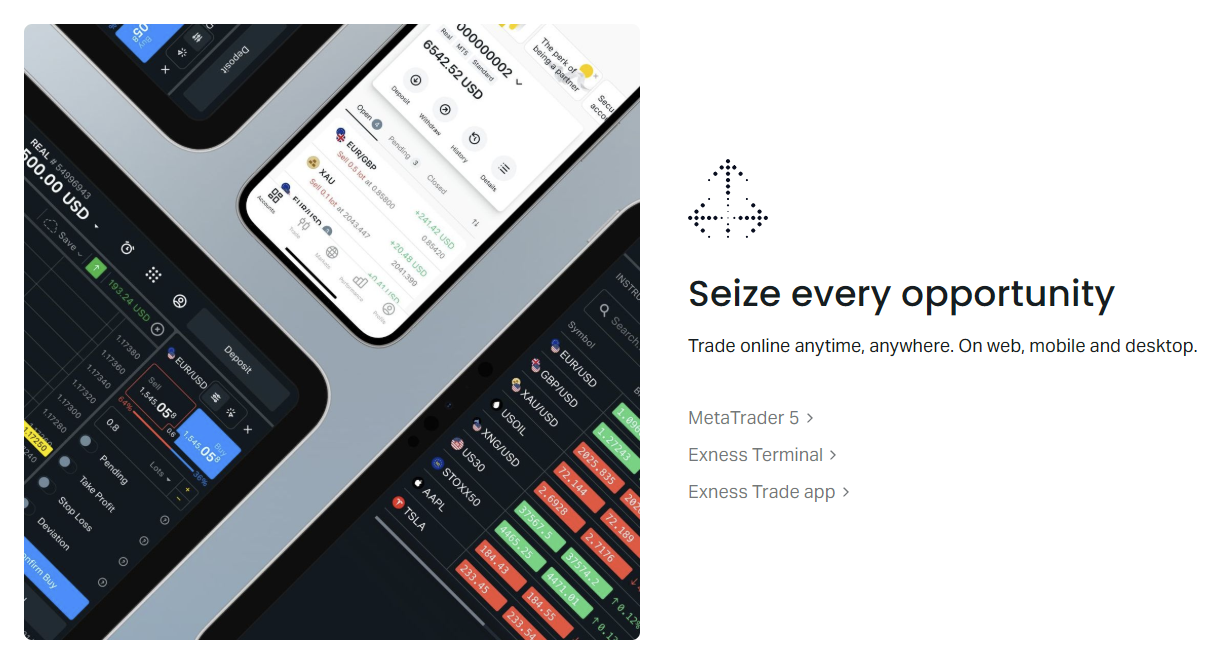
One practical difference: MT4 and MT5 display swap points in points (not pips), while Web Terminal and mobile apps show the monetary value per lot per night. On EURJPY, 10 points = 1 pip. If the swap display shows +120 points long, that's +12 pips ≈ +$80 per standard lot per night at current USDJPY. Always confirm the monetary equivalent in the trading calculator before holding a swing position over Wednesday rollover (triple swap day).
Leverage and Margin Requirements
Exness offers dynamic leverage up to 1:2000 on Standard and Standard Cent accounts for EURJPY, with automatic reduction as account equity grows. Raw Spread, Zero, and Pro accounts cap at 1:200. The leverage tiers work in bands: below $999 equity gets maximum leverage, $1,000–$4,999 drops to 1:2000 (Standard) or 1:200 (commission accounts), $5,000–$29,999 drops further, and above $30,000 equity the maximum is 1:500 on Standard and 1:200 on commission accounts. Professional clients who pass the eligibility assessment can access 1:2000 on Pro accounts regardless of equity.
Margin for EURJPY calculates as: (contract size × lot size × current price) ÷ leverage. At 160.00 EURJPY, one standard lot (100,000 EUR) with 1:500 leverage requires 32,000 JPY margin — roughly $213 at 150 USDJPY. The same position at 1:2000 leverage needs only $53. Exness shows required margin in the order window before confirmation, and the margin level updates in real time in the terminal. Stop out triggers at 0% margin level on all account types, meaning positions close automatically when equity equals used margin.
Trading Hours and Session Overlap
EURJPY trades 24 hours a day, five days a week, from Monday 00:05 UTC to Friday 23:55 UTC (server time GMT+2/GMT+3 with DST). The most active window is the London–Tokyo overlap (08:00–09:00 UTC) when both European and Japanese desks operate simultaneously. Volume spikes again at London open (08:00 UTC) and New York open (13:00 UTC). The Asian session (00:00–08:00 UTC) produces range-bound conditions suitable for mean-reversion strategies, while the European session drives directional moves.
Exness does not widen spreads artificially during rollover (23:55–00:05 UTC), but liquidity providers do. Expect 3–5x normal spreads for 5–10 minutes around daily close. Pending orders placed during this window may fill at worse prices or not at all. The economic calendar in the Personal Area highlights rollover times and scheduled maintenance windows. Weekend gaps on EURJPY are common after major news — the pair can open 50–150 pips away from Friday close. Stop losses do not protect against gaps; they execute at the first available price on Monday open.
EURJPY respects technical levels during London hours but ignores them during thin Asian liquidity. Session awareness matters more than indicator choice.
Risk Management Tools for EURJPY
Exness provides several built-in risk controls that apply specifically to EURJPY positions. Negative balance protection is automatic — you cannot lose more than your account equity, and Exness absorbs any residual deficit. This matters for EURJPY because gap risk on Monday open can theoretically blow through stop losses and margin calls simultaneously. The protection activates at the account level, not per position.
Stop out level is 0% across all accounts. When margin level hits zero, the system closes positions starting with the largest losing position until margin level recovers. There is no margin call warning level — the platform shows margin level in real time, but no automatic notification triggers before stop out. Traders should set custom alerts in MT4/MT5 or the mobile app at 100%, 200%, or whatever buffer suits their strategy. The Web Terminal includes a margin calculator widget that updates required margin as price moves.
Trailing stops function on all platforms but execute server-side only on MT5 and Web Terminal. On MT4, trailing stops require the terminal to remain open and connected. For EURJPY swing traders holding positions overnight, server-side trailing stops on MT5 or Web Terminal provide continuous protection even with the local terminal closed. Partial close is available everywhere — right-click a position and select 'Modify' to reduce lot size while keeping the remainder open.
Using Exness Trading Calculator for EURJPY
The Exness trading calculator (accessible from the Personal Area and website) handles EURJPY calculations natively. Input the account type, leverage, lot size, and direction — it outputs required margin, pip value in account currency, swap long/short per night, and commission if applicable. The calculator uses real-time prices and current swap rates, so the figures match what you'll see in the order window. For EURJPY, pay attention to the pip value conversion: it calculates based on the current USDJPY rate since your account is likely denominated in USD.
A practical workflow: before entering a EURJPY trade, open the calculator, select your account type, enter the planned lot size, and check the margin requirement against your free margin. Then check the swap row — if you're going long and swap is positive, holding adds a small credit each night. If short, factor the cost into your risk/reward. The calculator also shows the price level where a stop loss would trigger a margin call given your current equity, which helps position sizing.
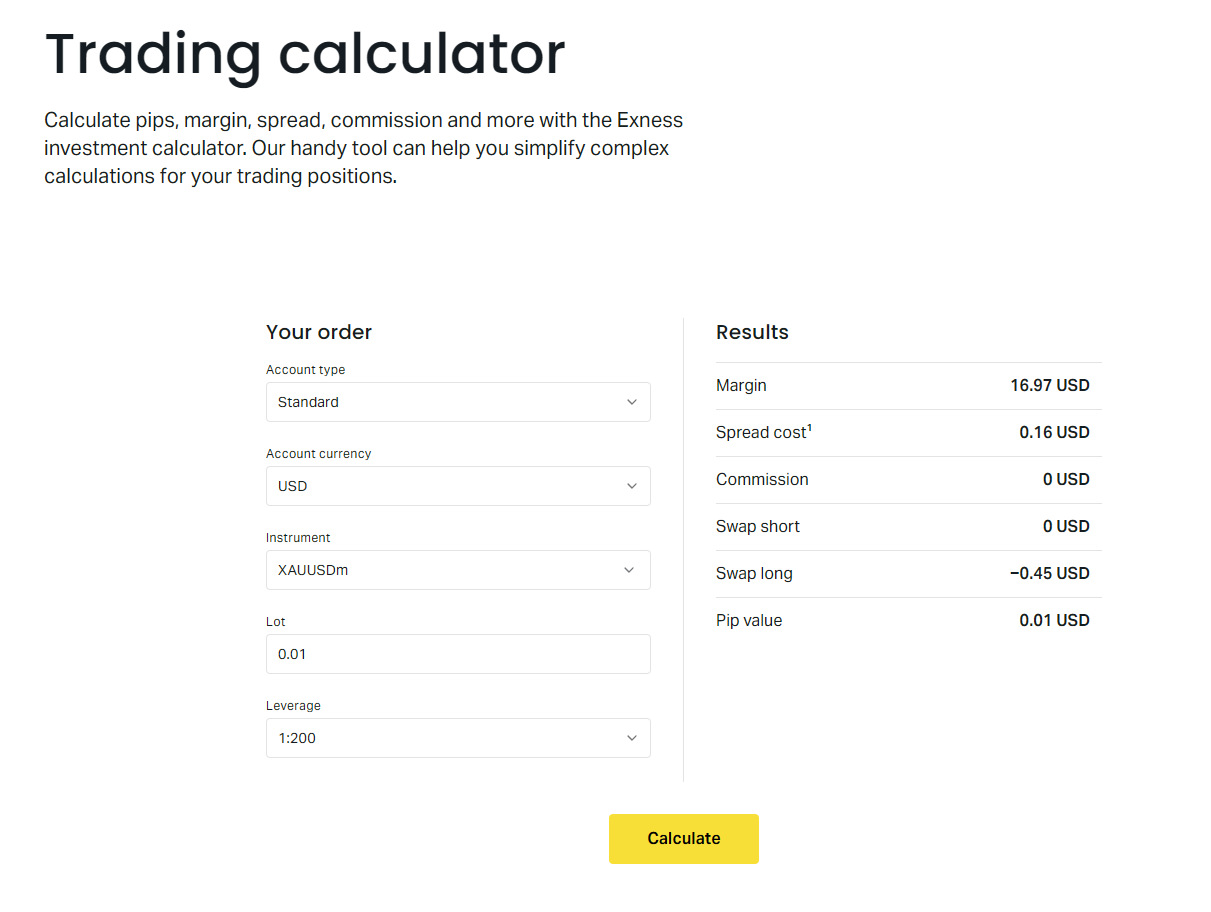
The profit calculator tab lets you simulate outcomes: enter entry price, exit price, lot size, and direction to see gross profit, commission, swap accrual, and net result. This is useful for backtesting EURJPY setups — plug in historical entry/exit levels from your chart analysis to verify the strategy's net expectancy after all costs. The calculator does not account for slippage or spread widening during news, so add a buffer of 0.5–1.0 pips for realistic modeling.
Mobile Trading Experience
The Exness mobile app (iOS and Android) and the mobile-responsive Web Terminal provide full EURJPY functionality. Charts load with TradingView rendering, supporting all timeframes, drawing tools, and indicators. One-tap trading from the chart works for market orders; pending orders require the order ticket. Price alerts push to the device even when the app is backgrounded — set an alert at a key EURJPY level (e.g., 165.00 breakout) and you'll get a notification without keeping the app open.
The app includes the economic calendar with filters for EUR and JPY high-impact events. Tap an event to see forecast, previous, and actual readings once released. This is handy during BOJ or ECB meetings when EURJPY can move 100+ pips in seconds. The app also shows account margin level, free margin, and open P&L in real time. Deposit and withdrawal requests can be initiated from the app, though KYC verification still requires the web Personal Area for document upload.


One limitation: the mobile app does not support custom indicators or EAs. If your EURJPY strategy relies on a proprietary MT4/MT5 indicator, you'll need the desktop terminal or a VPS. Exness offers a free VPS for clients meeting volume thresholds (typically 5 lots/month on Raw Spread/Zero/Pro, 15 lots/month on Standard). The VPS runs MT4/MT5 24/7 with sub-millisecond latency to Exness servers — essential for EA traders targeting EURJPY Asian session range breaks.
Deposit and Withdrawal for EURJPY Traders
Funding an Exness account for EURJPY trading works through the Personal Area. Supported methods vary by region but typically include bank cards (Visa/Mastercard), electronic wallets (Skrill, Neteller, WebMoney, Perfect Money), local bank transfers, and crypto (USDT, USDC, BTC, ETH). Minimum deposit is $10 on Standard and Standard Cent accounts; Raw Spread, Zero, and Pro require $200 minimum first deposit. Deposits via cards and e-wallets are instant. Bank transfers take 1–3 business days. Crypto deposits confirm on-chain (typically 10–30 minutes).
Withdrawals process back to the original deposit method up to the deposited amount; profits can be withdrawn to any verified method. Exness advertises instant withdrawals for e-wallets and crypto — in practice, most complete within minutes. Card withdrawals take 1–7 business days depending on the issuer. Bank transfers take 3–5 business days. No withdrawal fees from Exness, though payment processors may charge their own. The minimum withdrawal is $1 for e-wallets, $3 for cards, and $10 for bank transfers.
EURJPY Strategy Considerations on Exness
EURJPY rewards strategies that align with its dual drivers. Trend-following on H4/D1 timeframes works well during sustained risk-on or risk-off regimes — the pair can trend 500–1,000 pips over weeks with shallow pullbacks. Mean-reversion on M15/H1 during Asian session (00:00–07:00 UTC) exploits the range-bound behavior when Tokyo is the only major center open. Breakout strategies at London open (08:00 UTC) capture the directional impulse as European desks react to Asian session levels.
Exness execution quality supports all three approaches. Market execution means no requotes — your order fills at the best available price, which during news can be several pips away from the requested price. Slippage is symmetric (positive and negative) and Exness publishes slippage statistics quarterly. For EURJPY specifically, the fill quality on Raw Spread and Zero accounts during London hours is consistently within 0.1–0.3 pips of requested price for orders under 10 lots. Larger orders access deeper liquidity tiers automatically.
News trading on EURJPY carries gap risk. BOJ policy announcements (typically 03:00–05:00 UTC) and ECB decisions (13:45 UTC press conference) produce the largest moves. Exness does not restrict trading during news, but spreads widen and liquidity thins. If you trade these events, use limit orders rather than market orders to cap worst-case fill price, and reduce position size to account for potential slippage. The economic calendar in the terminal flags these events with 'high impact' tags for both EUR and JPY.
Scroll horizontally to see all columns
| Session (UTC) | Characteristics | Suitable Strategies | Typical Spread (Standard) |
|---|---|---|---|
| 00:00–07:00 (Asian) | Range-bound, lower volume | Mean reversion, range trading | 1.5–2.5 pips |
| 08:00–09:00 (Tokyo–London overlap) | High volume, directional moves | Breakout, trend entry | 0.8–1.2 pips |
| 09:00–16:00 (London) | Sustained trends, deep liquidity | Trend following, pullback entry | 0.6–1.0 pips |
| 13:00–17:00 (London–NY overlap) | Highest volume, news impact | News fade, momentum | 0.5–0.8 pips |
| 17:00–23:00 (NY afternoon) | Thinning liquidity, chop | Scalping, range fade | 1.0–1.8 pips |
Technical Analysis Tools for EURJPY
EURJPY responds well to standard technical tools, but certain combinations work better given the pair's structure. Ichimoku Cloud on H4 and D1 timeframes captures the trend-plus-momentum nature — the cloud acts as dynamic support/resistance during trends and defines the range during consolidation. The Tenkan-sen/Kijun-sen cross on H4 has historically signaled EURJPY trend changes with reasonable reliability. Exness MT4/MT5 include Ichimoku by default; the Web Terminal adds it via TradingView's indicator library.
Fibonacci retracements on the prior swing work unusually cleanly on EURJPY because the pair respects key levels (38.2%, 50%, 61.8%) during pullbacks in trending markets. Combine with the 200 EMA on H4 for trend filter: long only above 200 EMA, short only below. The pair also respects round numbers (160.00, 165.00, 170.00) as psychological magnets — price often stalls or reverses at these levels even without other confluence. Exness charts allow price alerts at exact levels for round-number monitoring.
EURJPY at 165.00 isn't magic — it's where institutional options barriers cluster. Watch how price reacts there; the reaction tells you more than the level itself.
Correlation Awareness When Trading EURJPY
EURJPY correlates strongly with EURUSD and USDJPY — mathematically, EURJPY ≈ EURUSD × USDJPY. This means a long EURJPY position is synthetically similar to long EURUSD plus long USDJPY. If you hold long EURUSD and long USDJPY simultaneously, adding long EURJPY triples your directional exposure to euro strength and yen weakness. Exness does not restrict correlated positions, but the margin calculator does not account for correlation — it treats each position independently. Traders running multi-pair portfolios should monitor net exposure manually or use the portfolio view in MT5.
Gold (XAUUSD) and EURJPY often move inversely during risk-off episodes: gold rallies as a safe haven while EURJPY falls on yen strength. This negative correlation isn't perfect but holds during major risk events. Exness offers gold on all account types with similar conditions. Some traders hedge EURJPY exposure with a small gold position during uncertain periods. The correlation shifts during pure monetary policy moves — if the ECB hikes while the Fed holds, EURUSD and EURJPY may both rise while gold falls.
Final Assessment of Exness EURJPY Trading
Exness delivers on the basics for EURJPY: tight spreads during peak hours, reliable execution across all platforms, no restrictions on strategy type, and transparent pricing with published swap rates and average spreads. The account type structure lets you match costs to trading frequency — Standard for swing, Raw Spread/Zero for scalping, Cent for testing. The trading calculator and integrated economic calendar reduce friction in daily workflow. Mobile and Web Terminal access means you're not tied to a desktop during the Asian session moves that often define EURJPY's daily range.
The trade-offs are standard for the industry: spreads widen at rollover, gaps happen on Monday open, and high leverage tempts over-sizing. Exness doesn't hide these — the margin calculator, slippage reports, and risk warnings are accessible. For EURJPY specifically, the positive swap on long positions is a genuine carry advantage while the rate differential persists, but it reverses when policy shifts. Traders who respect session dynamics, size positions to survive 150-pip adverse moves, and use the tools Exness provides will find the environment competitive. Those expecting guaranteed fills during BOJ announcements or zero slippage on 50-lot orders will be disappointed — no broker delivers that.
Frequently Asked Questions
What is the minimum deposit to trade EURJPY on Exness?
$10 for Standard and Standard Cent accounts. $200 for Raw Spread, Zero, and Pro accounts on first deposit.
Does Exness charge swap on EURJPY positions held overnight?
Yes. Long EURJPY currently earns positive swap (approx. +$0.50 to +$1.20 per lot per night). Short positions pay negative swap. Rates update daily at 21:00 UTC.
Can I use EAs for EURJPY on Exness?
Yes, on MT4 and MT5. No restrictions on strategy type. For 24/7 EA operation, Exness offers a free VPS with qualifying volume (5 lots/month on commission accounts, 15 lots/month on Standard).
What is the typical spread for EURJPY on Exness Standard account during London hours?
0.8–1.2 pips on average. Raw Spread and Zero accounts often show 0.0–0.3 pips during the same window.
How does Exness handle EURJPY gaps over the weekend?
Stop losses do not protect against gaps. Positions reopen at the first available price Monday 00:05 UTC. Negative balance protection ensures you cannot lose more than account equity.
Is EURJPY available on the Exness Web Terminal and mobile app?
Yes. Full functionality including charts, indicators, one-click trading, pending orders, and price alerts on both Web Terminal and iOS/Android apps.
What leverage is available for EURJPY on Exness?
Up to 1:2000 on Standard and Standard Cent (dynamic, reduces with equity). Up to 1:200 on Raw Spread, Zero, and Pro. Professional clients can access 1:2000 on Pro accounts.